IN Brief:
- Germany has signed for four additional MEKO A-200 DEU frigates, extending the programme to eight ships.
- TKMS will use established production structures and suppliers while the first two ships are already in construction.
- The first planned handover remains late 2029; dates for subsequent vessels have not been individually published.
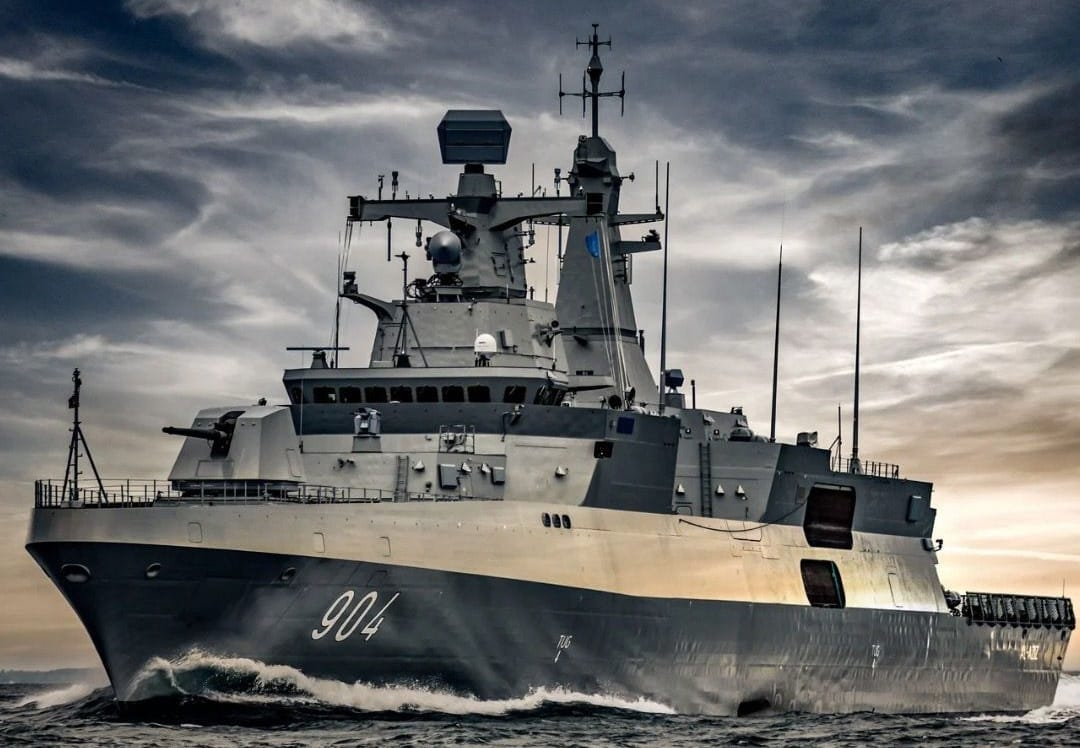
TKMS has signed a contract with Germany’s Federal Office of Bundeswehr Equipment, Information Technology and In-Service Support for four additional MEKO A-200 DEU frigates, taking the planned naval construction programme to eight vessels. The agreement, completed on 17 November, implements the follow-on procurement approved by the German parliament’s Budget Committee in October. It converts that earlier authorisation into a formal order for the second group of ships, extending the production programme already under way for the initial four.
The German shipbuilder says the expanded programme is the largest surface vessel order in its history. Construction of the first two frigates has begun, and the first vessel is still scheduled for delivery to the German Navy at the end of 2029. Subsequent vessels are expected to follow at relatively short intervals, but TKMS has not issued individual handover dates for all eight ships. The latest contract therefore establishes procurement scope and manufacturing continuity without confirming that each vessel will enter operational service on a particular date.
Germany’s decision follows the cancellation of the F126 frigate programme in June 2026 after delays and mounting costs. The navy had intended the F126 vessels to contribute significantly to anti-submarine warfare, and the MEKO A-200 DEU programme is now intended to meet part of that requirement on a revised schedule. A different ship design brings different machinery arrangements, sensor integration work, and operating characteristics; the planned eight MEKO hulls should therefore be assessed against the specifications ordered for Germany rather than treated as identical substitutes for F126.
MEKO is based on a modular approach to ship design and equipment integration, with an established family of combatants that can be adapted for different customers. Modularity can support repeatable construction and integration work, particularly where machinery, accommodation, electrical distribution, and selected mission-system interfaces are established early. It does not eliminate the engineering effort involved in configuring a ship to a particular navy’s combat systems, sensors, communications, survivability, and certification requirements. The precise German configuration will determine which modules and equipment arrangements are common across the eight vessels.
TKMS says the four additional ships will be constructed using production structures already established for the first batch. Retaining the same industrial arrangements is intended to reduce interruptions associated with starting a separate shipbuilding programme. The company has identified the Heinrich Rönner Group among the existing partners it will continue to use, with broader participation anticipated from the German maritime industrial base. It has not provided a complete subcontractor list or broken down the new contract into hull fabrication, propulsion, combat-system integration, and other work packages.
The October parliamentary approval cleared the political and financial route to the follow-on purchase; the 17 November signature establishes the contractual commitment for four more hulls. TKMS and its industrial partners can now plan a longer sequence of fabrication, outfitting, integration, and testing around the enlarged programme. Continuity can reduce stop-start production and protect specialist skills, although the result depends on whether long-lead equipment arrives in step with the build programme and whether shipyard capacity is sufficient.
Shipbuilding programmes of this scale require steelwork and outfitting to progress alongside long-lead equipment procurement. Engines, transmission components, power generation, sensors, communications equipment, and weapons interfaces frequently have different manufacturing and acceptance schedules. Even where a common hull design is used, delivery is shaped by system integration, harbour tests, sea trials, and customer acceptance. TKMS has not published revised completion dates for the second batch or confirmed how much additional production capacity will be added rather than retained across existing facilities.
German government budget documents cited during the October approval process put the additional four ships at an estimated €5.6 billion. TKMS did not publish a new contract value with the 17 November signature, so that figure remains an earlier budget estimate rather than a newly confirmed final consideration. The signed order fixes the additional ship count, while the financial and industrial details will become clearer as contracts and subcontracting arrangements progress.
Anti-submarine performance will depend on the eventual combination of hull acoustics, propulsion, sensors, combat systems, weapons, and embarked aviation. The German Navy’s revised programme is designed to address a capability requirement left by the F126 cancellation, but the contract announcement does not establish a final sonar fit, weapon quantities, or operational qualification plan. Those decisions will affect both naval performance and the scope of supply work for the expanded eight-vessel programme.
TKMS now faces overlapping ship construction, system integration, and acceptance work across eight frigates, with the first delivery still planned for late 2029. The follow-on agreement provides continuity for participating yards and suppliers, but individual handover dates for the later ships and their final mission-system configurations remain undisclosed. The immediate production requirement is to keep the first hulls on schedule while preparing the supplier base for the second group.