IN Brief:
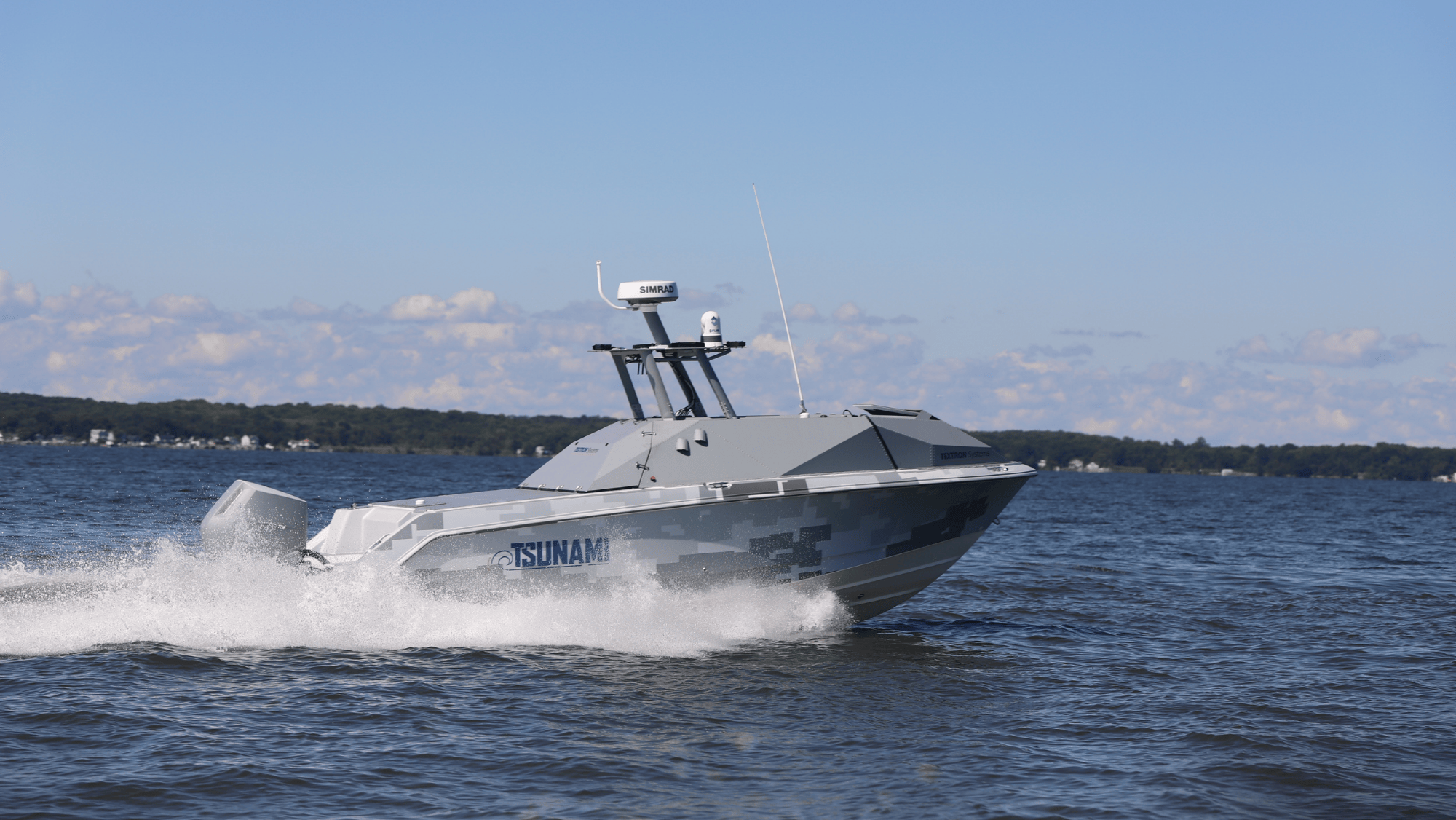
- Textron Systems has received a Neya Systems subcontract to convert TSUNAMI 25 unmanned surface vessels for fuel distribution.
- The integrated concept combines maritime and ground vehicles using N-Drive autonomy and mission management software.
- The programme includes options for up to 11 additional vessels, while operational deployment and follow-on procurement remain unconfirmed.
Textron Systems has received a subcontract from Neya Systems to convert TSUNAMI 25 unmanned surface vessels for an autonomous military fuel distribution programme. The work will integrate maritime transport with unmanned ground vehicles and mission management software, allowing the US Army to evaluate a distributed approach to delivering fuel across different operating environments.
Textron disclosed the subcontract on 18 November 2026. The agreement follows Neya’s selection for a $5.9 million prototype programme through the US Army’s Defense Industrial Base Accelerator initiative earlier in the year. The new development establishes Textron’s specific role in adapting the maritime equipment rather than representing a separate Army award of the same value.
The subcontract also includes a potential follow-on effort covering options for up to 11 TSUNAMI vessels. Those quantities are not confirmed production orders, and Textron has not disclosed the number of vessels included in the initial conversion work or the value of its subcontract. The programme remains at the prototype and demonstration stage.
Neya Systems, a subsidiary of Applied Research Associates, is leading the integrated development. Its partners include Textron, which will supply and adapt the unmanned surface vessels, and AM General, which will contribute unmanned ground vehicles. Neya will provide autonomy and mission management capabilities through its N-Drive software and Mission Planning and Management System.
The proposed system is intended to move fuel across long distances without requiring a conventional crewed transport for every stage of the journey. Neya’s concept involves unmanned vessels carrying fuel over maritime routes exceeding 100 nautical miles before reaching a shore transfer point. Fuel would then be distributed to ground vehicles for onward transport.
That operating concept creates an integrated logistics task rather than an independent maritime mission. The surface vessel must reach a suitable transfer location, the receiving equipment must be available, and the ground vehicles must be ready to continue distribution. Delays or technical failures at one stage can affect the wider delivery schedule.
The TSUNAMI 25 platform provides an existing unmanned vessel architecture that can be adapted for the new requirement. Textron’s conversion work will need to accommodate fuel carriage and the interfaces required for an integrated logistics system. The company has not published the final tank arrangement, fuel capacity, transfer equipment, or detailed engineering configuration.
Transporting liquid fuel introduces different physical requirements from carrying many conventional surveillance or communications payloads. Fuel mass affects vessel loading and stability, while the movement of liquid within a partially filled tank can influence how a vessel responds to changes in speed and direction.
Tank positioning, securing arrangements, and the relationship between payload mass and vessel operation must therefore be addressed during integration. The engineering task also involves considering how fuel is loaded, retained during transport, and transferred at the destination. The final design will depend on the fuel type, required capacity, and operating conditions specified for the demonstration.
The companies have not identified the particular pumps, hoses, valves, sensors, or transfer connections selected for the prototype. Such equipment would need to be compatible with the vessel and receiving platforms, but its presence cannot be assumed until the conversion configuration is disclosed.
Fuel handling also creates requirements for containment, monitoring, and maintenance. Leaks or contamination can affect the delivered material and the safe operation of the equipment, while transfer procedures must account for the relationship between the vessel, receiving location, and connected systems.
Moving fuel from a maritime vessel to ground transport adds a further interface. The two vehicle types operate under different physical conditions and have distinct loading arrangements, electrical systems, and control equipment. Their integration will need to establish how transfer operations are initiated, monitored, and completed.
Mission management software provides the coordinating element. Neya’s Mission Planning and Management System is intended to orchestrate multiple vehicles, while N-Drive supports vehicle autonomy. The programme aims to enable one operator to supervise a distributed fleet with limited intervention, although that capability has not been demonstrated publicly as a qualified operational system.
Coordinating several vehicles requires information about their positions, status, routes, and assigned tasks. A maritime vessel arriving at a transfer point must be incorporated into a wider schedule that accounts for receiving capacity and onward distribution. The system also needs to respond appropriately when equipment is delayed or unavailable.
Communications reliability will influence those functions, particularly during long-distance operations. An unmanned surface vessel may encounter periods of reduced connectivity or interruptions to communication with its supervisory system. The level of autonomy available during such conditions depends on the vehicle’s installed capabilities and the procedures governing its operation.
Neya has not disclosed a complete communications architecture or detailed contingency procedures for the integrated demonstration. The proposed ability to supervise several platforms should therefore be treated as a development objective rather than evidence that the system can already complete every intended task without human intervention.
The distributed approach is intended to reduce reliance on large crewed logistics convoys, which can be difficult to protect and may require substantial personnel support. Using several smaller unmanned platforms could provide alternative routes for moving fuel where conventional transport is constrained.
That arrangement introduces different logistical demands rather than eliminating the need for support. Smaller vehicles may carry less fuel per journey, increasing the number of movements required to deliver a given quantity. The fleet must also be maintained, supplied with spare parts, loaded, and recovered or serviced as necessary.
The industrial value of the demonstration will depend partly on how those trade-offs are measured. Delivery volume, journey time, equipment availability, personnel requirements, and maintenance demands will influence whether the arrangement offers advantages over established methods. The participating companies have not released comparative operational data.
Textron’s work will also require compatibility between its vessel control arrangements and Neya’s mission management software. Autonomy software, navigation equipment, communications interfaces, and vehicle status information must operate together within a coherent configuration. Integration testing will establish whether the converted vessels can perform their assigned tasks as part of the wider system.
AM General’s contribution adds the ground transport element, creating a programme involving different vehicle manufacturers and software technologies. Agreed interfaces, testing procedures, and technical responsibilities will be necessary to ensure that the combined equipment functions as intended.
The initial Army prototype award followed the Defense Industrial Base Accelerator competition held in Philadelphia in August 2026. Textron’s November subcontract advances that programme by establishing a defined maritime conversion activity, with further vessel options available if subsequent requirements justify them.
No military deployment date, confirmed operational production quantity, or completed system demonstration has been announced. The next milestones are conversion of the initial TSUNAMI vessels, integration with Neya’s software and AM General’s ground equipment, and testing of the proposed fuel distribution process.
Successful testing would establish whether autonomous maritime transport, transfer operations, and ground distribution can function as a coordinated logistics system. The results will inform any later decisions on additional vessels, further development, and possible military acquisition.