IN Brief:
- Two additional MH-60R helicopters have arrived at HMAS Albatross, increasing the Royal Australian Navy's fleet from 23 to 25.
- Eleven further deliveries are expected over approximately two years, ultimately expanding the fleet to 36 aircraft.
- The programme supports 75 additional sustainment positions at Nowra, with the first two helicopters expected to enter service in April 2027.
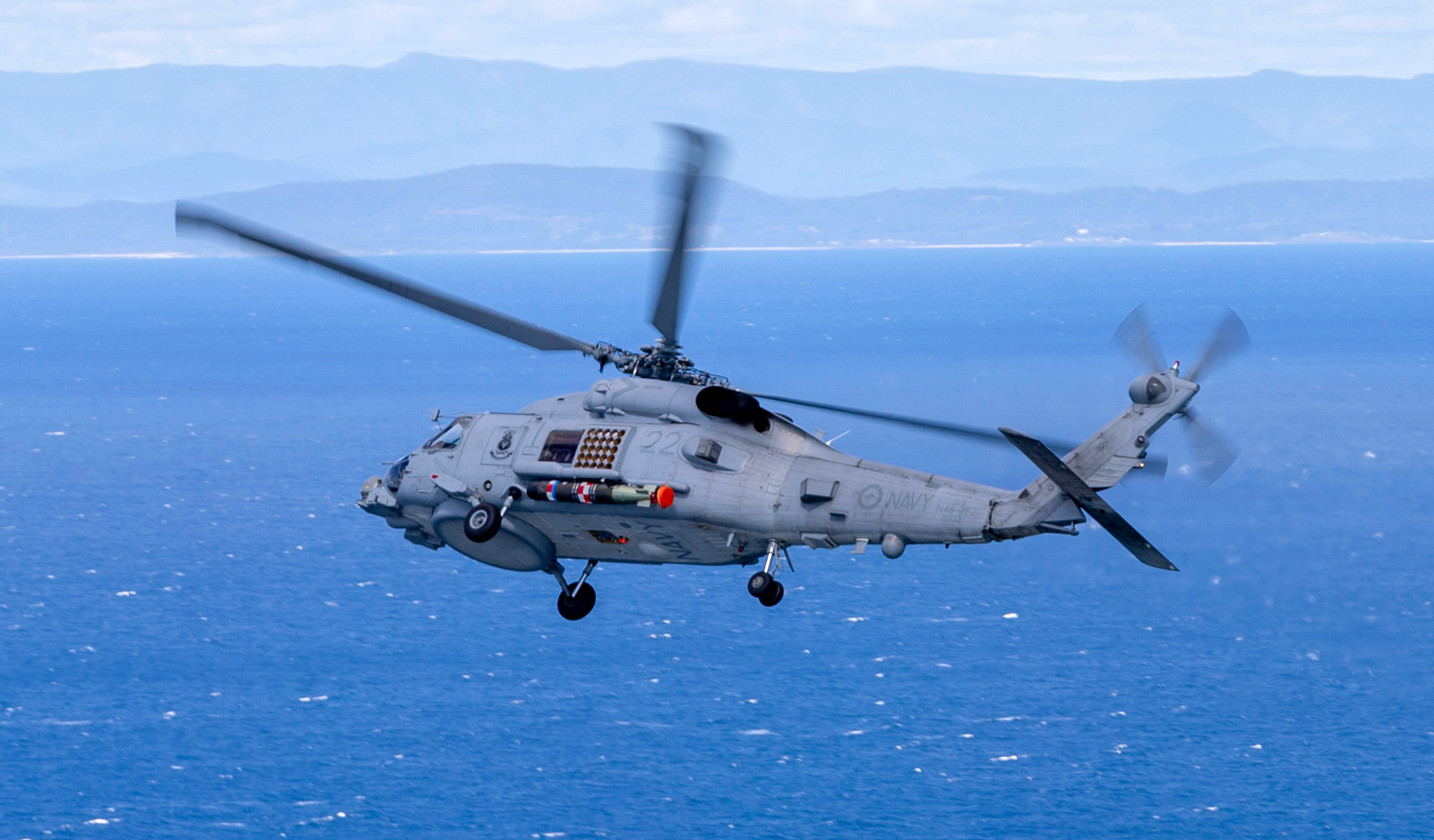
Australia has received two additional MH-60R Seahawk helicopters at HMAS Albatross in Nowra, beginning deliveries under a programme to expand the Royal Australian Navy’s fleet by 13 aircraft. The new helicopters increase the fleet from 23 to 25, with the remaining 11 expected to arrive over approximately two years and support a final total of 36.
The aircraft arrived on 19 November 2026 as part of Australia’s A$2.5bn investment in the MH-60R capability over the decade. They were manufactured by Sikorsky, a Lockheed Martin company, and will undergo Australian configuration work before entering operational service. Defence Minister Richard Marles said the first two aircraft were expected to become operational in April 2027.
That interval between delivery and service entry reflects the work required to incorporate newly manufactured aircraft into an established national fleet. The Australian government has not itemised the modifications planned for these helicopters, although Marles confirmed that their underlying configuration remains broadly consistent with the existing fleet. Changes to individual equipment or software installations must be completed and checked before the aircraft can be released for their intended duties.
The MH-60R provides airborne surveillance and weapons capability to surface warships, particularly for anti-submarine and anti-surface warfare. It can also undertake intelligence collection, search and rescue, logistics support and personnel transfers. Operating from a frigate allows the helicopter to extend the area that can be surveyed beyond the ship’s immediate sensor coverage.
Anti-submarine operations depend on the helicopter’s ability to gather and interpret acoustic information. The MH-60R can employ sonobuoys and an airborne dipping sonar, enabling crews to examine suspected submarine activity in areas selected during a mission. These acoustic systems operate alongside navigation, communications and tactical processing equipment, allowing information to be assessed aboard the aircraft and passed to other naval units.
Surface surveillance uses a different combination of sensors. Radar can detect and track contacts under suitable operating conditions, while electro-optical and infrared equipment supports visual and thermal observation. The effectiveness of each sensor depends on factors including weather, target characteristics, distance and the aircraft’s operating position. Combining their outputs helps crews assess contacts that may be difficult to identify through a single source.
The helicopter’s weapons and mission systems allow a ship to employ aircraft in tasks that would otherwise be constrained by the range of its own sensors and equipment. This extends the number of options available during naval operations, but it also creates a requirement for trained aircrews, maintenance personnel, compatible shipboard facilities and reliable aircraft availability.
Expanding the fleet to 36 therefore involves a larger sustainment commitment as well as additional aircraft purchases. Lockheed Martin Australia and Sikorsky Australia support the Seahawk fleet at Nowra, where the programme is expected to underpin 75 additional skilled positions. The work includes specialist maintenance, engineering, logistics and supply chain support associated with operating the larger fleet.
The additional positions were included in earlier government plans for the expansion of Australian Seahawk sustainment. Their inclusion in the November delivery announcement does not represent a separate new employment award. The current milestone is the arrival of the first two additional helicopters, allowing configuration, maintenance preparation and training activity to proceed with the actual aircraft.
Naval helicopters operate in conditions that impose particular demands on their mechanical and electronic systems. Exposure to salt water, humidity and repeated operation from ships requires corrosion inspection and preventive maintenance, while engines, transmissions, rotor systems and mission equipment are subject to their own servicing requirements. A larger fleet increases the volume of technical work that the sustainment organisation must plan and complete.
Maintenance activity also has to be coordinated with operational commitments. Aircraft undergoing scheduled servicing cannot be assigned to flying tasks until the required work has been completed, while unexpected defects may require additional repairs or replacement components. Expanding fleet numbers can provide more flexibility, although the number of helicopters available on any given day will depend on how effectively those maintenance demands are managed.
The Nowra support arrangements provide an established industrial base for the expansion. Existing facilities, technicians, engineering processes and component management systems can continue to support the aircraft type as further deliveries arrive. Commonality across the fleet may simplify some training and maintenance activities, but different production batches still require configuration records and controlled incorporation of approved modifications.
Australia’s dependence on overseas manufacture remains an important distinction from its domestic sustainment capability. The helicopters are produced through Lockheed Martin’s US industrial arrangements, while substantial maintenance and support activity takes place in Australia. Local engineering capacity can support the availability of delivered equipment, but it does not eliminate the need for specialist components, technical information or production activity supplied from abroad.
The delivery programme has already experienced manufacturing and supply chain constraints. Marles acknowledged delays affecting Lockheed Martin’s production arrangements and said Australia had worked with the company to secure the two aircraft now delivered. He expects the remaining 11 to arrive during the following two years but could not provide a detailed sequence for individual deliveries.
That uncertainty affects the planning of both fleet growth and associated support work. Maintenance organisations need sufficient personnel and equipment to accommodate incoming aircraft, while operators must coordinate acceptance, configuration changes and training against the delivery sequence. An uneven arrival pattern can change when additional capacity becomes available even if the ultimate fleet target remains unchanged.
HMAS Albatross is the principal home of the Royal Australian Navy’s Fleet Air Arm, combining operational aviation activity with supporting technical functions. Its established Seahawk infrastructure provides a base for introducing the additional aircraft without creating an entirely separate support organisation. The enlarged fleet will also generate greater long-term demand for specialist engineering personnel and qualified maintenance processes.
The acquisition forms part of Australia’s wider investment in maritime capability and the defence industrial workforce. The immediate requirements are completion of the national modifications and preparation of the first two aircraft for service in April 2027. Subsequent deliveries will progressively increase the fleet towards 36 helicopters, with their operational availability depending on the sustainment capacity developed alongside them.