IN Brief:
- The Dutch Ministry of Defence signed four contracts with Flensburger Fahrzeugbau Gesellschaft at the NEDS exhibition in Rotterdam on 19 November.
- The procurement includes Armoured Combat Support Vehicles and WiSENT-2 heavy recovery vehicles, selected under previously announced modernisation plans.
- Van Halteren Technologies will assemble and maintain the vehicles in the Netherlands, supported by domestic component and protection material suppliers.
The Netherlands has signed four contracts with Flensburger Fahrzeugbau Gesellschaft (FFG), advancing the acquisition of tracked support and recovery vehicles for the Dutch Army. The agreements were concluded at the NEDS defence exhibition in Rotterdam on 19 November 2026, following the government’s selection of the German manufacturer for several vehicle requirements in October.
State Secretary for Defence Derk Boswijk signed the contracts as part of a wider programme of approximately 15 agreements involving more than ten companies. The Dutch government placed the combined value of those agreements above €1.5bn, covering equipment and partnerships across several military domains. It did not disclose a separate value for the four FFG contracts or provide a complete public breakdown of their individual quantities.
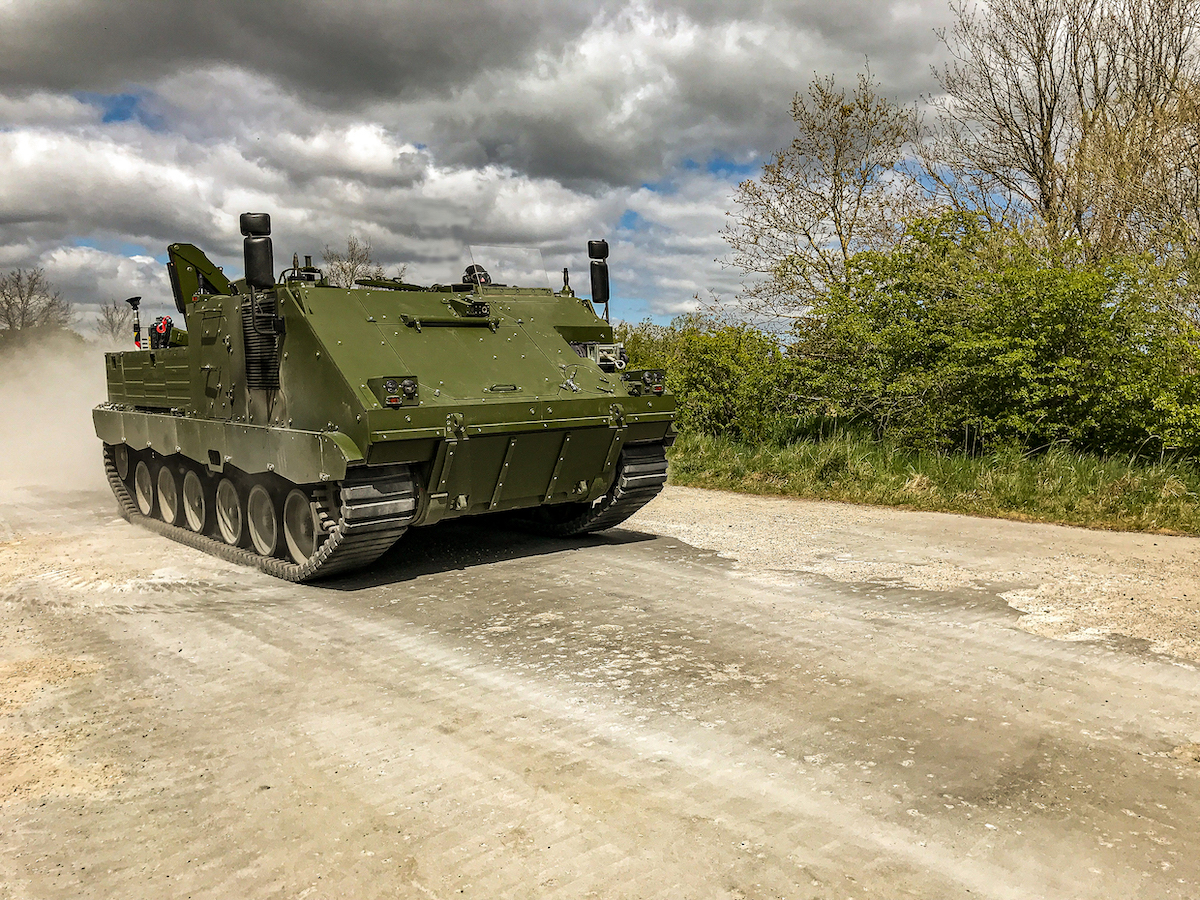
The procurement includes Armoured Combat Support Vehicles (ACSV) and WiSENT-2 heavy armoured recovery vehicles. Both types provide capabilities required to support mechanised formations, rather than performing the same functions as infantry fighting vehicles or main battle tanks. Their acquisition forms part of a broader effort to equip the Dutch Army’s heavy and medium formations with additional vehicles and support equipment.
The selection of FFG was made public on 26 October, when the Ministry of Defence outlined plans to acquire new armoured vehicles alongside additional CV90 infantry fighting vehicles, bridge-laying equipment and systems intended to clear obstacles. The November signing represents the transition from those announced procurement intentions to contractual commitments for the FFG equipment.
ACSV is a tracked platform developed to perform several specialist duties using a related vehicle architecture. The Netherlands has identified ambulance, command post, mine-laying and driver training configurations among its requirements. Each has different equipment and internal arrangements, but the common platform provides opportunities to share automotive components, maintenance procedures and engineering support.
An ambulance variant must accommodate casualties and medical personnel, while retaining the mobility and protection needed to accompany military vehicles over difficult terrain. A command post configuration requires communications and information equipment, with additional provision for electrical distribution, operator workstations and environmental control. Mine-laying and training variants introduce further requirements for mission equipment and vehicle layout.
Commonality can reduce the number of distinct mechanical systems that maintenance personnel must support, although it does not eliminate differences between variants. Changes to the internal installation, electrical equipment or vehicle mass require suitable integration and qualification. Manufacturers must also maintain configuration records so that replacement components, technical documents and maintenance instructions correspond to the equipment actually delivered.
The WiSENT-2 addresses heavy battlefield recovery, a different engineering requirement from the ACSV’s support roles. Recovery vehicles are used to retrieve immobilised or damaged equipment and move it to locations where maintenance can be carried out. They must combine substantial towing and lifting capability with the mobility and protection required to operate near the formations they support.
Recovery tasks can impose considerable mechanical loads on a vehicle’s chassis, drivetrain and recovery equipment. The equipment’s position, the weight of the vehicle being recovered and the condition of the ground influence how an extraction can be conducted. Appropriate recovery capacity helps ensure that a mechanical failure or immobilisation does not leave an otherwise repairable vehicle unavailable for longer than necessary.
The Dutch requirement includes support for heavy equipment such as the Leopard 2A8 tank and CV90 infantry fighting vehicle. Recovering these platforms requires engineering equipment suited to their mass and operating environment. The exact configuration delivered to the Netherlands will be determined through the contracted requirements and subsequent technical acceptance process.
FFG’s appointment creates work for several Dutch industrial partners. Van Halteren Technologies will undertake local assembly of both the ACSV and recovery vehicles, and is also expected to provide maintenance. This establishes a domestic role extending beyond the purchase of completed equipment from Germany, with activities continuing after the vehicles enter service.
KONI Nederland and Neways Electronics have been identified as component suppliers, while Avient Protective Materials will provide specialist fibres for ballistic protection associated with the ACSV. The companies contribute different manufacturing capabilities, requiring coordination between mechanical production, electronic equipment, protection materials and final vehicle integration.
Ballistic protection components must be incorporated into the vehicle structure without compromising essential operating requirements. Material performance, fastening arrangements, coverage and the interaction between protection systems and other equipment all influence the finished configuration. The government has identified Avient’s material supply role but has not disclosed the protection levels or detailed construction of the Dutch vehicles.
Local assembly also requires suitable inspection and testing. Mechanical assemblies, electrical installations and mission equipment must be checked against the approved configuration before vehicles are accepted. The availability of technical documentation, qualified personnel and specialist diagnostic equipment will influence how efficiently Dutch companies can undertake both initial assembly and subsequent maintenance.
Production capacity remains relevant to the acquisition schedule. Several European governments are increasing orders for armoured equipment, placing additional demands on manufacturers and their component suppliers. The Netherlands has previously identified the importance of securing production capacity and managing subsystem integration risks as its vehicle programmes progress.
Manufacturing and delivering a base platform does not necessarily mean every specialist system is ready for operational use. Command equipment, medical installations or other mission components may require separate testing and integration. The delivery and acceptance process must therefore establish which functions are available on each vehicle and whether further work remains before it can enter its intended role.
The four FFG contracts sit alongside other agreements signed at NEDS, including separate arrangements for electronic warfare and multinational armoured vehicle cooperation. Those programmes have different suppliers, equipment and procurement structures. The €1.5bn figure announced by the Dutch government refers to the wider group of agreements and must not be attributed solely to FFG.
Further developments will include confirmation of production schedules, the allocation of work to Dutch facilities and the first vehicle acceptance milestones. The contracts establish the procurement and industrial participation framework, while quantities, delivery dates and values for the individual FFG agreements remain undisclosed in the public announcement.