IN Brief:
- Swiss procurement agency armasuisse has selected Thales Suisse to supply Ground Master 200 Multi-Mission All-in-one radar equipment.
- The deployable capability will replace ageing TAFLIR systems scheduled for withdrawal at the end of 2028.
- Swiss industrial participation and the transfer of maintenance technology for critical components formed part of the supplier selection.
Switzerland has selected Thales to supply Ground Master 200 Multi-Mission All-in-one radar equipment, renewing a deployable air surveillance capability that supports the country’s fixed radar network. Federal procurement agency armasuisse confirmed the selection on 19 November 2026, following a competition among European radar manufacturers.
Thales Suisse will supply the GM200 MM/A system as the replacement for Switzerland’s ageing TAFLIR medium-range surveillance radars, which are scheduled for withdrawal at the end of 2028. The acquisition forms part of the 2026 Armament Programme and follows parliamentary approval of the planned investment. The final contract value, number of radars and delivery timetable were not itemised in the original public announcement.
TAFLIR was introduced during the 1980s and has become increasingly difficult to sustain as its equipment ages. Maintaining older electronic systems can involve limited access to replacement components, specialised repair knowledge and technical support for equipment no longer manufactured in its original configuration. The replacement programme addresses those constraints alongside the need for modern surveillance performance.
Switzerland’s permanently installed surveillance radars provide the foundation of its recognised air picture. Deployable sensors supplement that infrastructure by allowing surveillance coverage to be established at selected locations. A mobile radar cannot eliminate every obstruction caused by terrain, but its position can be changed to provide additional observations in areas where fixed installations have limitations.
Mountainous geography makes radar siting particularly important. Surveillance depends in part on the existence of a suitable path between the antenna and an airborne target, with intervening terrain capable of restricting coverage at lower altitudes. Moving a radar to a different location changes that geometry and may improve observations of particular approaches or operating areas.
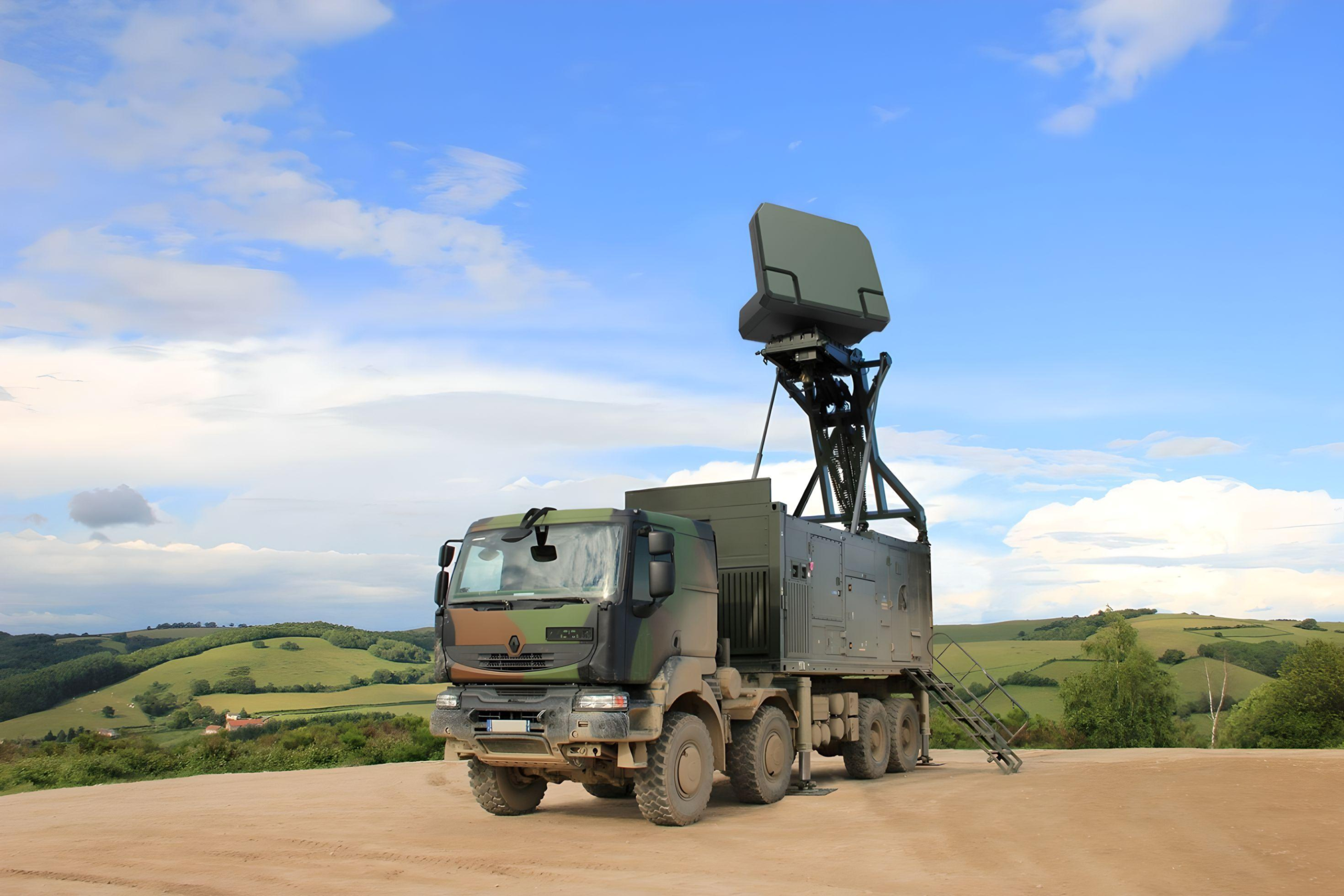
The GM200 MM/A uses electronically scanned radar technology designed to detect and track airborne contacts across several mission requirements. An electronically steered antenna can alter the direction of its observations without depending entirely on mechanical movement. The system’s processing equipment interprets radar returns to produce tracks that can be passed to operators and connected command systems.
Radar tracks depend on measurements collected over successive observations. The system must distinguish relevant returns from background interference and estimate how a contact’s position changes over time. Target characteristics, operating environment and the position of the sensor all influence the quality of the resulting information, making radar performance dependent on more than its nominal detection range.
Thales has developed the GM200 MM/A as an integrated deployable installation, with radar and supporting equipment arranged to facilitate transport and setup. Power generation, communications, the antenna assembly and processing equipment must operate together at the selected site. The final Swiss configuration will determine the exact supporting vehicles, installation procedures and operating arrangements.
The procurement also includes identification functions intended to help operators distinguish cooperating aircraft. Identification Friend or Foe equipment exchanges information with suitably equipped aircraft under defined conditions, providing another source of information for the recognised air picture. It does not replace radar surveillance or independently establish the identity of every aircraft detected by the system.
Radar information becomes more useful when it can be combined with observations from other sensors. A contact seen by several installations may generate separate tracks with different update rates and measurement uncertainties. Command systems must reconcile those inputs before presenting a consistent representation of activity across the monitored area.
Integrating a replacement radar into an existing surveillance architecture therefore involves communications interfaces and information processing as well as the physical installation. Sensor data must reach the appropriate command organisation through approved networks, while the system’s configuration must satisfy the relevant security, reliability and operating requirements.
Armasuisse evaluated several European suppliers before selecting Thales Suisse. The procurement agency identified industrial participation in Switzerland and access to technology needed to repair critical radar components among the advantages of the successful proposal. The announcement did not allocate named manufacturing or maintenance contracts to individual Swiss companies.
Domestic maintenance capability can reduce reliance on sending equipment abroad for selected repairs. Modern radar installations combine specialised electronic assemblies, power equipment, cooling systems and mechanical components, each with different diagnostic and replacement requirements. Establishing local repair capacity requires suitable technical documentation, qualified personnel and access to approved components.
Technology transfer does not automatically provide the ability to manufacture every part of a radar or redesign its controlled electronics. The scope of work that Swiss companies can undertake will depend on the agreements governing technical information, component access, qualification and support. Those arrangements will become clearer as the procurement proceeds into detailed implementation.
Thales’s radar family is already used in several European military programmes, creating an established base of manufacturing and technical experience. Related equipment may provide opportunities for common support practices, although national configurations can differ in communications interfaces, identification equipment and maintenance arrangements.
The Swiss acquisition is distinct from the country’s separate decisions on ground-based air defence weapons. Surveillance radar provides information for detecting and tracking aircraft or other airborne contacts, while an interceptor system performs a different function. Connecting the two capabilities requires suitable command and control arrangements, and selection of the GM200 MM/A does not itself constitute an additional interceptor order.
Preparing for the retirement of TAFLIR will require coordination between deliveries, system installation, training and acceptance testing. The replacement must be integrated into the surveillance network before the older capability is withdrawn if operational continuity is to be maintained. Those activities will determine when the new radars become available for routine military use.
The supplier selection establishes Thales Suisse as the contractor for the renewal programme and identifies domestic industrial participation as part of the procurement approach. Delivery quantities, contract value, named Swiss subcontractors and the final acceptance schedule remain outstanding public details ahead of TAFLIR’s planned withdrawal in 2028.