IN Brief:
- The Netherlands has proposed a €200m Defence Scaleup Fund, with implementation subject to parliamentary approval.
- The fund will target dual-use companies seeking market-based investments starting at €5m, with private investors providing at least half of each round.
- Invest-NL expects operations to begin in early 2027, with the potential to mobilise more than €600m in combined public and private capital.
The Netherlands has proposed a €200m investment fund to help domestic dual-use technology businesses expand manufacturing capacity and move commercially mature products towards series production. The Defence Scaleup Fund will be managed by Invest-NL, with private investors required to provide at least half the capital in each investment round.
The Ministry of Defence, Ministry of Economic Affairs and Climate Policy, and Invest-NL presented the initiative at the NEDS defence exhibition in Rotterdam on 19 November 2026. They aim to establish the fund in early 2027, subject to parliamentary approval. Its legal, financial and operational structure remains under development, and no individual investment has yet been awarded.
The proposed fund will concentrate on businesses that have progressed beyond the earliest stages of technology development but need substantial financing to expand production. Investments will start at €5m, targeting companies whose products have reached a level of technical maturity that supports further commercial and industrial development.
Eligibility will be restricted to dual-use businesses. The Dutch government defines these as companies developing technology with a credible civilian application alongside a defence or security use. The restriction means the proposed fund is not a general financing mechanism for every defence manufacturer or supplier, even where a company is already producing equipment for military customers.
Dual-use technologies can include equipment and software developed for industrial applications that also satisfy particular defence requirements. Sensors, communications components, autonomous systems and specialist electronics may serve customers in both markets, provided the underlying technology can meet the different technical and regulatory conditions. The fund has not yet published its definitive list of eligible sectors or investment criteria.
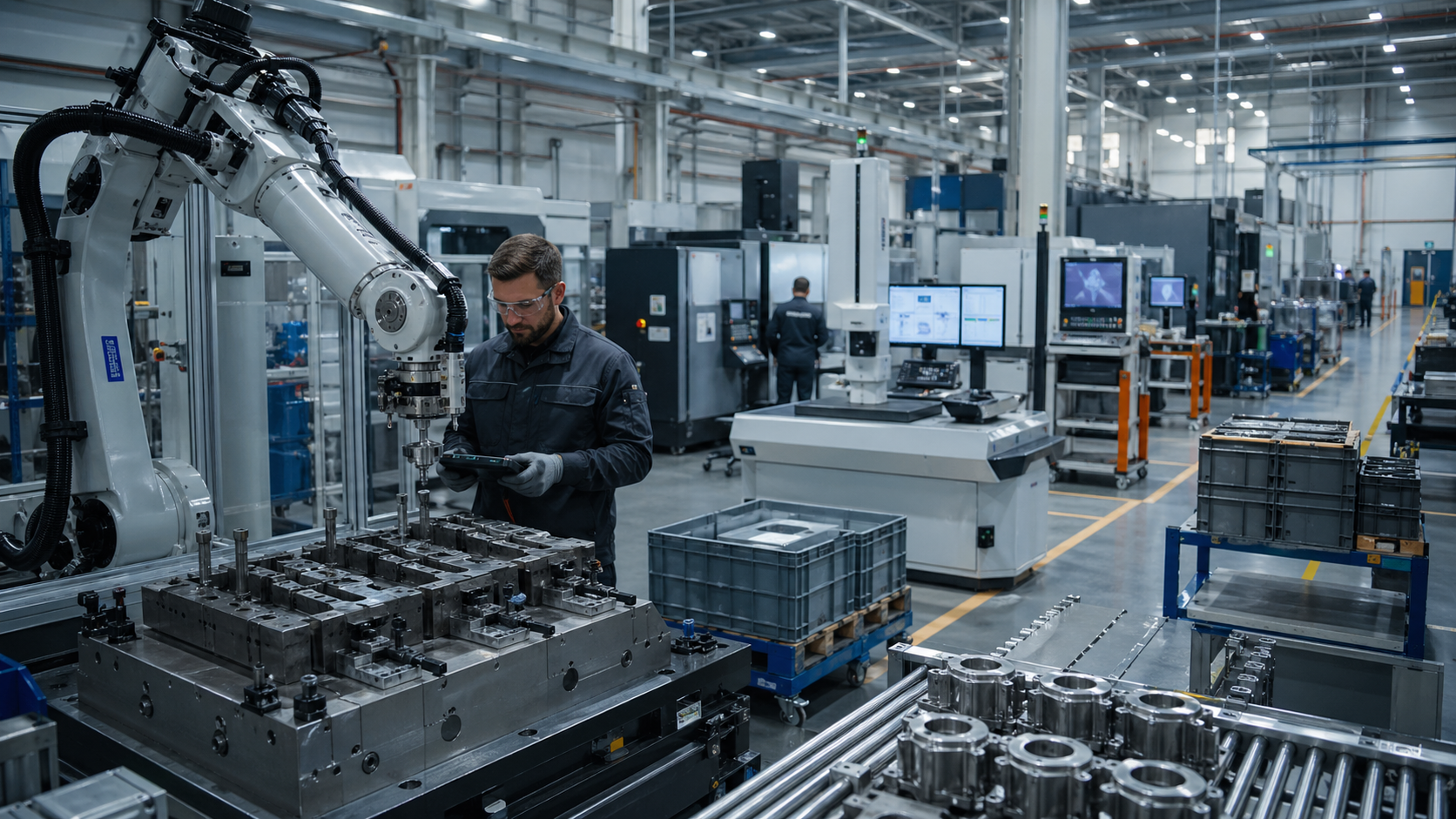
Moving from prototype development to regular production can require substantial capital before a company begins delivering equipment in significant quantities. A working prototype may be assembled using methods that are unsuitable for larger manufacturing volumes. Establishing repeatable processes can involve production tooling, equipment qualification, inspection systems and additional engineering personnel.
Industrial expansion also depends on reliable access to components and materials. A company capable of producing several prototypes may need new supplier arrangements when orders increase. Manufacturing processes must remain consistent across successive units, while changes to materials or component sources may require additional testing before the finished product can be accepted.
These requirements create financing needs that differ from those associated with early research. Once a company has demonstrated its technology, it may still need to fund factory expansion, machinery and working capital before a customer places a sufficiently large production order. In defence markets, the long intervals between equipment development, procurement decisions and delivery can increase the period over which those costs must be financed.
The proposed investment model requires private co-investors to contribute at least half of each round. With €200m of public investment capacity, the government and Invest-NL expect to attract at least €200m of additional private capital, bringing the initial combined investment potential to €400m.
The partners have set a more ambitious objective based on the performance of other Invest-NL funds. They believe total investment could exceed €600m, including approximately €400m from other investors. That higher figure is an aspiration dependent on future financing decisions, rather than money already committed to the new fund.
Private participation means that businesses seeking funding will also need to satisfy commercial investors. Prospective backers may examine the maturity of a product, the cost of increasing production, the number of potential customers and the company’s ability to generate revenue. Market-based financing will therefore remain dependent on investment assessments, even where a technology has potential defence applications.
The Ministry of Defence will guide the fund’s strategic alignment with future military requirements and the public interests associated with national and economic security. The Ministry of Economic Affairs and Climate Policy will help place the mechanism within the Netherlands’ wider public financing system.
Invest-NL will make decisions independently on individual investments, management and eventual exits. This separation between strategic policy direction and investment decisions is intended to place the fund at arm’s length from political decision-making. It also distinguishes the mechanism from military procurement, where a government department contracts directly for specified equipment or services.
An investment in a defence technology company does not amount to an order from the armed forces. A recipient would still need to secure customers and demonstrate that its products meet the applicable technical requirements. Production investment may enable a business to prepare for larger contracts without guaranteeing that those contracts will subsequently be awarded.
Military applications can introduce qualification requirements that are not necessarily present in the original civilian market. Equipment may need to demonstrate performance under vibration, temperature extremes, electromagnetic interference or restricted communications conditions. Companies adapting civilian technology for defence use must account for the engineering and testing costs associated with those requirements.
The fund is part of the Netherlands’ National Programme for Defence Industry and Innovation, which was also presented on 19 November. The wider programme addresses production capacity, innovation and industrial resilience. The Defence Scaleup Fund provides a specific financing instrument within that policy structure, rather than replacing other industrial development measures.
Existing public finance mechanisms will remain available for businesses at different development stages. The government has identified SecFund among the instruments the new fund is intended to complement. By concentrating on later-stage innovation and larger investment rounds, Defence Scaleup Fund is designed to address a financing requirement that may be too large for earlier-stage support arrangements.
The next phase will determine the fund’s final governance, eligibility rules and operational procedures. Invest-NL plans to publish investment criteria, application information and contact details when the mechanism is launched. Until parliamentary approval and those arrangements are completed, the €200m remains a proposed financing commitment rather than an operational fund making investments.