IN Brief:
- Finland has authorised 160 vehicles with an option for up to 100 more.
- The five participating countries are pursuing more than 430 vehicles collectively.
- Industrial participation represents more than 30% of the Finnish procurement value.
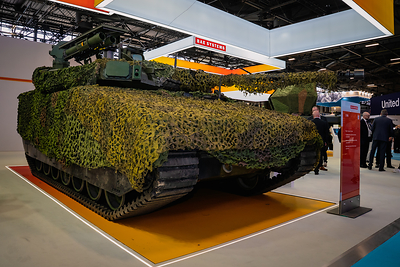
Finland has authorised the purchase of 160 vehicles from BAE Systems Hägglunds under a joint European CV90 procurement programme that could be worth more than €7.5bn. Sweden, Norway, Lithuania, and the Netherlands are participating alongside Finland, with the combined acquisition expected to encompass more than 430 vehicles.
Finnish Defence Minister Antti Häkkänen authorised the national acquisition on 26 November. Finland has allocated €2.835bn to its Infantry Fighting Vehicle 2030 project, with the initial vehicle acquisition accounting for €1.955bn excluding VAT. An option for up to another 100 vehicles gives Finland a mechanism to expand the fleet subsequently without treating those additional purchases as firm orders today.
The Finnish procurement covers the CV9035 Mk IV Nordic Edition alongside supporting equipment and services, including maintenance resources, spare parts, testing equipment, technical documentation, licences, and training. The army expects to begin introducing the vehicles in 2030 as it progressively replaces its BMP-2 fleet. Sweden is leading the joint acquisition process.
Finland's authorisation does not itself conclude all five national purchasing arrangements. The aggregate value will depend on the orders completed by the participating countries, while the financial scope of each national programme may include different equipment support and associated services. The Finnish project budget cannot be divided by the vehicle count to obtain a representative unit price for the multinational programme.
The acquisition establishes a substantial role for Finnish industry. Patria Land will be the principal manufacturer's industrial partner in Finland, and subcontracting work is envisaged for more than ten domestic companies. The industrial participation arrangements represent more than 30% of the Finnish procurement value, according to the defence ministry, which estimates an employment effect equivalent to around 550 person-years.
That employment measure represents the aggregate amount of work expected to be generated rather than a commitment to create 550 permanent positions. The work will be distributed over the programme, with its effect on individual manufacturers dependent on the allocation of subcontracting responsibilities.
Patria's participation builds on an existing relationship with the Finnish defence authorities. In 2025, the government authorised a series of separate purchases of defence system services from domestic suppliers. These included an agreement valued at approximately €62.4m excluding VAT with Patria Aviation. While unrelated to the new land vehicle order, such contracts demonstrate the established role of Finnish industry in equipment support alongside procurement from foreign manufacturers.
The new vehicle programme also introduces an EU financing component. Finland intends to use loans granted under the Security Action for Europe (SAFE) instrument during 2029 and 2030 to fund part of the acquisition. SAFE establishes a financing route for participating governments undertaking defence investment, rather than a grant payable directly to the vehicle manufacturer.
European cooperation extends beyond the financing arrangements. A joint procurement creates a common commercial programme for the manufacturer, avoiding some of the duplication that would arise if each country negotiated a separate acquisition independently. The extent of commonality will depend on the final national configurations and arrangements for associated support.
The Finnish decision follows earlier orders for CV90 vehicles in other European countries. Denmark, for example, increased its planned fleet to 159 vehicles in 2025 and has now commissioned associated simulator equipment under a separate contract. These orders represent distinct customer commitments and should not be added to the newly announced five-country total.
Larger multinational orders can provide a longer planning horizon for the original equipment manufacturer and its subcontractors. Separate maintenance and training commitments also generate work beyond the initial delivery of completed vehicles. The inclusion of domestic industrial participation in the Finnish programme means that some of this expenditure will be distributed through Finnish companies rather than concentrated at the principal manufacturing site in Sweden.
The allocation of contracts to local businesses will determine the extent of that contribution in practice. Finnish industrial partners will also have to establish their individual contractual responsibilities and the quality requirements applicable to their work, which may differ between component supply, engineering services, and maintenance provision.
The Finnish government has committed funding to its national project and established a planned service introduction date. Completion of the wider multinational purchasing process will provide greater clarity over the size of the combined order and its delivery schedule. For Finland, the industrial participation arrangements and subsequent procurement of support services will remain important elements of the programme alongside the arrival of the first vehicles in 2030.