IN Brief:
- Embraer and ALADA signed the framework agreement in Brasília on 25 November.
- The partnership builds on an April memorandum of understanding covering Latin American and African opportunities.
- Embraer reported a $6.1bn defence and security backlog at the end of the third quarter.
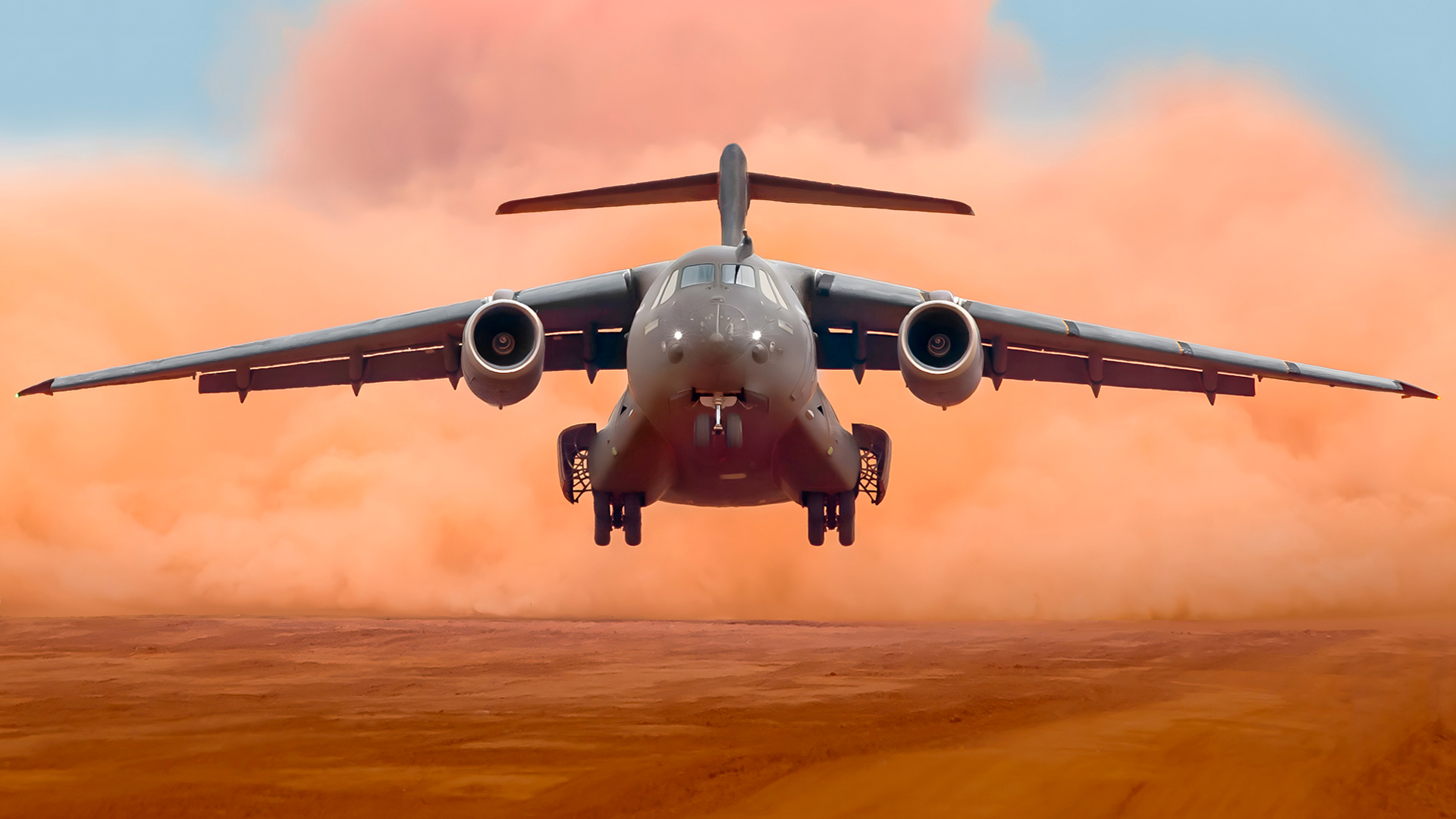
Embraer has signed a framework agreement with Brazilian public aerospace company ALADA, creating an additional route for international customers to acquire KC-390 Millennium and A-29 Super Tucano aircraft through government-to-government procurement. The companies signed the agreement at the Mostra BID defence industry exhibition in Brasília on 25 November.
The agreement follows a memorandum of understanding signed at the FIDAE aerospace exhibition in Santiago, Chile, on 7 April. That initial arrangement focused on examining opportunities in Africa and Latin America where prospective customers use intergovernmental acquisition mechanisms. The new framework advances the commercial relationship without identifying a first customer, order value, or delivery schedule.
ALADA is a comparatively recent addition to Brazil’s public aerospace infrastructure. Legislation signed on 2 January 2025 authorised its creation as a subsidiary of NAV Brasil, the state-owned air navigation services company. NAV Brasil records the date of ALADA’s formal incorporation as 28 July 2025, making the distinction between legislative approval and the establishment of the business important to the chronology of the partnership.
The subsidiary was established to support Brazilian aerospace projects, including the commercial development of the country’s space programme. Its responsibilities include bringing government entities and industry together to develop prospective business, while its legal remit extends beyond space infrastructure to aerospace equipment and projects. The agreement with Embraer gives the organisation a role in aircraft exports within that broader remit.
An intergovernmental purchase differs from a direct commercial sale in the contractual relationship between the importing country, the exporting country, and the manufacturer. Depending on the applicable procurement regime, the government-level agreement can establish responsibilities for acquisition and oversight, with manufacturers undertaking equipment supply and associated services under the resulting contractual arrangements. Neither Embraer nor ALADA has indicated that the framework replaces the manufacturer’s existing direct sales channels.
Embraer’s defence business has expanded significantly over the past year. Its October order backlog disclosure put the division’s outstanding commitments at $6.1bn, an increase of 56% compared with the third quarter of 2025. The company’s total order backlog reached $35.7bn, up 14% year on year, with commercial and executive aircraft accounting for substantial portions of the total.
The geographical distribution of the KC-390 customer base already extends well beyond Brazil. Embraer identifies Portugal, Hungary, Austria, the Netherlands, Czechia, Sweden, and Lithuania among the European countries that have selected the aircraft, alongside customers in Asia, the Middle East, and Latin America. Selection is not necessarily equivalent to a completed contract, so the list should not be interpreted as an additional order book.
Colombia’s order for two KC-390 aircraft was identified in Embraer’s November investor presentation as a further development in its Latin American business. The company also reported an expansion of its agreement with Sweden covering training resources. These activities illustrate the range of services that can accompany the acquisition of an aircraft, beyond manufacturing and delivering the airframe itself.
Embraer’s third-quarter results recorded 66 aircraft deliveries across its businesses, including one KC-390 and two A-29 aircraft. The remaining deliveries comprised 22 commercial aircraft and 41 executive jets. Group revenue reached $2.3bn for the quarter, the highest third-quarter revenue reported by the company. The deliveries and backlog measure different aspects of performance: the former records completed handovers, whereas the latter represents contractual work still to be fulfilled.
International support commitments continue after aircraft deliveries. Embraer’s services business includes logistics arrangements, technical training, spare parts provision, and maintenance support. Its ability to offer these activities alongside aircraft production gives international customers a basis for negotiating support requirements within individual acquisition packages, rather than relying on the purchase price alone when assessing the cost of introducing a fleet.
The ALADA agreement adds a government-backed commercial channel at a time when Embraer is already managing rising demand across several manufacturing businesses. Increasing aircraft deliveries requires the coordination of customer schedules with supplier commitments, workforce availability, and acceptance activities. An export framework does not itself expand those resources, and prospective orders negotiated through ALADA will still need to be accommodated within the manufacturer’s production plans.
Brazil’s public aerospace organisation and Embraer have now moved from assessing the government-to-government model to agreeing a framework for its use. The value of the new relationship will become measurable when individual customer agreements are concluded and their aircraft, support, and delivery commitments enter the manufacturer’s contractual backlog.