IN Brief:
- Thailand proposes combining its final two Gripen procurement phases into one project.
- Budget preparation is planned for 2027, with project commencement envisaged in 2028.
- The existing SEK5.3bn order includes a separate long-term industrial offset agreement.
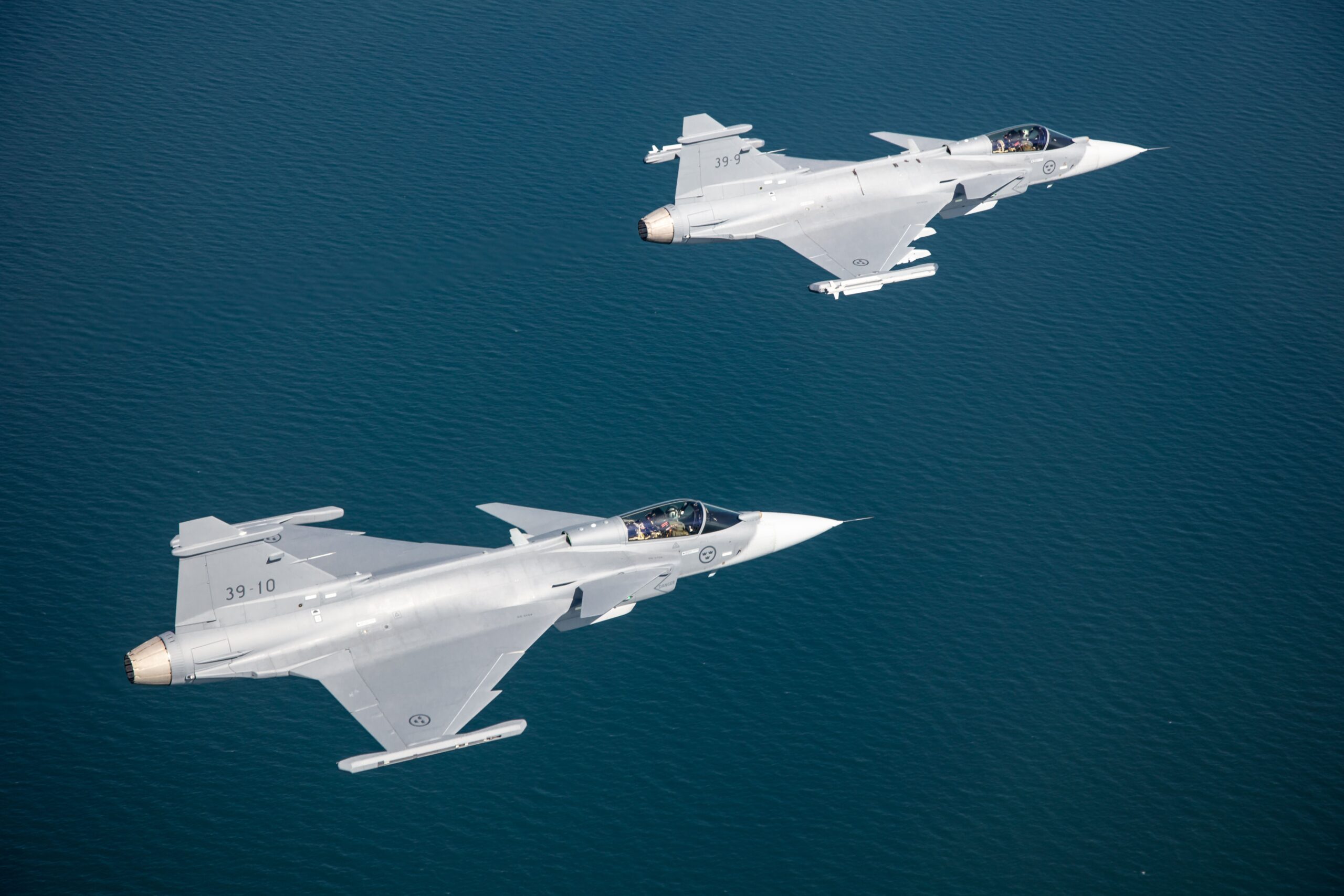
Thailand is preparing to combine the final two phases of its Saab Gripen E/F acquisition into a single eight-aircraft project, extending an existing procurement programme that includes commitments to develop domestic aerospace engineering capabilities.
Air Chief Marshal Sakesan Kantha outlined the proposal on 25 November, and the Royal Thai Air Force subsequently confirmed the planned consolidation on 26 November. Project and budget preparation is expected during 2027, with commencement envisaged in 2028. The proposed purchase would bring Thailand’s planned fleet of the latest Gripen variants to 12 aircraft, subject to government approval and funding.
Saab secured its initial Thai Gripen E/F order in August 2025 under a SEK5.3bn contract with the Swedish Defence Materiel Administration, known as FMV. The agreement covers three Gripen E aircraft and one Gripen F alongside associated equipment, training, and support, with contractual deliveries extending to 2030. It does not include the eight aircraft now being considered.
Sweden’s parliament has previously authorised the government to enter agreements covering up to 12 Gripen E/F aircraft for Thailand. That authorisation provides scope for the additional acquisition but does not substitute for a Thai purchasing decision or an order placed with Saab. A consolidated project could change the allocation of funding and procurement responsibilities without necessarily changing the eventual manufacturing timetable.
The existing order is accompanied by a separate long-term offset contract between Saab and the Royal Thai Air Force. The arrangement includes industrial cooperation, technology transfer, and investment, reflecting Thailand’s ambition to retain a greater proportion of the engineering work associated with its aerospace procurement programmes.
In May, Saab Thailand’s country manager outlined plans to identify domestic manufacturing partners capable of producing selected aircraft components. The company has also discussed establishing a research and development centre in Thailand to support engineering cooperation and personnel development. Neither the allocation of specific manufacturing packages nor the capacity of the proposed centre has been confirmed in connection with the latest procurement proposal.
The Thai air force reported further progress on the offset programme during 2026, including intellectual property and technology transfer arrangements and postgraduate scholarships in Sweden. The educational component includes aerospace engineering studies at the KTH Royal Institute of Technology. These commitments extend industrial participation beyond the assembly or delivery of individual aircraft.
Developing qualified domestic suppliers requires more than identifying companies with relevant machinery and personnel. Aerospace manufacturing customers typically require documented quality systems, traceable materials, and evidence that completed components meet the applicable engineering requirements. A manufacturer introducing work at a new supplier must also establish the relevant documentation and inspection arrangements before that supplier can enter routine production.
Such development activities can take place independently of the manufacturing schedule for completed aircraft. An offset programme can therefore extend across several years, creating opportunities for suppliers and educational institutions even where the underlying acquisition initially involves overseas manufacture. The amount of work ultimately undertaken domestically depends on the scope of the agreements and the capabilities established by the participating businesses.
Thailand has operated Gripen C/D aircraft since 2011, providing an existing base of personnel, facilities, and experience with Saab equipment. The newer E/F variants introduce different engineering and support requirements, however. Training, maintenance documentation, and replacement equipment arrangements must be adapted to the aircraft actually delivered, rather than assuming that all resources used for an earlier variant will remain interchangeable.
The original procurement encompasses support and training alongside the aircraft, establishing some of the resources required for that transition. Introducing additional aircraft under a subsequent agreement would require further coordination of personnel development, maintenance infrastructure, and supplier commitments with the delivery schedule negotiated for the expanded fleet.
Saab is also managing export orders from other Gripen E/F customers. In July 2026, the company announced a further agreement with Embraer to expand Gripen production capacity, reflecting the broader industrial cooperation established through Brazil’s acquisition programme. The Brazilian arrangements are distinct from Thailand’s offset commitments, but illustrate the manufacturer’s wider use of international industrial partnerships.
Thailand’s proposed consolidation of the final procurement phases remains a planning decision rather than a confirmed order. The next milestones are the preparation of a detailed project budget and the government’s funding decision, while work continues under the existing four-aircraft contract and its associated industrial cooperation programme.