IN Brief:
- AeroForce X has a 26-metre wingspan, around 1.3 tonnes of mission payload, and targeted endurance of up to 40 hours.
- Aerodata has publicly rolled out the first prototype at Strausberg, with further testing and first flight planned later in 2026.
- The ITAR-free modular platform is being developed for ISR, electronic reconnaissance, maritime surveillance, and critical-infrastructure protection.
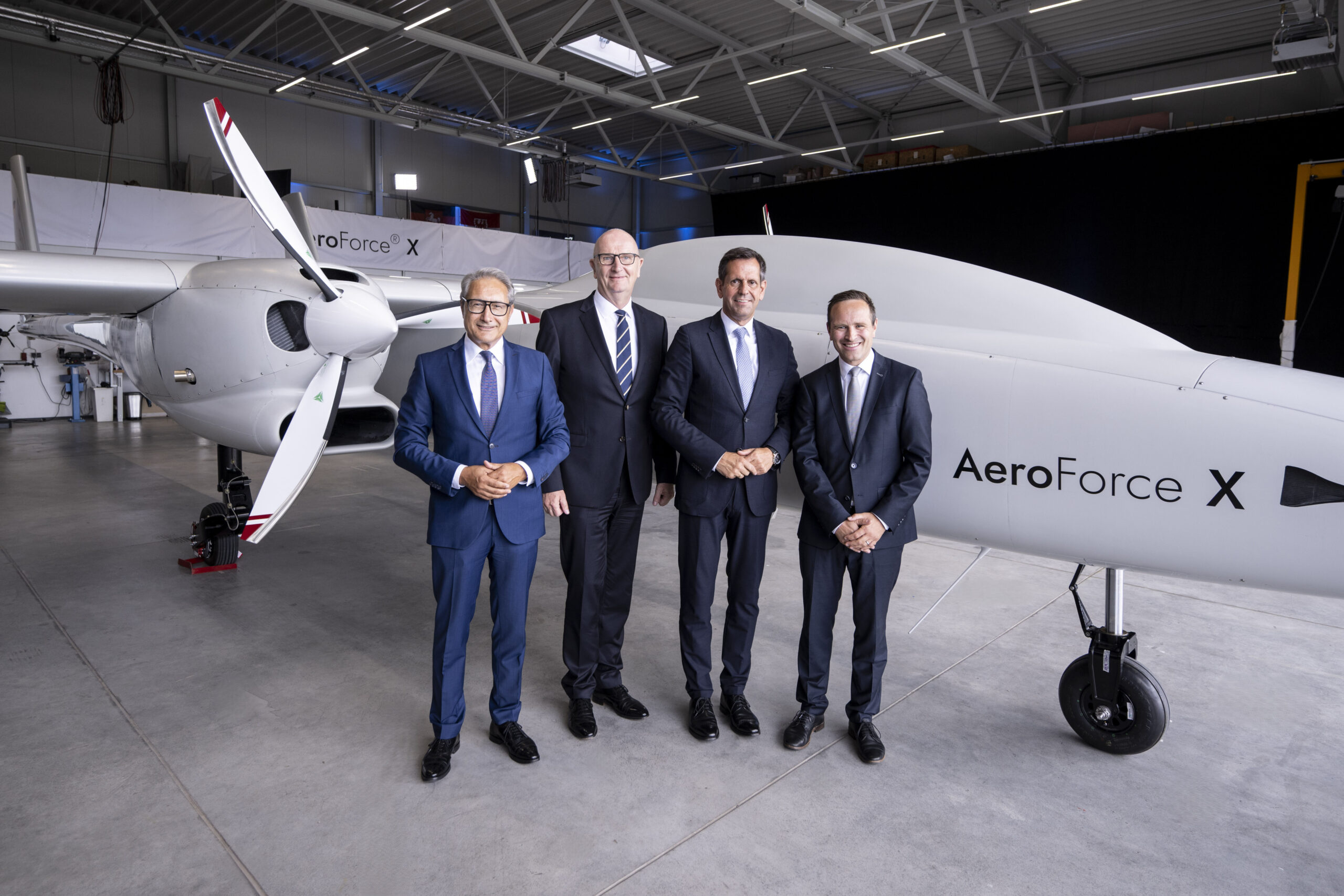
Aerodata AG has publicly unveiled the first AeroForce X prototype at its manufacturing site in Strausberg, Germany, moving the medium-altitude, long-endurance aircraft programme towards flight testing after completion of final assembly earlier this year.
The aircraft was presented on 19 August during a visit by Brandenburg Minister President Dr Dietmar Woidke and Lower Saxony Minister President Olaf Lies. Aerodata is headquartered in Braunschweig, while development and manufacturing activity for the prototype is centred on the Strausberg aerospace site in Brandenburg, creating an industrial footprint across both German states.
AeroForce X is being developed as an unmanned MALE system for long-duration intelligence, surveillance, and reconnaissance missions. Aerodata gives the aircraft a wingspan of 26 metres, a mission payload of around 1.3 tonnes, and targeted endurance of up to 40 hours, allowing it to remain over distant surveillance areas for prolonged periods without frequent aircraft rotations.
The current aircraft remains a development prototype rather than an operational unmanned system. Aerodata says the manned prototype will undergo further testing following the rollout and is scheduled to make its first flight later in 2026. Further development stages will follow as the company validates the airframe, propulsion, handling, mission-system architecture, and eventual unmanned configuration.
That distinction puts the public unveiling into proportion. Completion of a prototype establishes that the programme has moved beyond a digital model and component development, but flight testing is where assumptions made during design begin to encounter aerodynamic loads, vibration, thermal conditions, systems interaction, and the compromises required to turn individual subsystems into a reliable aircraft.
Payload capacity is one of the more substantial figures attached to the design. Aerodata says up to 700kg can be carried within the fuselage, with a further 325kg available at each wing hardpoint. The distribution gives mission planners scope to combine internal sensors and processing equipment with externally mounted systems without assigning the entire payload allowance to one location.
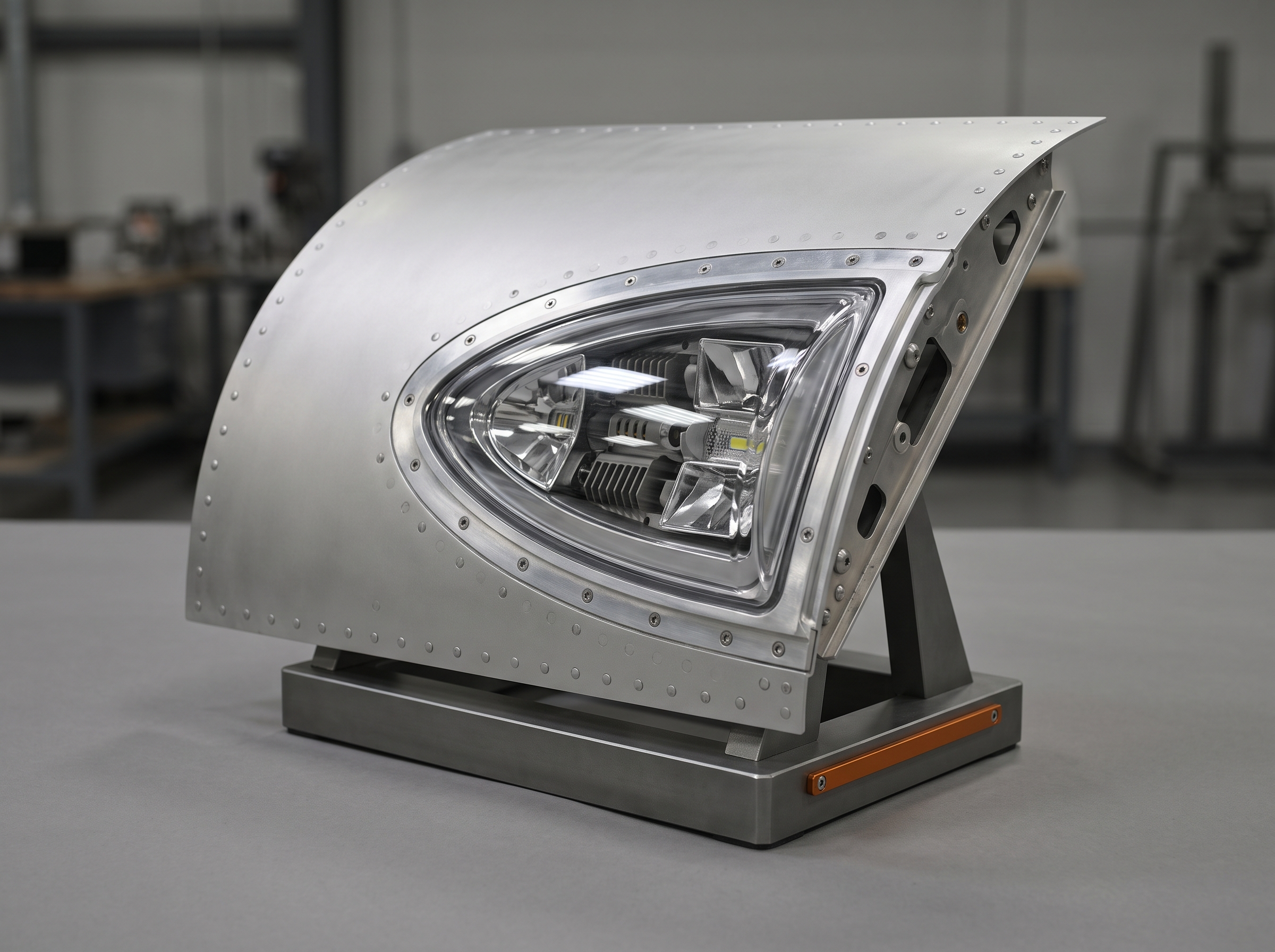
The company lists electro-optical and infrared cameras, electronic-support and ELINT equipment, multimode radar, satellite communications, and other surveillance equipment among the potential configurations. Maritime applications can include large-area surveillance and the deployment of sonar buoys, drawing on Aerodata’s existing work in maritime reconnaissance and airborne mission-system integration.
The platform uses two propulsion systems as its standard configuration, while the modular architecture is intended to accommodate alternative engine arrangements. That flexibility can allow cruising speed, operating altitude, endurance, and electrical generation to be adjusted around different mission requirements, although each significant configuration change adds integration and qualification work of its own.
Aerodata also describes AeroForce X as ITAR-free, allowing the company to pursue international customers without the US export restrictions attached to some American-origin defence technologies. For European operators seeking greater control over mission-system integration, upgrades, and onward deployment, that supply-chain position forms part of the programme’s commercial proposition alongside the aircraft’s performance.
Long endurance and a large payload do not automatically create a useful reconnaissance platform. Mission systems compete for electrical power, cooling, processing capacity, bandwidth, antenna position, and physical space, while the aircraft has to maintain sufficient fuel and structural margin to remain airborne for the stated duration.
The engineering challenge is therefore less about carrying one large sensor than maintaining flexibility across several combinations of equipment. An electro-optical surveillance mission has different power, weight, and communications demands from electronic reconnaissance or maritime radar work, and customers may expect those payloads to change during an aircraft’s service life.
A modular core architecture can reduce the amount of redesign needed for those changes, provided interfaces, power supplies, cooling, data networks, and software are defined carefully enough at the outset. Poorly controlled modularity can instead create a series of aircraft variants that share a name while requiring separate engineering and support arrangements.
Aerodata first disclosed the AeroForce X development programme in late 2025 and completed final assembly of the prototype before the current public rollout. The company has more than three decades of experience in airborne surveillance and reconnaissance systems, but developing a complete MALE aircraft adds airframe manufacture, propulsion integration, flight controls, certification, ground infrastructure, and long-duration reliability to the mission-system work for which the business is better established.
Neset Tükenmez, chief executive of Aerodata AG, said: “Europe needs its own reliable capabilities to protect critical infrastructure.” The company’s positioning reflects growing European interest in retaining greater control over defence production, maintenance, software, sensors, and supply chains rather than relying entirely on non-European platform providers.
AeroForce X is particularly aimed at missions in which persistence matters. Critical-infrastructure surveillance, maritime reconnaissance, border monitoring, and electronic intelligence can require aircraft to cover large areas for many hours, making endurance and mission-system capacity more important than the speed characteristics associated with combat aircraft.
Aerodata’s wider product material also identifies possible future configurations for cargo and medical evacuation, while the modular mission architecture supports additional military payloads. Those concepts broaden the potential market, but the immediate development priority remains the ISR aircraft now entering its test programme.
The first flight will therefore be a more useful programme milestone than the public rollout itself. Engineers will need to establish basic handling, propulsion performance, system behaviour, and structural response before progressively expanding the test envelope and validating the mission configurations around which Aerodata is marketing the aircraft.
Only after that work will the claimed 40-hour endurance and 1.3-tonne payload have meaningful operational context. Maximum endurance figures depend on aircraft configuration, payload, altitude, weather, fuel reserves, and mission profile, while installing heavier sensors can alter the performance available elsewhere.
The industrial programme faces a similar progression. A prototype can be built by a relatively concentrated engineering team, whereas repeat production requires qualified suppliers, consistent composite manufacture, avionics availability, tooling, configuration control, test capacity, trained personnel, and long-term support arrangements.
Aerodata has now moved AeroForce X into the phase where those claims can begin to be measured against hardware. The aircraft exists, final assembly is complete, and the prototype has been shown publicly; the next evidence will come from testing and flight rather than another rendering or programme announcement.