IN Brief:
- Lockheed Martin and Rheinmetall are planning a European ATACMS production route in Germany.
- Rheinmetall’s Unterlüss site is expected to support manufacturing, integration, and distribution.
- The programme reflects Europe’s drive to localise missile production, energetics, motors, integration, and sustainment.
Lockheed Martin and Rheinmetall’s plan to establish a European production route for ATACMS places one of NATO’s most recognisable tactical missile systems inside the continent’s expanding deep-fires industrial base.
The two companies have signed a memorandum of understanding to create European manufacturing, integration, and distribution capacity for the Army Tactical Missile System. Rheinmetall’s Unterlüss site in Germany is expected to provide the production base, adding the missile to a complex already associated with weapons, ammunition, vehicle work, and firing-range activity. Rheinmetall is also investing in rocket motor and guided missile component capacity, with production activity expected to develop from 2027.
A European ATACMS route would change more than geography. The system has long been associated with US production, particularly Lockheed Martin’s established missile facilities. Placing production work in Germany would give European customers a closer manufacturing and distribution channel for a weapon family tied to ground-launched long-range strike. It would also build industrial skills around missile integration, test processes, and supplier qualification at a time when European armies are increasing magazine depth.
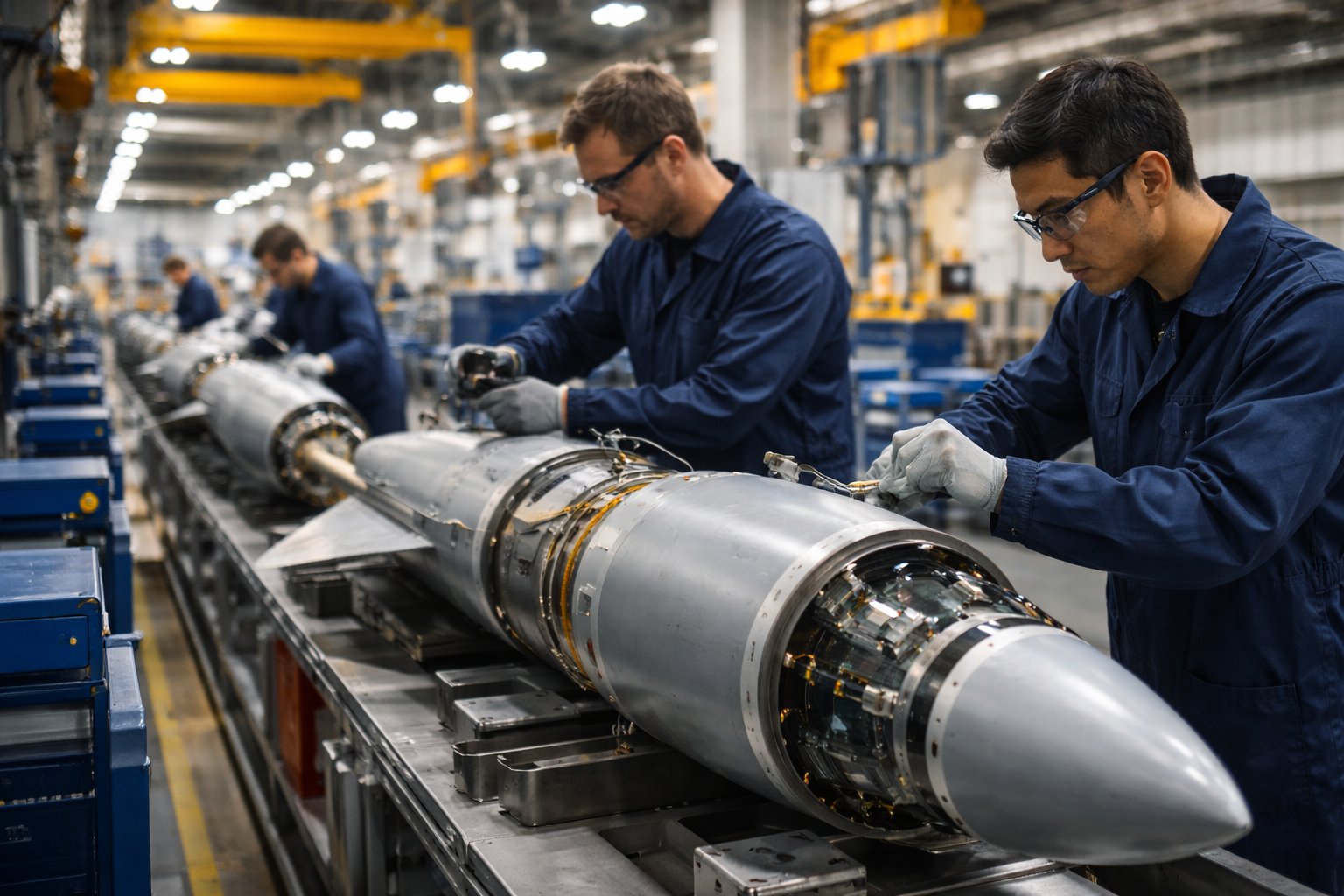
Tactical ballistic missile production is not easy to transfer. Solid rocket motors, energetic materials, guidance systems, warheads, airframes, launch compatibility, mission software, thermal management, and test infrastructure all need strict control. Moving production work into Europe will require qualification of processes, security arrangements, technical data management, and reliable alignment between US-origin system standards and European manufacturing practice.
The programme sits beside a wider allied move into longer-range fires. Britain’s planned move into Precision Strike Missile has already placed the British Army closer to US and Australian deep-fires development, while Poland’s local Barracuda cruise missile plans point to a broader European appetite for scalable strike production. ATACMS production in Germany would add an established system to that emerging missile-production map.
Unterlüss gives Rheinmetall a credible starting point, but facilities alone do not solve the shortage. Europe needs propulsion specialists, energetic materials workers, quality inspectors, software engineers, machinists, systems integrators, safety engineers, and production managers able to handle high-consequence manufacturing. Those skills are being pulled simultaneously by artillery ammunition, air defence, armoured vehicles, naval systems, and missile programmes.
Co-production also has to avoid unnecessary fragmentation. Allied governments often want domestic workshare, yet missiles reward standardisation, certification discipline, and common configuration. If every customer variation creates a separate production pathway, output slows and support becomes more difficult. ATACMS work in Europe will need enough local industrial value to satisfy political objectives while preserving the manufacturing discipline of a mature weapon system.
The transition from ATACMS to newer missile families adds another layer. PrSM is the US Army’s future long-range precision fires system, while ATACMS remains an established tactical missile with immediate demand. European ATACMS work could provide near-term capacity, support existing launcher fleets, and build industrial competencies that can later support other missile programmes. In that sense, the factory skills may be as valuable as the first weapon line.
Export control and technology access will shape the programme. A US-origin missile produced in Germany will still sit within US policy frameworks, including end-use controls, transfer approvals, and protected technical data. European governments may accept those constraints in exchange for faster availability and local production depth, although longer-term missile sovereignty will remain a strategic goal for several capitals.
Rheinmetall’s expanding role across ammunition, vehicles, air defence, and missiles makes the German company one of the key industrial beneficiaries of Europe’s defence spending shift. Lockheed Martin gains a stronger regional production route and a politically useful European partner. NATO customers gain the possibility of shorter supply lines and deeper allied capacity, provided the production system can be qualified quickly enough.
The difficult phase will begin after the announcement. Missile production takes time, certification, materials, and patient investment. The first production outputs will be judged not by the promise of local autonomy, but by whether qualified missiles arrive at scale, on schedule, and with a support model European users can rely on.