IN Brief:
- Austal has begun fabricating the first Landing Craft Heavy vessels following steel cutting in October.
- The Australian Army programme comprises eight heavy and eighteen medium landing craft under contracts exceeding A$5 billion.
- Construction is expected to support 1,100 direct jobs and more than 2,000 indirect jobs in Western Australia.
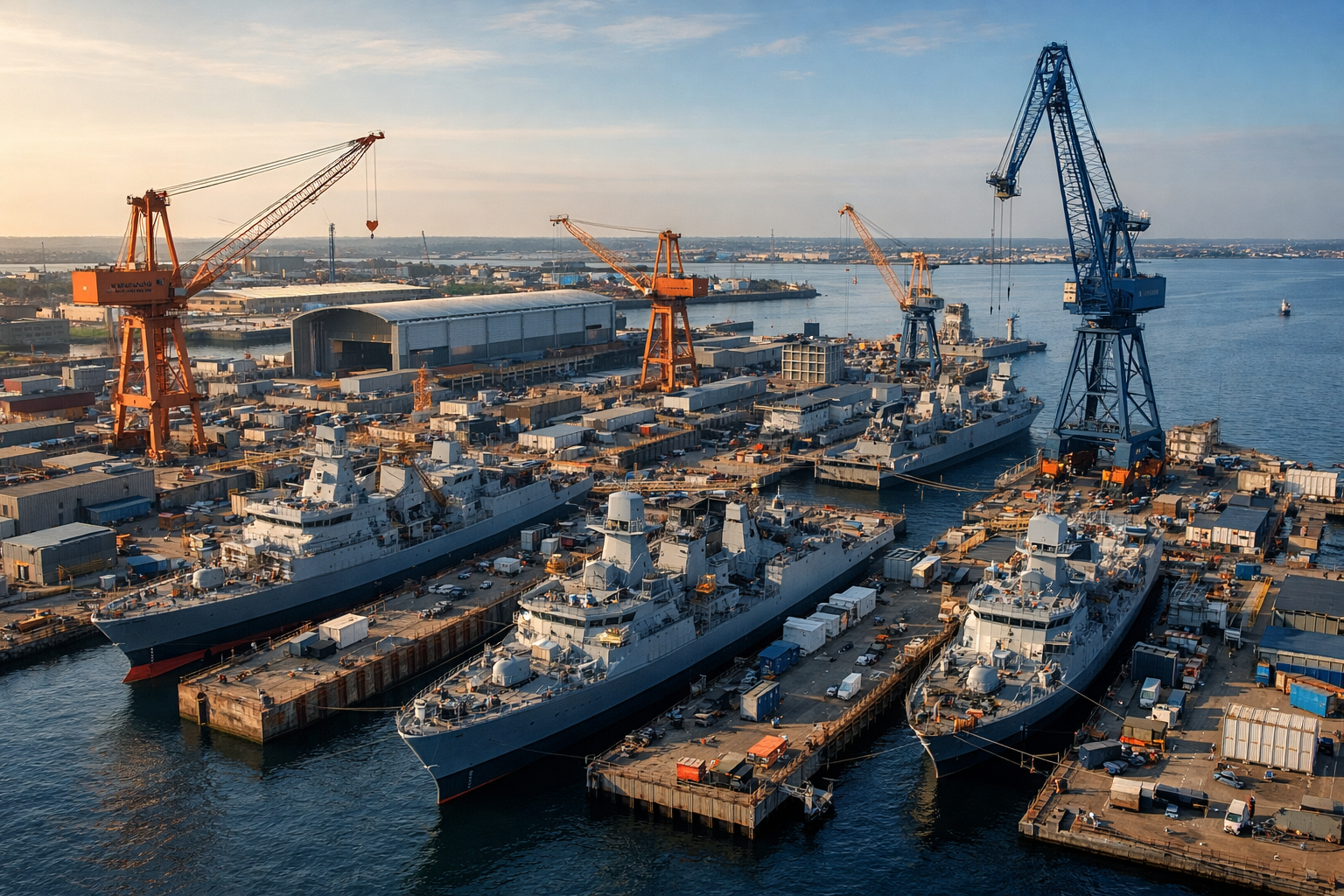
Austal has begun constructing Australia’s Landing Craft Heavy vessels, with the first steel cut in late October as the country’s amphibious shipbuilding programme moves from design preparation into physical production.
The Australian government confirmed the milestone on 11 November 2026, marking the start of construction activity under the larger of two related Army landing-craft programmes. Manufacturing of the Landing Craft Medium class had already begun, establishing parallel construction work at the Henderson shipbuilding precinct in Western Australia.
Australia has awarded contracts exceeding A$5 billion for eighteen Landing Craft Medium and eight Landing Craft Heavy vessels. The two classes are intended to strengthen the Army’s maritime transport capability, enabling vehicles, equipment, and personnel to move between coastal locations across the Indo-Pacific region.
The heavy vessels are based on Damen’s Landing Ship Transport 100 design, selected for Australia’s LAND8710 programme. Austal Defence Australia received its approximately A$4 billion construction contract in February 2026, following an earlier agreement covering the medium landing-craft fleet.
Austal’s published specifications identify a vessel approximately 100 metres long and 16 metres wide, with a displacement of around 3,900 tonnes. The design is intended to carry more than 500 tonnes of military vehicles and equipment, providing considerably greater transport capacity than the medium landing craft.
Depending on the loading configuration, the heavy vessels are designed to accommodate up to six Abrams tanks, eleven Redback infantry fighting vehicles, or twenty-six High Mobility Artillery Rocket Systems. The stated capacities represent alternative payload arrangements rather than equipment that would necessarily be carried together.
Vehicle transport requirements influence the structural and mechanical design of landing craft. Concentrated loads from tracked vehicles, the arrangements for embarking heavy equipment, cargo securing points, and stability during loading must all be considered alongside the vessel’s broader operating requirements.
The selected LST100 design provides a purpose-built platform for transporting substantial military payloads. Its configuration differs from smaller landing craft, which must balance their transport capacity with shallower operating requirements and the ability to support movements between larger ships and coastal landing areas.
Austal’s Landing Craft Medium programme uses a separate design and is expected to deliver vessels capable of transporting up to 90 tonnes of equipment. The medium craft can carry combinations of vehicles and cargo, supporting the wider Army programme through transport arrangements suited to smaller loads.
The two classes are intended to operate together. Heavy vessels provide greater range and transport capacity, while medium craft can undertake different movements of personnel and equipment within the amphibious operating area. Their effectiveness depends on coordinated logistics arrangements as well as the capabilities of each vessel.
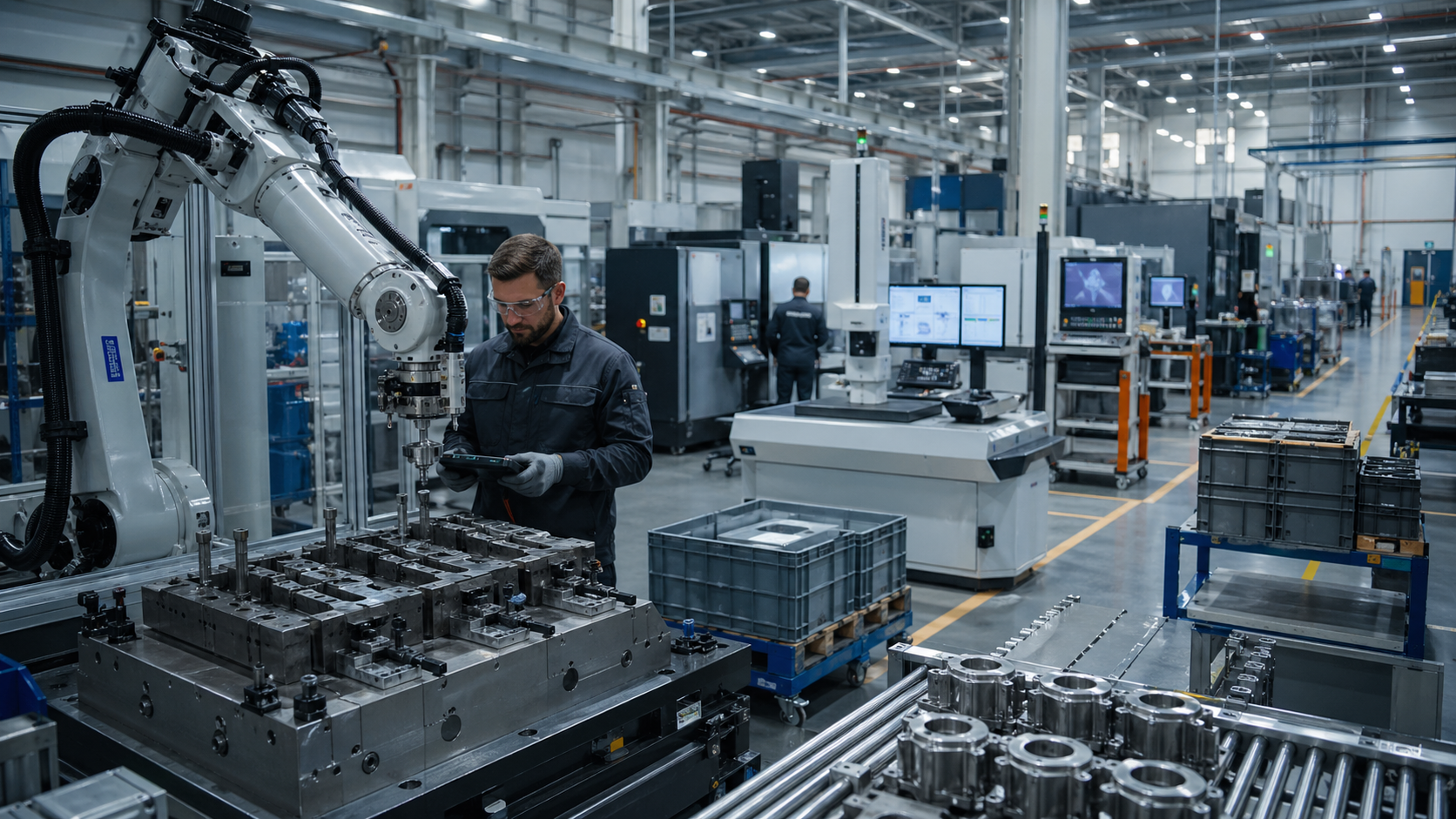
Construction of the heavy vessels introduces substantial steel fabrication activity into Austal’s Western Australian operations. The company has extensive experience manufacturing aluminium naval and commercial vessels, while the larger LAND8710 ships require facilities and production processes suited to steel hull structures of approximately 4,000 tonnes.
Initial steel cutting marks the beginning of physical hull manufacture. The subsequent work involves fabricating structural sections, assembling larger units, installing machinery and onboard equipment, and integrating the systems required for operation before the ships undergo testing and acceptance.
The programme is supported by investment in the Henderson industrial precinct. In October, Australia’s National Reconstruction Fund Corporation announced a A$245 million loan to Austal Defence Shipbuilding Australia to finance construction and fit-out of facilities needed for Landing Craft Heavy production.
The loan supports the industrial infrastructure required to manufacture the larger vessels. Production facilities must accommodate steel processing, assembly activities, material movement, equipment installation, and the consolidation of hull sections manufactured across different parts of the shipbuilding supply chain.
During a government press conference at Henderson, Defence Industry Minister Pat Conroy explained that some Landing Craft Heavy modules would be manufactured by suppliers elsewhere in the precinct before being transported for final assembly. This approach distributes fabrication activity while retaining responsibility for integrating the completed ship.
Module construction allows work to proceed across several facilities, although it requires consistent engineering documentation, dimensional controls, and coordination between participating manufacturers. Structural sections must meet the required specifications before they can be joined, outfitted, and incorporated into the larger hull.
The Australian government expects the combined landing-craft programmes to create approximately 1,100 direct jobs and more than 2,000 indirect jobs in Western Australia. The figures describe anticipated employment across Austal and its supporting supply chain as construction and associated industrial activities develop.
The employment projections are connected to a longer-term naval construction strategy. Austal entered a Strategic Shipbuilding Agreement with the Commonwealth in August 2025, providing the framework for the medium and heavy landing-craft contracts and future shipbuilding work at Henderson.
The heavy programme is scheduled across a twelve-year contractual period, while the medium vessels are being delivered under an eight-year arrangement. These periods establish the broad industrial workload rather than individual commissioning dates, with specific delivery and acceptance milestones determined through the respective contracts.
A continuing production pipeline can help manufacturers retain specialist skills, maintain equipment, and develop suppliers across successive projects. Achieving that continuity nevertheless requires individual programmes to progress through engineering, manufacturing, integration, and acceptance without creating substantial gaps in factory activity.
The start of Landing Craft Heavy construction therefore brings a further major workload into Western Australia’s defence manufacturing base. Steel fabrication has begun, the supporting facilities are being expanded, and production of the medium vessels is already under way, with the remaining construction and delivery milestones extending across the coming years.