IN Brief:
- Australia has entered NATO's Distributed Synthetic Training project as an associated member.
- The environment supports connected simulation across land, maritime, air, space, and cyber domains.
- Australian participation may create work in modelling, simulation, data analytics, and supporting technologies.
Australia has joined NATO’s Distributed Synthetic Training partnership as an associated member, giving the Australian Defence Force access to a multinational effort intended to connect national simulation systems into larger cross-domain training environments.
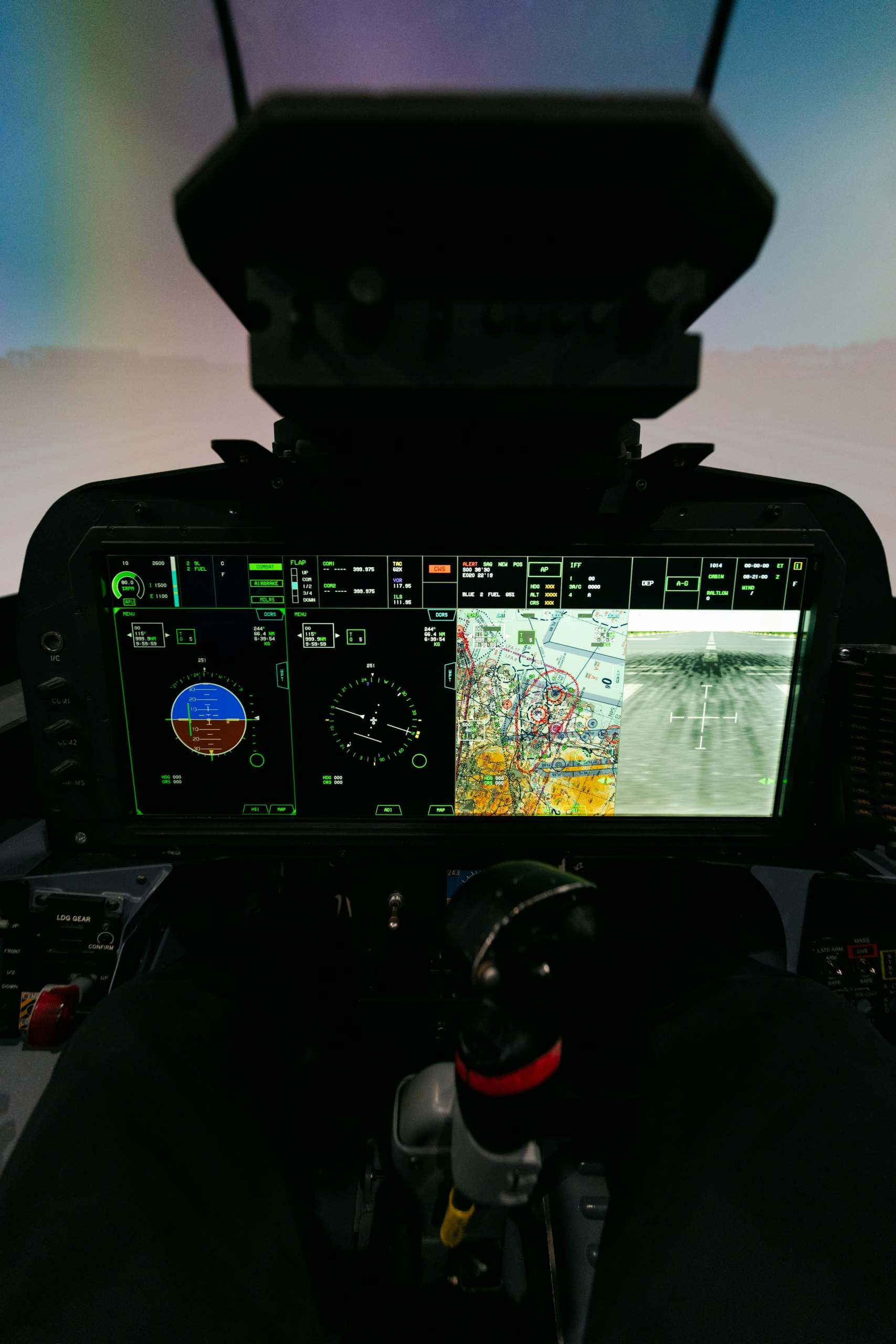
The arrangement provides Australian personnel with visibility of synthetic and simulation-based training environments covering land, maritime, air, space, and cyber activity. It is intended to improve interoperability and allow geographically separated training audiences to work through the same virtual scenario without assembling every unit and platform for a large live exercise.
NATO has developed Distributed Synthetic Training as a multinational capability project rather than a single simulator purchase. Participating nations connect existing national simulation assets through common architectures, security arrangements, and shared technical standards, allowing training systems to exchange the information needed to support a combined scenario.
Australia enters the project as an associated member rather than as a NATO Ally. The Australian Department of Defence says participation will increase opportunities to train and experiment with trusted partners while giving personnel greater understanding of allied training methods and supporting interoperability in exercises and operational planning.
Distributed training reduces some of the dependence on aircraft, ships, vehicles, ranges, and specialist personnel that constrains large live exercises. Command teams can repeat a scenario, alter individual variables, and connect audiences in different locations while controlling the conditions more closely than would be possible in the field. Live training remains necessary, but simulation can move part of the preparation and experimentation into a repeatable environment.
The engineering burden sits in the connections between systems. Simulation fidelity depends on the quality of the underlying models, network latency, cyber assurance, classification controls, and the accuracy of the data exchanged between national environments. A technically sophisticated simulator still adds limited multinational value if its data formats, security rules, or timing cannot work with the systems used by other participants.
Configuration control creates a second challenge. Aircraft, ships, weapons, sensors, electronic warfare systems, and command software change continuously, while training systems have to represent the configurations personnel will encounter in service. An outdated model can teach procedures that no longer match the operational baseline, particularly where software-defined capabilities and digital interfaces are changing faster than physical platforms.
The Royal Navy’s recent Maritime Command and Staff Trainer milestone provides a national example of the same shift towards connected synthetic environments. MCAST reached initial operating capability with a classified environment supporting more than 100 terminals. NATO’s project extends the underlying problem across national boundaries and multiple domains, where accreditation and data-sharing arrangements become more complex.
Australian industry may gain work through that technical layer. Defence identifies simulation, modelling, data analytics, and supporting technologies as areas where participation could create opportunities. Entry into a multinational training environment, however, requires suppliers to work to common interface standards and security controls rather than delivering a standalone national product.
Geography also becomes a technical factor once distributed training expands beyond Europe. Australian participation introduces long network paths, different national infrastructure, and time-zone separation into an environment that depends on synchronised data and predictable system behaviour. Those constraints can be managed, but they increase the importance of network engineering, local support, and clear rules for how exercises are configured before participating sites connect.
Software support is likely to be as important as initial system delivery. Models have to be updated when operational platforms change, cyber requirements evolve, or participating nations alter their network architecture. The training environment also needs mechanisms for version control so that different sites do not unknowingly exercise against inconsistent representations of the same aircraft, weapon, or sensor.
NATO’s earlier work on Distributed Synthetic Training has covered policy, infrastructure, reference architecture, and practical exercises involving specialists from multiple nations and organisations. Australia is therefore joining a programme that has already moved beyond the initial concept stage, although its associated-member status will require practical decisions about which Australian systems connect first and what information can be exchanged.
Those decisions will determine the value of participation. Connection at an unclassified demonstration level is technically and organisationally different from routine multinational training involving sensitive mission systems and operational data. Network performance, accreditation, and classification rules all become harder as fidelity and realism increase.
The next milestones are likely to be integration milestones rather than another accession announcement: identifying the first Australian training systems, completing security and interface work, establishing repeatable multinational events, and creating a support model for keeping the connected systems current. If those elements are sustained, Distributed Synthetic Training becomes shared training infrastructure rather than an occasional interoperability demonstration.