IN Brief:
- At least two Arafura class offshore patrol vessels will be homeported at HMAS Cairns, beginning with HMAS Arafura in early 2027.
- Australia has invested A$250 million in additional berthing and supporting infrastructure at the northern naval base.
- The basing decision creates recurring maintenance and support demand as the six-ship class continues entering service.
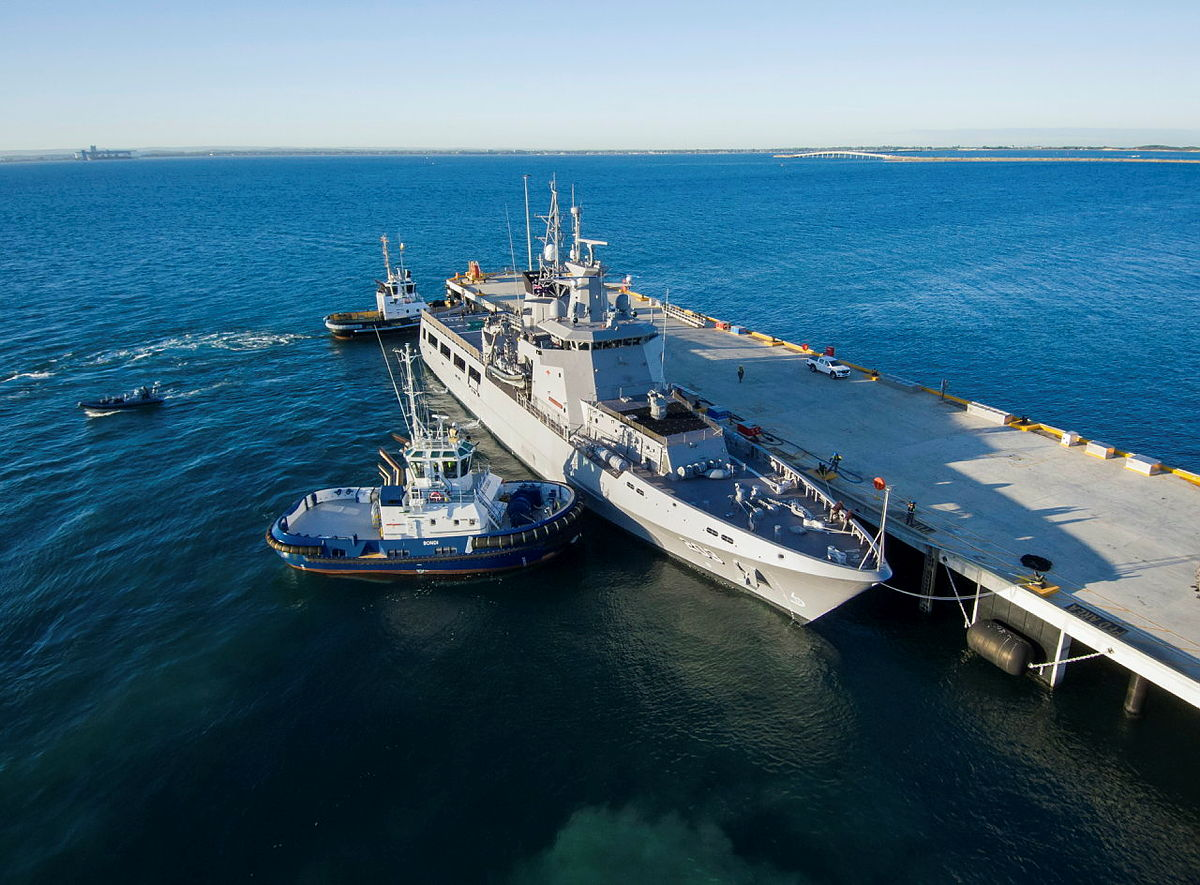
Australia will homeport at least two Arafura class offshore patrol vessels at HMAS Cairns, placing part of the Royal Australian Navy’s newest patrol fleet alongside an established maritime maintenance sector in North Queensland.
HMAS Arafura is scheduled to become the first ship of the class based at Cairns in early 2027. The decision follows A$250 million of investment at the naval base, including expanded berthing capacity and improvements to wharf and landside infrastructure.
Homeporting creates a long term engineering requirement around the vessels rather than simply a new operating location. Planned maintenance, defect rectification, stores, contractor support, inspections and specialist equipment will increasingly be required in Cairns as ships spend more of their service lives operating from northern Australia.
The infrastructure programme has already generated substantial local work. More than 770 people worked on the HMAS Cairns project, while A$67.7 million of expenditure was awarded to businesses within 125 kilometres of the base.
The upgraded wharf has also been elevated to improve resilience against high tide conditions. Naval infrastructure expected to support ships over several decades has to remain available through environmental conditions that may affect lower lying waterfront facilities, making resilience part of the sustainment design rather than a later modification.
The Arafura class consists of six offshore patrol vessels. The first two were built in South Australia, while the remaining four are being constructed in Western Australia by Civmec Defence Industries.
HMAS Arafura was commissioned in June 2025 and HMAS Eyre followed into service in May 2026. Pilbara, Gippsland, Illawarra and Carpentaria are due to complete the current six-ship programme.
Each vessel is 80 metres long with a 13-metre beam and a standard crew of 40, with accommodation for up to 60 personnel. Two 4,250kW diesel engines provide a top speed of 20 knots, while the class has a stated range of 4,000 nautical miles.
The ships are intended for maritime patrol, surveillance and response duties and will operate with Australian Border Force and regional partners. Navy also plans to use specialist mission packages, including maritime tactical uncrewed aircraft, with future roles covering rapid environmental assessment and deployable mine countermeasure activity.
Mission packages increase the shoreside support requirement because equipment that is not permanently fitted still needs storage, inspection, charging, software support, transport and specialist maintenance. The homeport consequently becomes part of the mission system rather than simply a berth between patrols.
Cairns already supports naval and commercial maritime activity, giving Defence access to a maintenance workforce rather than requiring every capability to be created from scratch. The government has linked the basing decision directly with confidence for regional businesses to invest in skills and capacity.
The programme continues to move through acquisition and fleet introduction at the same time. Construction of the remaining vessels, completion of outstanding programme work and establishment of long term sustainment therefore have to progress in parallel rather than in separate phases.
That overlap places particular importance on configuration control. Changes made to later ships during construction or remediation have to be reflected in technical documentation, spares, maintenance processes and training so that the sustainment organisation does not inherit six unnecessarily different vessels.
Arafura class ships will operate alongside Evolved Cape class patrol boats, creating a mixed patrol fleet rather than a direct one-for-one replacement structure. Navy will have to balance utilisation between the two classes while maintaining separate maintenance, crewing and support arrangements.
Northern homeporting should reduce some of the transit burden associated with operating vessels from bases farther south, but it transfers a larger share of readiness responsibility to Cairns. Engineering support must be available close enough to the operating fleet to return ships to service without avoidable movements to distant maintenance centres.
The 2027 arrival of HMAS Arafura will therefore mark the beginning rather than completion of the industrial transition. The measure of the Cairns investment will be whether infrastructure, contractors and Navy support organisations can produce dependable vessel availability as more ships enter operational service.