IN Brief:
- Auterion and SkyFall announced plans on 20 November for a German joint venture manufacturing drones for Ukraine.
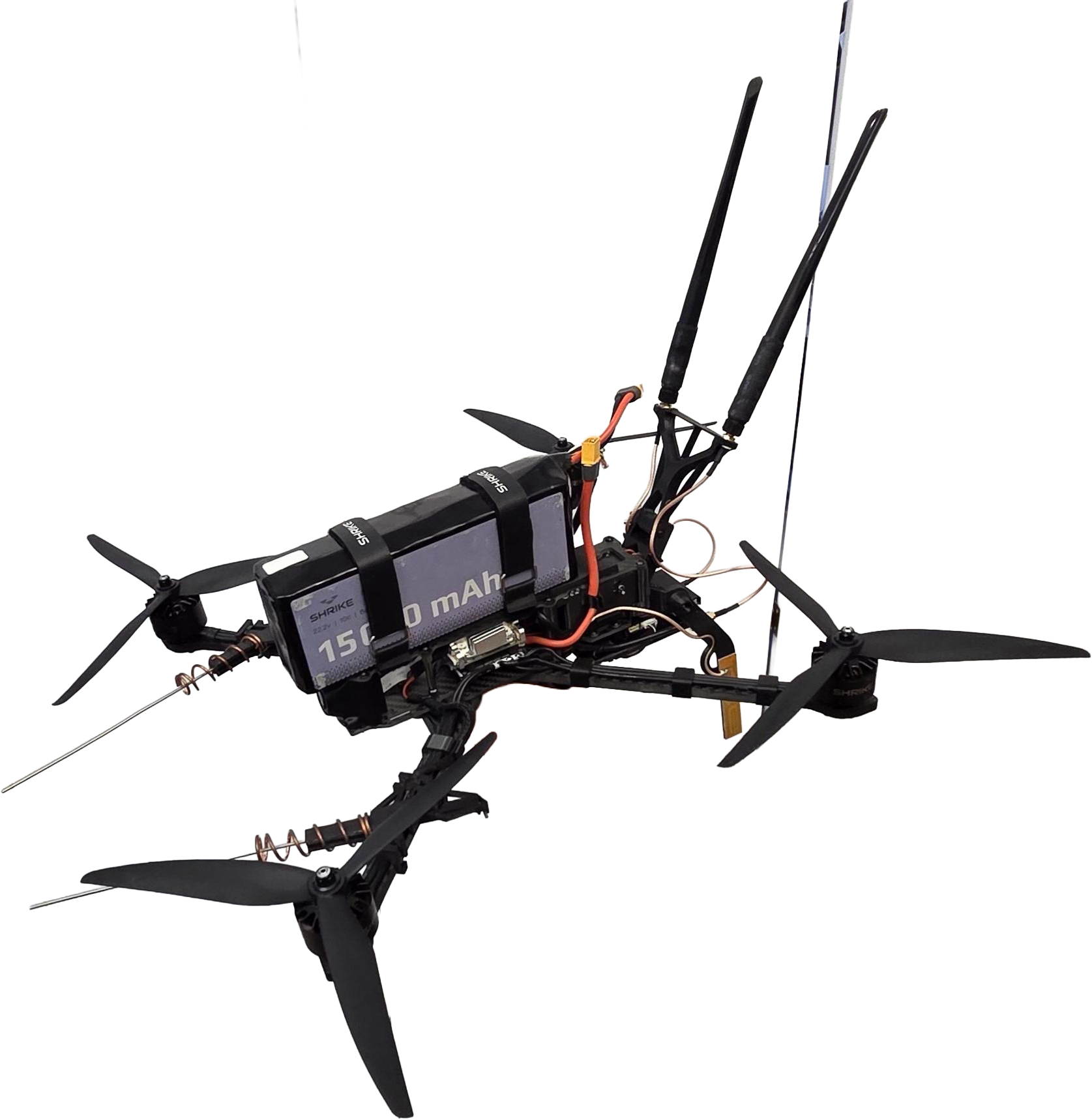
- Initial production would centre on Shrike FPV systems using SkyFall airframes, Auterion avionics, and AuterionOS.
- The partners intend to expand into interceptor and longer-range products; no factory opening date or production rate was disclosed.
Auterion and SkyFall intend to establish a German joint venture to manufacture Ukrainian strike drones, adding a proposed production site outside Ukraine to their existing industrial partnership. The companies announced the plan in Berlin on 20 November during the German-Ukrainian Economic Forum. The venture, to be called Skyfall x Auterion, is envisaged within the Build with Ukraine defence cooperation framework and has the support of the German and Ukrainian governments. The proposal remains at the venture-formation stage; there is no confirmed factory opening or newly disclosed delivery contract.
The planned venture builds on a substantial supply relationship. Auterion, which supplies autonomy software and avionics, and Ukrainian aircraft manufacturer SkyFall established a major Shrike delivery partnership in July. The companies say they have together delivered more than 50,000 Shrike strike drones to Ukrainian forces. That is a company-reported cumulative figure for the existing partnership, not a proposed annual output figure for the German factory or proof that an additional 50,000 units have been ordered.
Initial manufacturing would concentrate on the Shrike first-person-view aircraft. SkyFall would provide the airframe, while Auterion would contribute avionics and its AuterionOS software environment. Combining an established aircraft with a common software and electronics architecture can reduce the number of incompatible configurations that a manufacturer must support. It also creates practical integration requirements: power interfaces, sensors, flight controls, wiring, firmware versions, and final acceptance procedures have to remain consistent across production batches. The partners have not disclosed a complete manufacturing bill of materials or the precise division of shop-floor tasks.
The proposed facility is designed to add capacity outside the immediate exposure of Ukrainian manufacturing sites to air strikes. That geographic separation could improve production continuity, but it cannot remove industrial risks associated with component availability, logistics, testing, or changes in customer requirements. The company’s stated operating model would preserve a close engineering link with SkyFall teams in Ukraine. Feedback from Ukrainian users is expected to inform changes introduced on the German line, with lessons from operating conditions entering product development on a recurring basis.
The two partners expect feedback from Ukrainian operators to influence the design produced in Germany. To introduce a change without losing track of what was delivered, engineering teams must identify the relevant airframe, electronics and software versions, validate the amended configuration, and record which batches contain it. Even a modification confined to avionics can require fresh checks of power supply, flight-control interfaces, and release procedures. The companies have not published their method for controlling engineering changes, so a short iteration cycle should not be confused with an unrestricted ability to alter production hardware.
The partners intend eventually to broaden the German product portfolio beyond Shrike to SkyFall interceptors and systems intended for medium- and longer-range roles. Those are future plans, not confirmed production lines or separate procurement awards. Expanding to other aircraft families would introduce different qualification and production needs, including variation in structures, electronics, and support equipment. The announcement does not identify the site’s final location, number of manufacturing employees, scheduled commissioning date, maximum monthly output, or contract value for the future production programme.
Berlin’s support provides a prospective source of investment for the German plant. German funding is intended to support production capacity for Ukraine, and Reuters reported that a previous German-funded Shrike contract covered 50,000 aircraft worth approximately €90 million. The earlier contract should not be counted again as an order placed with the proposed joint venture. Nor has either company released a new factory investment budget, German military procurement quantity, or timetable for the plant’s initial shipments. Those figures remain separate from the venture’s stated intention to expand output.
Manufacturing in Germany would place some assembly, test, and supply activities within a different industrial and regulatory environment from the partners’ Ukrainian operations. Parts arriving from different suppliers must meet the same approved drawings and functional requirements if aircraft built at separate sites are to be supported as a coherent fleet. The companies have not detailed component-origin rules, repair responsibilities, or intellectual-property arrangements. Those matters will have to be resolved during company formation and factory preparation, alongside the practical need to maintain engineering links with the Ukrainian design and operating teams.
Auterion’s separate joint venture with Airlogix, announced earlier in 2026, involves another Ukrainian partner and is not an existing production facility belonging to Skyfall x Auterion. Likewise, the deliveries cited in the November announcement come from the companies’ established Shrike relationship rather than output from the proposed German site. Keeping those programmes distinct is necessary when assessing additional manufacturing capacity: the number of aircraft already supplied does not establish when the new venture will start production, or how many units it could build each month.
Formal establishment of Skyfall x Auterion will be the first measurable step towards the proposed German operation. Confirmation of its site, commissioned production equipment, and contracted output will then make it possible to distinguish additional manufacturing capacity from the more than 50,000 Shrike deliveries already credited to the existing partnership. The intended expansion into interceptors and longer-range aircraft remains dependent on later product and production decisions. Neither a factory commissioning timetable nor a new purchase quantity has been confirmed.