IN Brief:
- Babcock has won a contract worth up to about £36 million over up to eight years to support the British Army’s Field Electrical Power Supplies.
- The work covers full maintenance, repair, overhaul, and asset management for generators used to power tactical communications, lighting, and support infrastructure.
- The award underlines how deployed power generation is becoming a more serious engineering market as armies push more sensors, networks, and edge computing into the field.
Babcock has won a contract worth up to about £36 million to provide in-service support for the British Army’s Field Electrical Power Supplies, or FEPS, with the company saying the deal could run for up to eight years and create 20 new jobs across three UK locations. On its face, it is a support contract for military generators. In practice, it is a reminder that armies now depend on stable, maintainable power architectures almost as much as they depend on mobility.
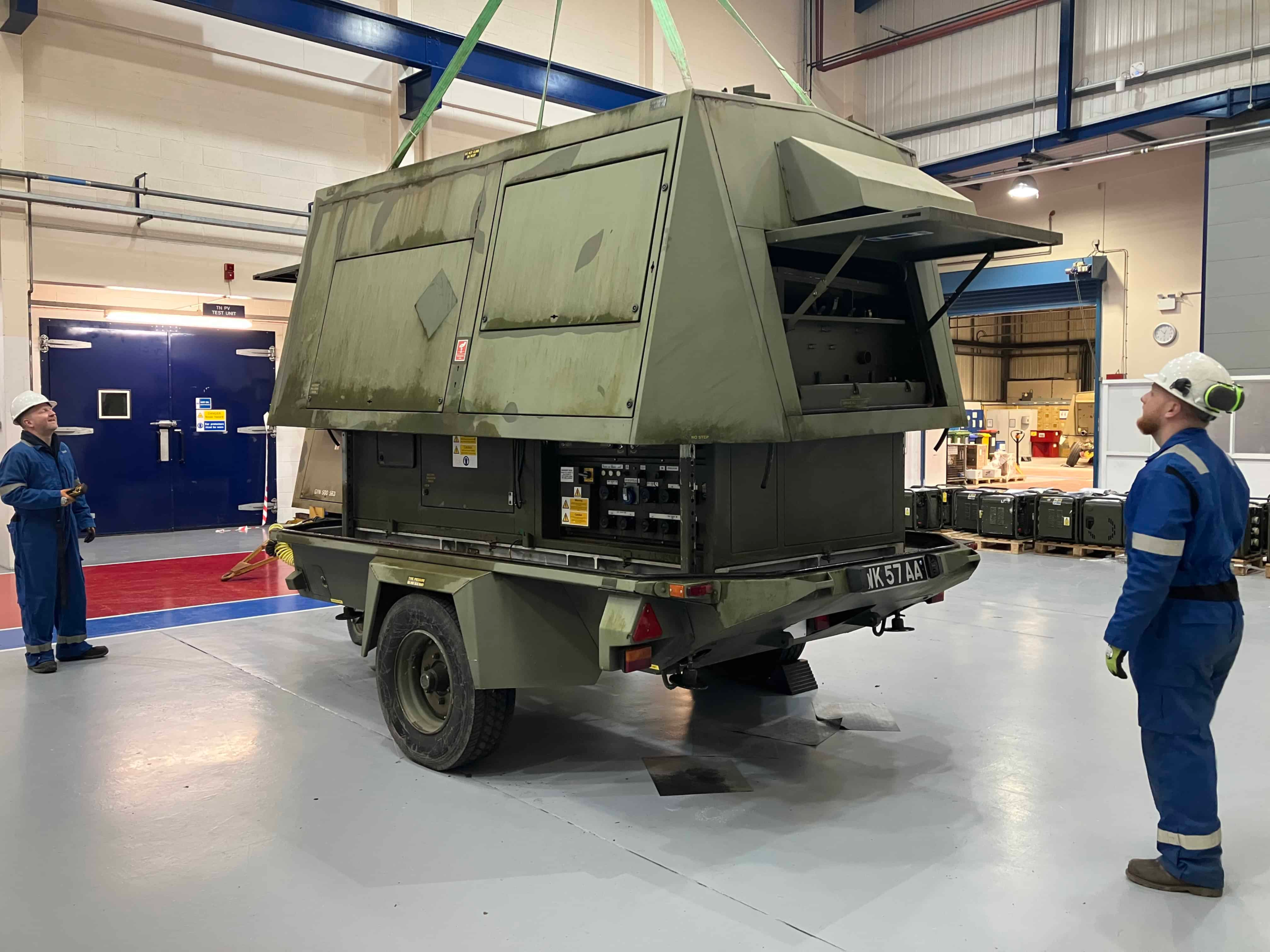
According to Babcock, FEPS units are used to power tactical communications systems, lighting, support facilities, and other mission-critical infrastructure during operations and training. The company said it will take responsibility for the complete maintenance, repair, and overhaul of the power generators, while also using its asset-management framework to improve fleet availability and reliability.
That sounds routine until the mission set is examined properly. Deployed command posts, communications nodes, temporary facilities, and support functions all lean on field generation. As more land forces push digitised planning, wider sensor use, and heavier data traffic into dispersed formations, generator uptime stops being a back-room concern. It becomes part of combat readiness.
Kate Robinson, Managing Director of Babcock’s Through Life Equipment Support business, said: “This contract supporting FEPS enables the British Army to operate and ensure that they have the power they need, when and where they need it. This new agreement strengthens our relationship with our customer and demonstrates Babcock’s integrated approach to complex asset management, powering our Armed Forces on the frontline.”
There is also broader programme context behind the award. A Ministry of Defence tender published in February 2025 described the FEPS support requirement as part of the Army’s General Purpose Power capability, covering fleet management, repair, and maintenance for Authority-owned generators. That notice referred to an approximate fleet of 840 generators in the 8kW to 40kW range, including standard and wading variants, and pointed to an equipment out-of-service date of 2030, with longer-term manoeuvre power procurement expected later in the decade.
Power quality matters as much as output
Generator support in defence is about far more than engine servicing. Tactical power quality, load stability, voltage regulation, connector integrity, cooling performance, and fault diagnostics all matter when the connected equipment includes communications systems and deployable technical infrastructure. A generator that starts but delivers unstable output is still a mission problem.
That is one reason FEPS support now sits closer to systems engineering than old-fashioned plant maintenance. Units operating in poor weather, dust, vibration, and variable load conditions need disciplined inspection regimes, spare parts planning, technical documentation, and load-bank testing. Wading variants and cold-weather demands add another layer. The Army is not merely keeping diesel boxes alive. It is trying to preserve dependable electrical infrastructure in harsh conditions with limited tolerance for failure.
The MoD’s earlier tender material also makes clear that the support model is availability-driven. Through-life support, safety management, post-design services, obsolescence work, technical documentation, and the supply of spares all sit inside the requirement. In other words, this is no longer just about fixing broken generators. It is about sustaining a field power fleet as a managed capability.
That matters industrially because tactical power remains a fragmented but increasingly valuable corner of land support. While vehicle and artillery programmes draw the headlines, the underlying power ecosystem is becoming more complex. Batteries, hybrid systems, power distribution equipment, silent-watch requirements, and electrified mission systems all place new demands on what had once been a fairly blunt category.
For companies like Babcock, that creates a useful middle ground between manufacturing and service support. The work is not merely depot repair, and it is not a greenfield procurement either. It sits in the harder space where obsolescence, readiness, and engineering judgement meet. That tends to suit businesses with through-life support depth and an established relationship with military fleet operators.
There is a broader lesson here as well. Modern armies keep adding electronic appetite to deployed formations while still expecting small footprints, rapid moves, and dependable support. Somebody has to carry the burden of making that power architecture work. Increasingly, that somebody is a contractor running an availability model, not a stores ledger and a crossed finger.