IN Brief:
- BAE Systems has been selected for the US Army’s Soft Kill Active Protection System programme.
- The ROOK system uses electronic countermeasures to disrupt incoming UAS and anti-tank guided missile threats.
- The programme will require vehicle integration, prototype testing, and production activity in Texas and New Hampshire.
BAE Systems has been selected for the US Army’s Soft Kill Active Protection System programme of record, moving its ROOK vehicle-protection system into a formal route for prototype integration and testing.
ROOK, short for Rapid Optical Observation and Kill, is designed to equip combat vehicles with electronic-warfare countermeasures against uncrewed aircraft systems and anti-tank guided missile threats. The system forms part of BAE Systems’ Intrepid Shield layered protection family, combining situational awareness, threat response, and non-kinetic defeat methods for armoured vehicles.
Soft-kill protection differs from hard-kill active protection systems that physically intercept incoming threats. Instead of launching a projectile or explosive countermeasure, soft-kill systems use electronic or optical effects to disrupt, confuse, or jam guidance systems before a weapon reaches the vehicle. Used effectively, that can preserve hard-kill interceptors while adding another defensive layer against threats that are becoming cheaper, more numerous, and more varied.
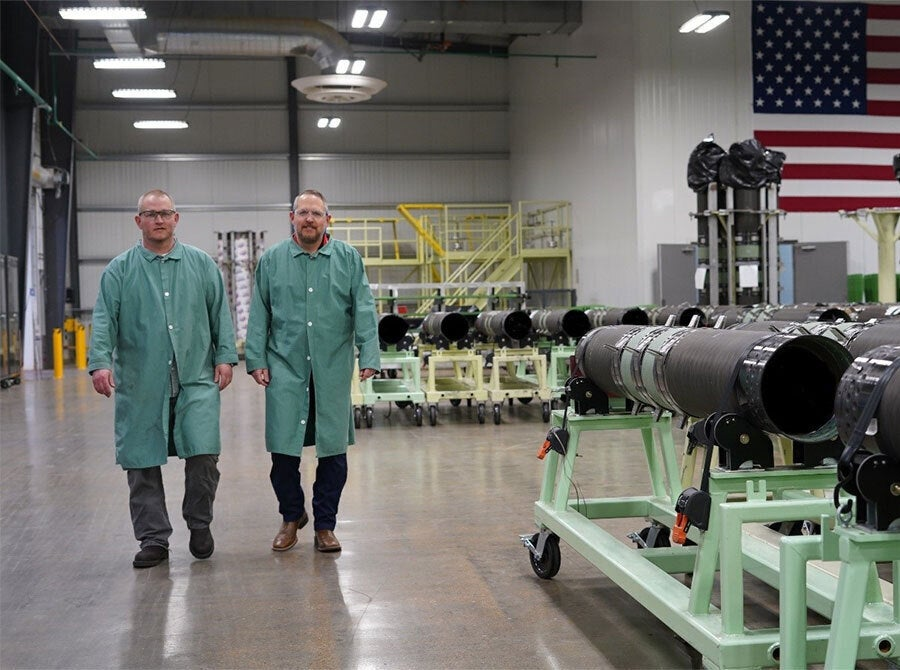
The US Army programme will support further development and prototype vehicle integration, including testing of ROOK and related technologies such as Stormcrow and TERRA RAVEN. BAE Systems will develop and manufacture the system in Austin, Texas, with research and development support in Merrimack, New Hampshire.
Vehicle integration will be one of the harder parts of the programme. A mounted electronic-warfare system must combine sensors, processors, emitters, control software, power systems, cooling, cabling, and crew interfaces inside platforms already crowded with radios, sights, weapons, armour, and mission equipment. It has to function while the vehicle moves, communicates, fires, and operates alongside other electronic systems.
The emergence of soft-kill systems across allied vehicle programmes is visible beyond the US market. UK work on soft-kill protection with Thales and QinetiQ shows the same shift towards electronic and optical defeat methods. Armoured vehicle survivability is increasingly being shaped by sensors, software, and electromagnetic effects alongside armour and kinetic interceptors.
That shift has been accelerated by the spread of small drones, loitering munitions, and guided anti-armour weapons. Vehicles now face threats from above, from longer standoff ranges, and from systems produced in far greater numbers than traditional precision weapons. Adding more passive armour cannot solve the problem alone, particularly where vehicles still need mobility, transportability, and space for communications and sensors.
Soft-kill systems offer a different balance. They can potentially defeat multiple threats without consuming hard-kill interceptors, but they depend on rapid detection, accurate classification, and effective electronic effects. They also have to avoid interfering with friendly radios, navigation systems, sensors, and command networks. Electromagnetic compatibility becomes a core design constraint rather than a late-stage test issue.
Production will need to account for mixed vehicle fleets. The US Army operates multiple combat vehicle types with different power margins, space constraints, interfaces, and protection requirements. A system that integrates cleanly on one platform may need additional kits, brackets, software settings, cooling changes, or power modifications for another. That favours open architectures and strong interface control.
The supply chain behind soft-kill protection also differs from traditional armour production. It draws on electronic warfare, rugged computing, sensors, antennas, processors, software-defined capability, power electronics, and environmental hardening. Secure electronics sourcing, component obsolescence, export controls, and cyber assurance will all shape the production model.
The programme-of-record decision gives ROOK a clearer path towards fielding, although prototype testing will determine how the system performs across realistic conditions. The move also signals that electronic protection is moving from experimentation into planned vehicle survivability packages. Once that happens, sustainment becomes as important as initial performance. Software updates, threat-library refreshes, spare modules, depot repair, and training will all affect long-term usefulness.
Layered protection is now the dominant direction for armoured vehicles. Passive armour, signature management, hard-kill active protection, electronic countermeasures, counter-UAS systems, and crew procedures must work together without overwhelming power, space, weight, and operator attention. The engineering task is to make those layers cooperate rather than compete.
BAE Systems’ selection gives the US Army a structured route to assess ROOK on combat vehicles and refine the production approach. If the system proves effective, it could become part of a wider move towards vehicles protected by electromagnetic effects as much as physical armour. The battlefield pressure behind that move is unlikely to ease while drones and guided weapons continue to proliferate.