IN Brief:
- Boeing has completed chamber, captive-carry, and rocket testing of its Ultra Low-Cost Seeker.
- The radar sensor uses adapted commercial components and a modular open-system architecture.
- Boeing is evaluating the common seeker across air-defence, direct-attack, and cruise-missile applications.
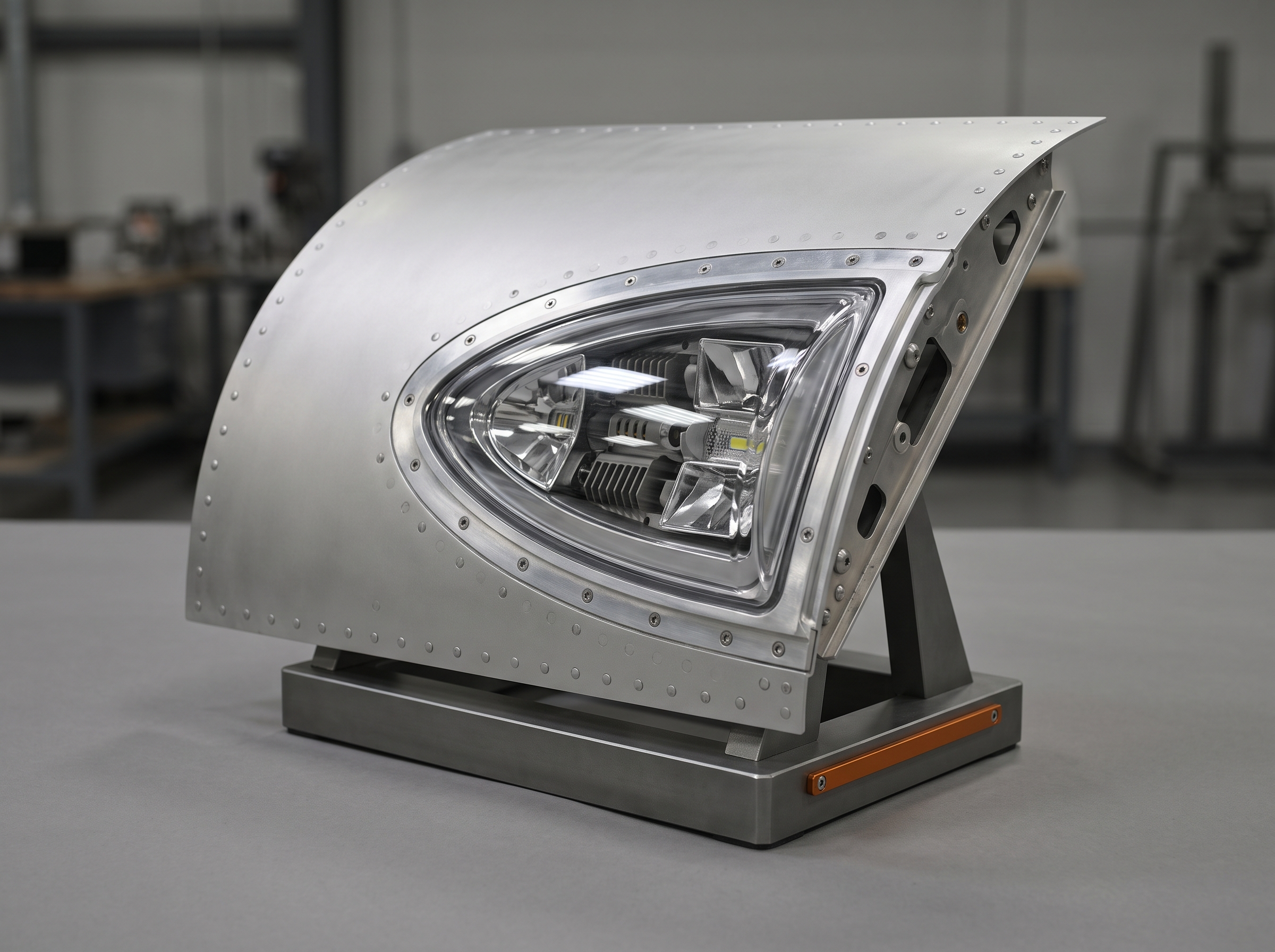
Boeing has moved its Ultra Low-Cost Seeker through chamber, captive-carry, and high-speed flight testing as it develops a common radar sensor architecture for use across several offensive and defensive weapon families.
The company has tested the seeker in an anechoic chamber, carried it aboard a Beechcraft 1900, and flown it on a scaled rocket from Spaceport America in New Mexico. During those events, the system detected and tracked targets over land and maritime environments, including an unmanned aircraft and reflector drone, while the rocket trial exposed the hardware to acceleration and vibration associated with powered flight.
The engineering objective goes beyond demonstrating another seeker. Boeing is trying to establish a modular sensor that can be adapted across integrated air and missile defence, direct-attack, and cruise-missile applications, reducing the amount of programme-specific engineering required when a new weapon needs a radar guidance function.
That approach reflects a growing cost problem in precision weapons. High-performance seekers remain necessary for demanding targets and complex engagement environments, but fitting the most sophisticated sensor architecture to every munition can push unit prices beyond the level required for larger inventories. A lower-cost common design creates another point on the capability curve, allowing guidance cost to be matched more closely to the target and mission.
ULCS uses commercial off-the-shelf components adapted for military use and is being developed around a modular open-system architecture. Boeing says the design is intended to support rapid, high-volume production while making future changes easier to incorporate.
Commercial components can reduce cost and broaden the supplier base, although their use in weapons brings a substantial qualification burden. Designers still have to establish temperature margins, vibration tolerance, electromagnetic compatibility, storage life, cybersecurity, and continuity of supply, while ensuring that production variation does not undermine seeker calibration or tracking performance.
A component considered reliable inside a conventional electronics product may face a very different environment after years of storage followed by launch shock, acceleration, vibration, and rapid temperature change. The attraction of commercial technology therefore depends on how effectively Boeing can qualify selected parts without recreating the cost structure it is trying to avoid.
Manufacturability is equally important. A low-cost seeker alters weapon economics only if it can be assembled repeatedly at scale, calibrated efficiently, and integrated without extensive programme-specific rework. Automated test, stable component sourcing, production yield, and control of RF tolerances will matter as much as the headline design concept if the programme moves from demonstrators into serial manufacture.
Boeing is drawing on seeker experience from programmes including PAC-3 MSE, but ULCS is aimed at a different cost and capability point. The potential advantage lies in reusing one sensor baseline where missions do not justify a more complex architecture, rather than funding a new seeker development every time a lower-cost weapon is introduced.
The recent test sequence gives Boeing a way to retire risk before attaching ULCS to a production weapon. Laboratory work can validate basic RF behaviour, captive-carry testing can assess target detection and tracking in representative environments, and rocket flights expose the unit to loads that cannot be reproduced completely on the ground.
For the supply chain, a common seeker could create a different demand profile from traditional low-rate, programme-specific electronics. Higher volumes would place more pressure on component availability, assembly automation, calibration throughput, and repeatable manufacturing processes, while an open architecture could allow selected subsystems or software elements to change without forcing a redesign of the complete sensor.
That flexibility also creates a configuration-control challenge. A seeker intended for several weapon families needs tightly governed interfaces and a clear division between common hardware, common software, and programme-specific adaptations. Without that discipline, a supposedly reusable architecture can split into several variants whose cost and qualification demands begin to resemble separate programmes.
Boeing has not announced a production award, unit price, or fielding schedule for ULCS. The programme remains at the demonstration and maturation stage, so the significance lies in the combination of commercially derived components, open architecture, and completed flight testing rather than any claim that it is already replacing existing seekers.
The next meaningful step will be integration into a representative weapon programme and qualification at production-relevant scale. If Boeing can preserve the intended cost advantage while meeting military reliability and performance requirements, ULCS could provide a reusable guidance building block for weapons where inventory depth and production rate matter as much as maximum seeker sophistication.