IN Brief:
- Canada will acquire 26 HIMARS launchers through the US Foreign Military Sales programme.
- The project includes munitions, spare parts, training, support services, infrastructure, project management, and contingency.
- Lockheed Martin will undertake Canadian industrial and technological benefit activity linked to the acquisition.
Canada has finalised a government-to-government agreement with the United States to acquire 26 M142 High Mobility Artillery Rocket System launchers for the Canadian Armed Forces, bringing long-range precision fires into the Canadian Army’s modernisation plan.
The acquisition forms part of the Long Range Precision Strike (Land) project and has an estimated total cost of C$2.6bn, including project management, infrastructure, contracts, and contingency. The package includes HIMARS launchers, an initial operational stock of munitions, spare parts, training, and support services. Deliveries are expected to begin in 2029.
HIMARS was selected after an evaluation process against Canada’s operational and technical requirements. The system is only available through the US Foreign Military Sales route, and Canada has no domestic manufacturer for the launcher system or associated long-range missile capability.
The launchers will be paired with long-range munitions capable of precisely engaging targets at distances of more than 300km. Canada also expects the system to support future land-based anti-ship missile capability, including missions tied to coastal and Arctic defence. That gives the procurement a wider role than army fires alone, connecting it to continental defence, NATO interoperability, and deterrence across dispersed operating areas.
The industrial dimension is built into the acquisition. Lockheed Martin Missiles and Fire Control will undertake business activity and investment in Canadian industry under Canada’s Industrial and Technological Benefits Policy. Those obligations are expected to include integration of Canadian companies into global supply chains, research and development investment, and support for small and medium-sized businesses.
For Canadian suppliers, the clearest opportunities are unlikely to involve launcher manufacture itself. HIMARS is a mature US-built system with established production pathways. The more realistic openings sit in support, software-adjacent activity, training, infrastructure, components, R&D, sustainment, and participation in broader Lockheed Martin supply chains. Canada will also need long-term in-service support beyond the initial FMS package.
Long-range fires have moved from specialist capability to central army requirement across NATO. Ukraine has demonstrated the value of mobile precision systems able to strike logistics nodes, command posts, air defence positions, and high-value targets before relocating quickly. In the Indo-Pacific and Arctic, similar systems are valued for mobility, distributed deployment, and the ability to hold maritime or land targets at risk.
The inventory pressure behind that shift can be seen in Pentagon moves on containerised missile mass, where launcher flexibility and missile stock depth sit at the centre of future fires planning. Canada’s programme belongs to the same wider movement: allied armies want more reach, while industry has to supply launchers, rockets, missiles, fire-control systems, support equipment, and training capacity at a pace that matches demand.
HIMARS and its munition supply chains are already under heavy pressure. Multiple countries have acquired, requested, or expanded interest in the system, while US demand continues. Launcher production, rocket motor supply, guidance packages, warhead components, pod assembly, test equipment, and transport vehicles all influence delivery schedules. Canada’s 2029 delivery timeline reflects both programme planning and the depth of the queue.
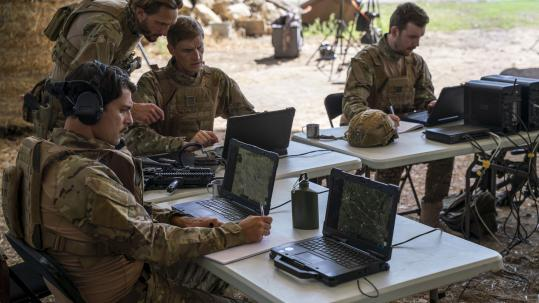
Introducing HIMARS will require more than receiving launchers. The Canadian Army will need doctrine, training areas, targeting networks, command-and-control integration, ammunition storage, airlift planning, maintenance systems, and coordination with sensors. Long-range fires depend on the network that finds targets, clears fires, manages deconfliction, and keeps launchers supplied.
The deal gives Canada a major new precision-strike capability, while placing the country inside one of the busiest defence production streams in the allied market. Its long-term value will be judged by launcher delivery, munitions availability, sustainment planning, and whether Canadian industry can secure useful participation in the supply chain that supports the capability over decades.