IN Brief:
- CBG Systems will supply and install insulation, linings, and pinning across the first three Hunter-class frigates.
- The company will establish workshop, office, and delivery capability at Osborne Naval Shipyard alongside the construction programme.
- The award follows prototype-block work and extends CBG Systems’ role into the full Batch 1 ship fit-out programme.
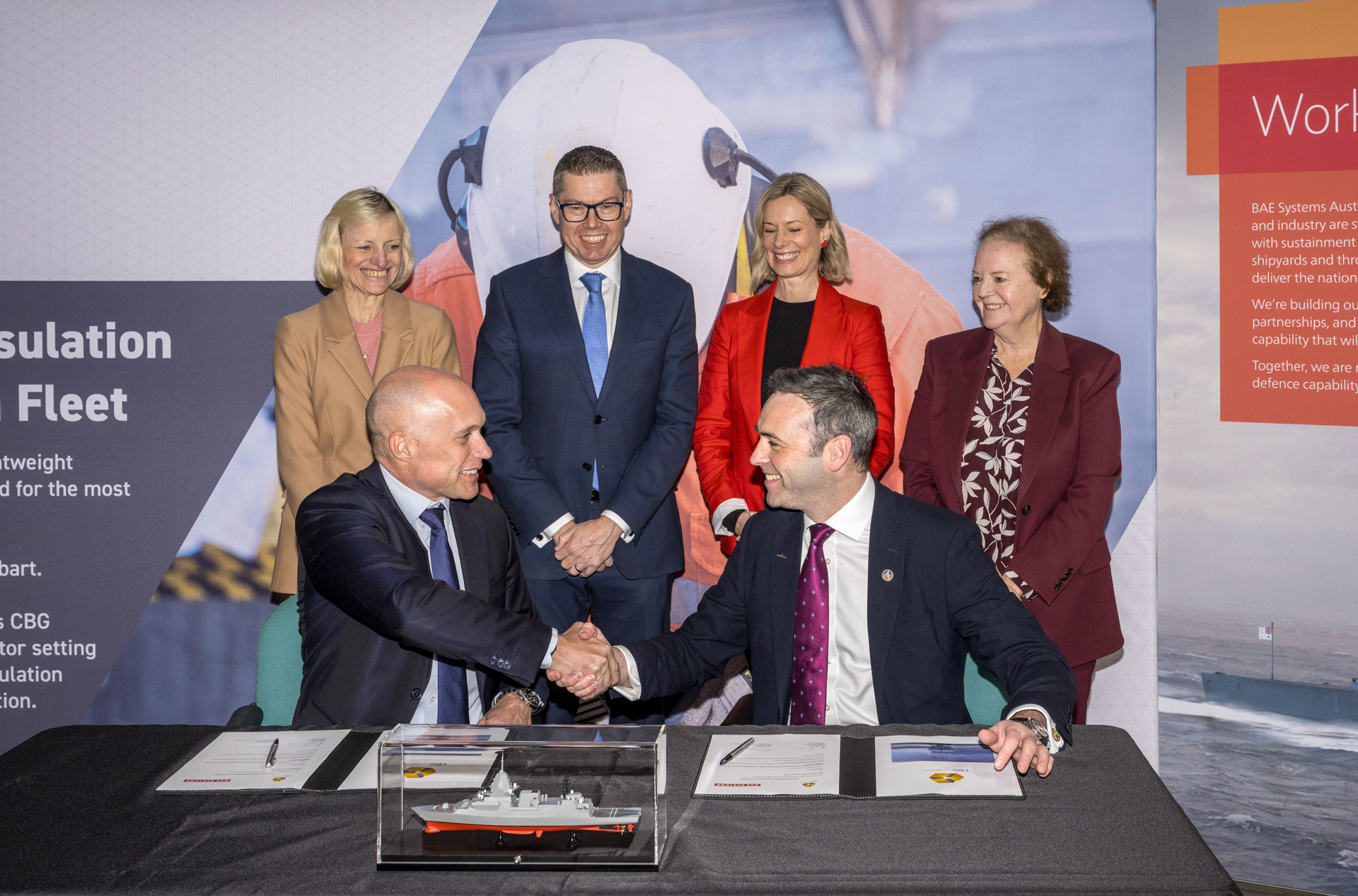
CBG Systems has secured an $83 million contract from BAE Systems Maritime Australia to supply and install fire, thermal, and acoustic insulation across the first three Hunter-class frigates, extending the Tasmanian manufacturer’s involvement from prototype work into the Batch 1 shipbuilding programme.
The contract covers insulation, linings, and pinning for the three anti-submarine warfare ships and requires CBG Systems to establish operations at the Osborne Naval Shipyard in South Australia. The company plans to place personnel, workshop capacity, and office facilities alongside the build programme while retaining its manufacturing and engineering base in Tasmania.
CBG Systems employs more than 45 people and has worked in the maritime sector for more than four decades. Its involvement in Hunter began in 2023 through insulation work on prototype blocks used to test production tooling, systems, processes, and build methods before those methods were transferred into ship construction. The new award turns that preliminary work into a sustained package across all three Batch 1 frigates.
Insulation has several functions on an anti-submarine warfare vessel. Fire protection and thermal control are fundamental ship-safety requirements, while acoustic treatment helps control machinery and structure-borne noise. Hunter is derived from BAE Systems’ Type 26 Global Combat Ship and is designed around an acoustically quiet hull and a sonar suite intended for submarine detection, placing additional demands on material selection and installation quality.
CBG Systems’ existing business includes structural fire protection and marine insulation for naval and commercial vessels. The company also manufactures lightweight panelised systems intended to reduce installed weight compared with conventional metal-clad insulation arrangements. The Hunter package goes beyond supplying material because it includes installation labour and an embedded shipyard presence, putting CBG Systems directly into the sequencing and quality-control requirements of the build.
“This is a landmark contract for CBG Systems, and for Tasmania’s Defence industry more broadly,” said Javier Herbon, Managing Director of CBG Systems. Establishing a permanent delivery presence at Osborne will require the company’s personnel to work alongside shipbuilders and equipment suppliers as blocks progress through assembly and fit-out rather than delivering completed material from Tasmania alone.
The award comes as the Hunter programme moves deeper into construction. The keel of the first frigate, NUSHIP Hunter, was laid at Osborne in August, following several years of prototyping and production preparation. Australia currently plans six Hunter-class ships, with the first three forming the initial batch covered by the CBG Systems work package.
BAE Systems says more than 140 contracts have been awarded for work on those first three vessels and more than 80 Australian suppliers are active on the programme. The wider Hunter build is expected to support more than 5,000 jobs across BAE Systems Australia and its supply chain over its lifetime. Those suppliers have to deliver components and trades in sequence as increasingly complete ship blocks move towards final assembly and outfitting.
Hunter’s configuration adds further integration demands because the Type 26 baseline has been adapted around Australian equipment, including CEAFAR2 radar, Australian combat-system interfaces, sonar equipment, Mk 41 vertical launch capability, and local support arrangements. Insulation and lining work has to coexist physically with combat, electrical, ventilation, piping, and maintenance systems without compromising access, fire protection, weight, or acoustic requirements.
The prototype phase gave CBG Systems an opportunity to establish installation methods on representative Hunter structures before series construction accelerated. That earlier work reduces some production risk, but the Batch 1 contract increases both volume and coordination requirements as ship sections become more densely outfitted.
The Osborne presence also pulls a specialist supplier closer to the production line. Problems involving fit, interfaces, access, or installation sequence can be addressed alongside the shipbuilder rather than passed between separate sites, while lessons from the first vessel can be fed into later blocks and subsequent ships.
The $83 million award now takes CBG Systems from production preparation into delivery across three frigates. Its performance will be measured less by the properties of individual insulation products than by repeatable installation quality, schedule adherence, and the ability to integrate specialist protection systems into a complex warship build without disrupting the surrounding trades.