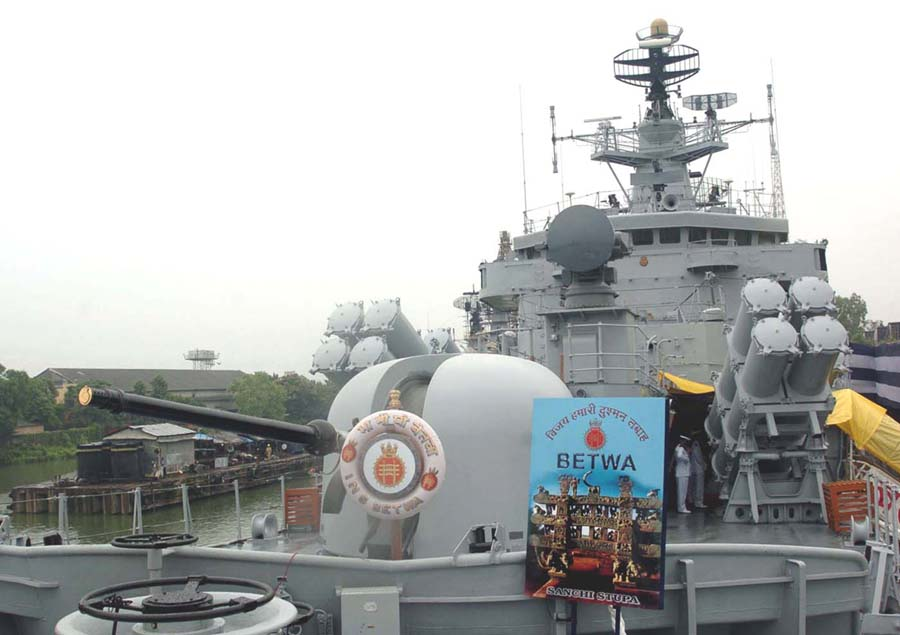
IN Brief:
- India's Ministry of Defence has awarded Cochin Shipyard a ₹498.58 crore refit and re-powering contract.
- INS Betwa will exchange its steam propulsion machinery for a diesel-based system and receive upgraded weapons.
- More than 50 Indian micro, small, and medium enterprises are expected to participate.
Cochin Shipyard Limited has secured a ₹498.58 crore contract to refit and re-power the Indian Navy’s INS Betwa, replacing the Brahmaputra-class frigate’s steam propulsion machinery with a diesel-based system and modernising its combat equipment.
India’s Ministry of Defence signed the agreement in New Delhi on 11 November 2026, in the presence of Defence Secretary Rajesh Kumar Singh. The work is classified as a Normal Refit and Re-powering programme, combining maintenance of an existing naval vessel with a major change to its propulsion architecture.
The ministry confirmed that the frigate will receive diesel engines in place of its existing steam-based propulsion system. The contract also includes installation of a modernised weapon suite, although the government has not identified the new equipment, machinery suppliers, detailed technical configuration, or anticipated completion date.
INS Betwa is a guided-missile frigate of the Brahmaputra class, constructed in India for the country’s navy. The class entered service with steam propulsion, and the proposed conversion represents a substantial departure from the original mechanical arrangement without requiring the construction of an entirely new vessel.
Steam propulsion depends on boilers generating high-pressure steam to drive the machinery connected to a ship’s propellers. A diesel installation instead produces mechanical power through internal combustion engines, requiring different supporting systems for fuel, cooling, exhaust, controls, and machinery operation.
Replacing the principal propulsion machinery within an existing warship presents different engineering conditions from designing a new vessel around its engines. The available compartment dimensions, existing shaft lines, structural supports, machinery access routes, and electrical infrastructure can constrain the arrangement and installation of replacement equipment.
Propulsion interfaces must also be considered as a complete system. Changes to engine speed, power transmission, machinery controls, and auxiliary equipment can affect the way the ship’s existing propulsion components operate together. Cochin Shipyard has not disclosed whether Betwa’s shafting, gearboxes, or propeller arrangements will be retained or modified.
The physical installation may require alterations to machinery foundations, pipework, ventilation, and exhaust arrangements. Such work must accommodate the replacement engines within the ship’s existing hull structure while maintaining access for inspection, operation, and maintenance throughout its remaining service life.
These are engineering considerations associated with changing propulsion type rather than a confirmed list of individual alterations under the Betwa contract. The ministry has described the overall conversion but has not released drawings, equipment specifications, or the detailed work allocation among shipyard departments and suppliers.
Once installed, replacement propulsion equipment must be integrated with the ship’s existing control and auxiliary systems. Machinery operation, safety arrangements, instrumentation, and the interfaces between new and retained equipment require verification before the converted vessel can complete its acceptance programme.
The ministry has not published performance targets for the re-powered frigate. Its future speed, endurance, fuel consumption, operating availability, and remaining service life cannot therefore be established from the contract value or the decision to adopt diesel propulsion alone.
The modernisation of the vessel’s weapons introduces another substantial integration task. Warship combat systems bring together sensors, communications, fire-control equipment, launch arrangements, and other onboard systems. Replacing elements of that equipment requires compatibility with the vessel’s existing infrastructure and the intended operational configuration.
Changes to the weapon suite may involve equipment mounting, power distribution, cabling, software interfaces, and associated testing. The extent of these requirements depends on the specific systems selected, which have not been disclosed. No particular missile, gun, radar, or combat-management upgrade can yet be attributed to the award.
Cochin Shipyard has previously undertaken a related re-powering programme for another Brahmaputra-class frigate. In October 2023, the company received a ₹313.42 crore contract for the mid-life upgrade and re-powering of INS Beas, with an estimated duration of approximately 24 months at the time of award.
The Beas programme established a previous contract for complex modernisation within the same frigate class. However, differences in vessel condition, equipment specifications, and contractual scope mean its original cost and schedule should not be treated as direct estimates for the Betwa work.
India’s government expects more than 50 micro, small, and medium enterprises to participate in the latest project. This would extend the industrial activity beyond the principal shipyard, providing opportunities across the domestic repair, engineering, equipment, and supporting manufacturing sectors.
Specialist suppliers are important to major refits because shipyards must obtain both replacement equipment and the services needed to integrate it into an established platform. The required capabilities can include fabrication, precision engineering, electrical installation, machinery servicing, and testing, depending on the final work packages.
The ministry has not named the participating businesses or allocated specific components to domestic manufacturers. The anticipated involvement of more than 50 enterprises is therefore a programme expectation, rather than confirmation that individual supplier contracts have already been placed.
The project forms part of India’s policy of increasing domestic defence manufacturing and maintenance capacity. Cochin Shipyard’s work on existing naval platforms complements its newbuild activities by supporting more complex engineering and modernisation work within the country’s ship repair industry.
The ₹498.58 crore agreement confirms the government’s financial commitment and the principal technical changes planned for INS Betwa. Further details of the propulsion equipment, weapon suite, industrial participation, and acceptance timetable will establish the final configuration as the programme moves through implementation.
Featured image: Ting Chen, CC BY-SA 2.0. Photograph taken before the November 2026 refit award.