IN Brief:
- Dan Chiang is the first of five Batch 2 Tuo Chiang-class missile corvettes planned for Taiwan’s navy.
- The programme combines a high-speed catamaran hull with indigenous missiles, sensors, and combat systems.
- Four further vessels are expected to follow as Taiwan maintains pressure on domestic naval production capacity.
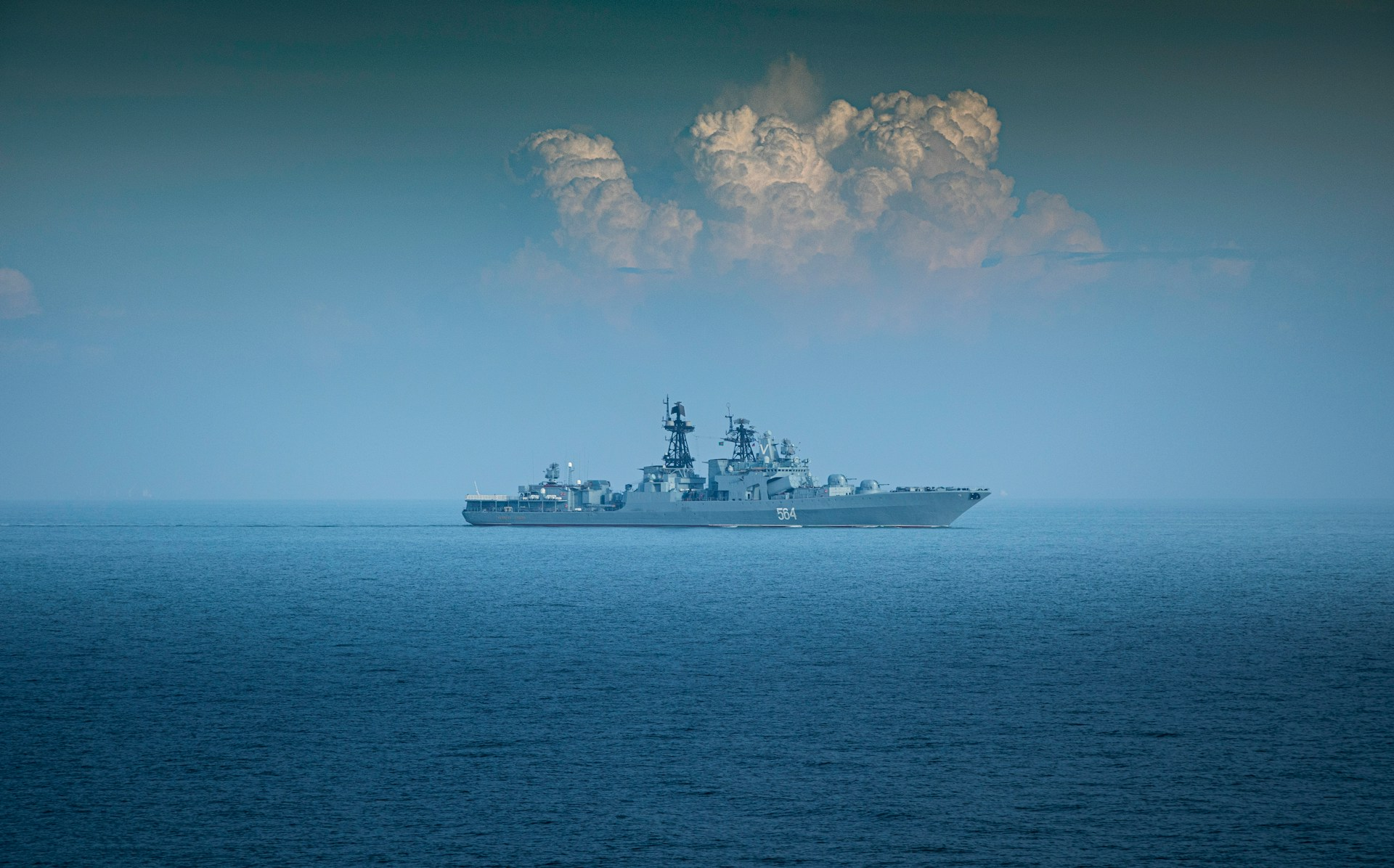
Taiwan has commissioned Dan Chiang, the first Batch 2 vessel in its Tuo Chiang-class missile-corvette programme, as indigenous construction of compact surface combatants moves into another production standard.
The ship entered service at Zuoying naval base and is the eighth vessel in the broader Tuo Chiang lineage. Four additional Batch 2 ships are planned, extending a programme built around high speed, dispersed firepower, and domestic systems integration.
Designed around a catamaran hull, the class combines shallow draught and high speed with a substantial missile fit for its displacement. Taiwan has used the design to distribute anti-ship capability across a larger number of relatively compact vessels rather than concentrating it entirely in major combatants.
Dan Chiang incorporates changes drawn from earlier ships, allowing the latest batch to address equipment layout, maintenance access, combat-system integration, weight control, and production sequence. The programme is consequently moving through controlled evolution rather than repeating an unchanged hull.
Lung Teh Shipbuilding is responsible for construction, while the National Chung-Shan Institute of Science and Technology supplies much of the indigenous weapons, electronics, and mission-system capability. Their relationship connects commercial shipyard capacity with a national defence research and production organisation.
Compact missile ships can be more difficult to integrate than their size suggests. Limited internal volume leaves little room to absorb equipment growth, reroute cables, expand cooling, separate hazardous systems, or provide access for maintenance.
Every new antenna, launcher, electronic cabinet, decoy, or communications system competes for weight, electrical power, deck area, and cooling capacity. A design that begins with comfortable margins can become tightly constrained after several rounds of operational modification.
The aluminium catamaran structure also requires careful production control. Welding and joining processes must limit distortion, preserve alignment between hulls, protect fatigue-sensitive details, and manage corrosion in a high-speed marine environment.
Repeated operation at speed transfers substantial cyclic loads through the connecting structure. Workmanship, non-destructive inspection, and repair procedures will influence the class’s long-term availability as much as its original design calculations.
Weight management remains particularly sensitive. Additional tonnes introduced through reinforcement, cabling, stores, or new systems can affect speed, fuel consumption, stability, and seakeeping.
Batch production offers engineers better operating data from earlier vessels, although it also creates pressure to include crew requests before the remaining ships are sufficiently advanced. Changes introduced too late can interrupt work, create rework, and fragment the fleet configuration.
Combat-system integration accounts for a significant share of the effort after launch. Anti-ship missiles, air-defence weapons, surveillance sensors, electronic warfare, communications, navigation, and fire control must function through a coherent architecture.
Software work continues long after the hull is structurally complete. Harbour and sea trials are used to stabilise radar performance, data links, weapon interfaces, navigation equipment, and combat-management functions under representative electrical and electromagnetic loads.
Taiwan’s parallel work on autonomous maritime systems with NCSIST and Saronic points towards a broader fleet architecture in which corvettes operate alongside distributed sensors and uncrewed vessels.
Such integration increases dependence on secure communications, common data standards, cyber resilience, and software updates. A missile corvette may eventually act as one firing or command node among several crewed, uncrewed, airborne, and shore-based systems.
Batch 2 production is also testing the resilience of Taiwan’s naval supply chain. Shipyards require engines, gearboxes, generators, marine equipment, electronics, radars, weapons, and specialist materials on schedules that match hull construction.
Some items can be sourced domestically, while others remain dependent on international suppliers, export approvals, or manufacturing capacity outside Taiwan. Delayed equipment can leave hulls occupying valuable yard space while awaiting outfitting.
Early delivery creates different problems. Sensitive electronics and weapons require secure, climate-controlled storage, preservation, configuration control, and periodic inspection before installation.
The workforce cannot expand at the same pace as demand. Naval architects, aluminium welders, electricians, pipefitters, software engineers, test specialists, and combat-system technicians are also required across submarine, coastguard, support-vessel, and commercial work.
Repeated construction helps retain expertise, provided orders arrive with enough continuity to prevent experienced teams dispersing between batches. The Tuo Chiang and related Anping coastguard programmes have already broadened Taiwan’s experience with fast catamaran production.
Common design knowledge and suppliers can reduce cost, though military and coastguard configurations still require separate weapons, software, communications, and acceptance regimes.
Commissioning transfers Dan Chiang from shipbuilder to operator, but industrial work continues through warranty support, defect correction, maintenance planning, software management, and the incorporation of operating experience into the remaining vessels.
A disciplined feedback process can improve later ships without allowing every lesson to become an immediate design change. Configuration boards must decide which alterations justify disruption and which should wait for a later upgrade period.
Taiwan has concentrated substantial firepower within a compact domestic hull, creating a demanding balance between speed, payload, integration, and supportability. The four remaining Batch 2 vessels will show whether that balance can be reproduced consistently while the shipyard and supplier network remain under pressure.