IN Brief:
- Denmark has selected Kongsberg's Joint Strike Missile for its F-35 fleet, becoming the seventh country to choose the weapon.
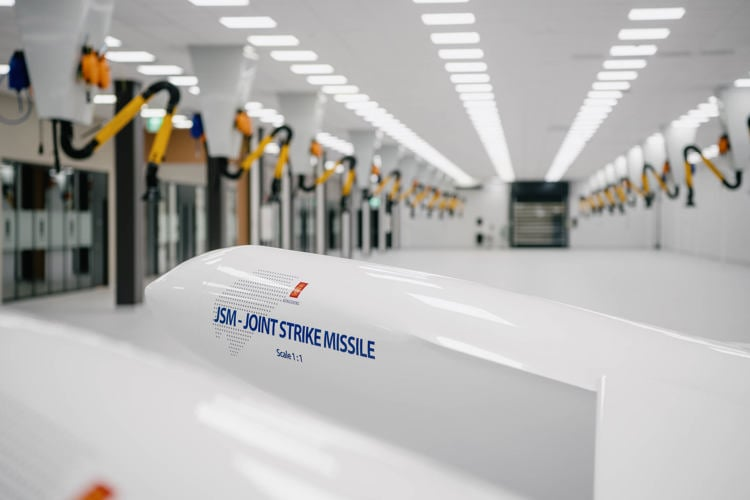
- JSM is designed for internal carriage on the F-35A and combines mission planning, navigation and imaging infrared targeting.
- Missile quantity, contract value and delivery arrangements have not been finalised.
Denmark has announced plans to acquire Kongsberg‘s Joint Strike Missile for its F-35 fighter fleet, becoming the seventh country to select the air-launched weapon. The decision establishes an intention to procure JSM, while the number of missiles, contract value and delivery arrangements remain subject to negotiations with the Norwegian manufacturer.
Kongsberg confirmed the selection on 22 October and said it would update the market once an agreement had been signed. The company identified Australia, Canada, Germany, Japan, Norway and the United States as the six existing selection countries. No production contract has yet been signed, and neither party has disclosed a quantity.
Denmark’s defence minister, Jeppe Bruus, also announced the country’s intention to obtain other long-range strike weapons, including the ground-launched Anthem system. The JSM decision concerns aircraft carriage and is a separate procurement track. The government did not disclose the number of either weapon it expected to buy or when deliveries would be available.
JSM has been developed for integration with the F-35A, including carriage within its internal weapons bay. Housing a missile internally helps preserve the aircraft’s low-signature configuration compared with mounting large stores on external pylons. Internal carriage imposes particular constraints on weapon dimensions, separation from the aircraft and compatibility with onboard control and mission systems.
The manufacturer lists a length of four metres, a weight of 416kg and a range exceeding 350km, with high subsonic flight speed. These are product specifications, not a guarantee of the range available in every mission. Launch conditions, intended route, flight profile and target location influence how much distance an aircraft-launched weapon can cover.
Its guidance architecture combines navigation and mission planning with an imaging infrared seeker for the terminal phase of flight. Mission planning can use geographic information to establish a route and approach, while the seeker supplies image information used to discriminate between potential objects in the target area. The company also describes automatic target recognition as a supported capability.
Automatic recognition does not eliminate the need for authorised target selection or the operating rules governing the weapon. The effectiveness of target discrimination depends on the conditions encountered and the information available to the system. Kongsberg has not published Danish-specific testing results or the mission configurations that would be authorised after acquisition.
The weapon draws on technology developed for Kongsberg’s Naval Strike Missile, including work on navigation, seekers and low-altitude flight. Nevertheless, the two products have different launch arrangements and integration requirements. JSM is designed for aircraft, whereas the Naval Strike Missile is deployed from ships or coastal batteries in other configurations.
Denmark separately signed a contract worth approximately NOK400 million for additional Naval Strike Missiles on 19 October. That agreement supports the country’s coastal defence system and concerns an undisclosed missile quantity. It is not the newly announced JSM decision and must not be combined with it to produce a fictitious total value for Denmark’s air-launched acquisition.
Carrying a precision weapon inside a combat aircraft requires the weapon, aircraft and mission planning systems to work together. Mechanical attachments and release arrangements must be compatible with the available space, while electrical and software interfaces need to support the required transfer of mission information. Verification is necessary before the particular aircraft configuration can employ the missile operationally.
Those tasks involve both the missile manufacturer and the wider aircraft programme. Prior integration activity for JSM provides an existing technical foundation, but it does not demonstrate that every Danish aircraft already has the necessary configuration or that Denmark has completed its own training, acceptance and support preparations.
The eventual programme will also require arrangements for storage, inspection and maintenance. Precision weapons contain electronics and other components with controlled handling and support requirements, while aircrew and maintenance personnel need procedures suited to the selected equipment. Kongsberg has not identified which services or support infrastructure Denmark will buy alongside the missiles.
Multiple customers may offer the manufacturer greater visibility of potential future demand, but a selection announcement is not equivalent to a funded order. Factory capacity, component procurement and production schedules must be aligned with formal commitments, and individual national deliveries remain dependent on agreed contracts and qualification milestones.
Denmark’s stated intention would add an internally carried strike option to its F-35 fleet. For now, the confirmed development is the government’s selection of JSM and its decision to negotiate the acquisition. Missile quantities, programme value and initial delivery dates will become reportable milestones only when the remaining commercial and technical arrangements are disclosed.