IN Brief:
- Kawa UAV has completed the maiden flight of its Divyastra Mk3 jet-powered loitering munition.
- The aircraft uses a turbojet developed by Indian propulsion specialist DG Propulsion.
- Flight testing now shifts attention towards guidance, endurance, payload integration, qualification, and repeatable manufacture.
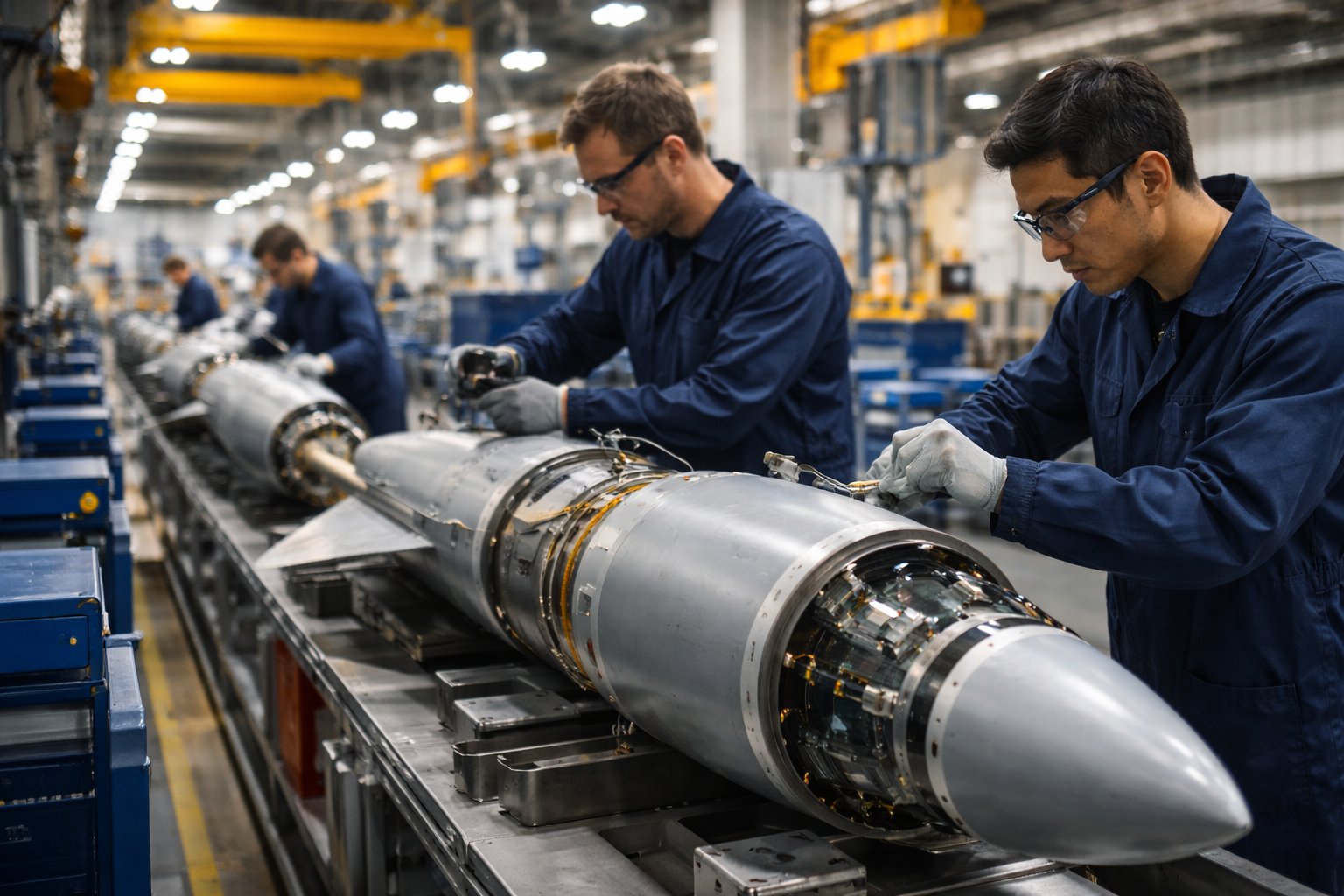
Indian defence technology company Kawa UAV has completed the maiden flight of its Divyastra Mk3 jet-powered loitering munition, moving the programme from ground development into flight testing as India continues to expand its domestic uncrewed-weapons sector.
The aircraft flew at a designated drone test site in Uttar Pradesh, with Kawa subsequently announcing the milestone publicly. The company describes Divyastra Mk3 as an indigenously designed and manufactured system, while its turbojet propulsion has been developed by Indian engine specialist DG Propulsion.
Kawa UAV, which also operates under the HoverIt name, is based in Lucknow and sits within the wider Uttar Pradesh defence-industrial ecosystem. The maiden flight gives the company its first opportunity to move beyond individual component and ground tests towards proving that propulsion, flight controls, airframe, guidance, launch arrangements, and supporting software operate together as one system.
Jet propulsion changes the engineering problem considerably compared with electrically powered or piston-engined loitering systems. Higher speed can shorten the interval between detection and engagement, but the benefit comes with greater demands on fuel storage, thermal management, intake design, vibration control, guidance response, and structural integrity.
Those constraints are particularly severe in a comparatively compact airframe. Space and mass allocated to fuel compete directly with sensors, communications equipment, payload, control electronics, and structural reinforcement, leaving designers to trade speed and endurance against one another rather than optimise both independently.
The propulsion element is therefore central to the programme’s industrial significance. Small military turbojets are specialist products, and countries dependent entirely on imported engines remain exposed to availability, export controls, spares, and configuration changes that sit outside national control.
Integrating an Indian-developed engine gives Kawa greater influence over the final aircraft configuration and creates scope for the propulsion system to evolve alongside the weapon. Airframe and engine engineers can change intake geometry, fuel delivery, mounting, thermal protection, or control software together rather than designing around a fixed imported package.
That does not make the programme mature. A maiden flight demonstrates that the basic configuration can launch, fly, and be controlled, but it says relatively little about endurance, terminal accuracy, navigation under electronic attack, payload performance, environmental reliability, or the repeatability required for military qualification.
Loitering munitions also occupy an awkward technical position between conventional missiles and reusable unmanned aircraft. They need enough endurance to search, wait, or reposition before an engagement, while retaining sufficiently responsive flight characteristics for the terminal phase. Navigation and communications may have to function in a contested electromagnetic environment, yet the complete vehicle still has to be economical enough to be expended in use.
For a jet-powered design, engineers must also balance speed against useful loiter time. Higher fuel consumption can reduce endurance unless additional fuel is carried, but additional fuel increases mass and can constrain the payload or mission electronics. Those trade-offs will become more visible as Kawa moves beyond its first flight and publishes more detailed performance information.
The Indian industrial context is equally relevant. New Delhi has been pushing a greater share of defence research, development, and manufacture towards domestic organisations, including smaller technology businesses able to work outside the development cycles associated with major state-owned groups.
Uncrewed systems are one area where comparatively small engineering teams can move quickly. Airframes, software, electronics, propulsion, and commercial manufacturing methods can be combined without the capital requirements of a conventional combat-aircraft programme, allowing companies to reach prototype testing with relatively modest infrastructure.
Moving from prototype to military production is harder. Serial manufacture requires controlled suppliers, documented processes, repeatable engine performance, electronics availability, quality assurance, dedicated test equipment, and configuration management. A design assembled successfully by its development engineers still has to show that production staff can build larger quantities to the same standard.
Qualification creates another layer. Defence customers typically require environmental testing, electromagnetic compatibility, transport and storage assessments, communications evaluation, safety evidence, and proof that critical subsystems operate predictably across temperature, vibration, and handling conditions. A loitering munition also needs dependable launch procedures and a production model capable of supplying complete rounds rather than experimental aircraft.
There is a supply-chain advantage if Kawa and DG Propulsion can keep important technologies inside India, particularly if the system progresses towards quantity manufacture. Domestic propulsion, software, airframe production, and integration can reduce exposure to foreign licensing restrictions and simplify later changes to configuration.
It may also widen eventual export options if the final system avoids components subject to restrictive third-country approvals. That benefit depends on how much of the complete bill of materials is genuinely domestic rather than on the origin of the airframe and engine alone.
No customer, production order, final payload, operational range, or qualification timetable has yet been established publicly, so Divyastra Mk3 remains a flight-test development rather than an operational weapon.
The useful milestone is narrower but still material: Kawa has put an indigenous jet-powered loitering-munition configuration into the air, with an Indian propulsion company providing one of its most demanding subsystems. The next development phase will show whether that combination can become a qualified and repeatable product rather than remain an impressive prototype.