IN Brief:
- GA-ATS and TRAKKA Systems have formed a strategic mission-sensor partnership for Do228 NXT.
- The gyro-stabilised TC-375 provides multispectral Full-HD imaging for day-and-night operations.
- Integration broadens the aircraft's mission-equipment offering following its June 2026 first flight and public debut.
General Atomics AeroTec Systems and TRAKKA Systems have formed a strategic partnership to offer multispectral imaging equipment as an integrated mission option for the Do228 NXT. The arrangement adds the TrakkaCam TC-375 to the German-built aircraft’s expanding sensor portfolio as GA-ATS moves the updated Do228 from initial flight testing towards a broader range of special-mission configurations.
General Atomics AeroTec Systems, or GA-ATS, announced the agreement with Swedish mission-equipment supplier TRAKKA Systems on 12 August. The companies intend to offer TRAKKA camera systems as supported equipment for the Do228 NXT rather than leaving operators to arrange an independent post-delivery sensor installation.
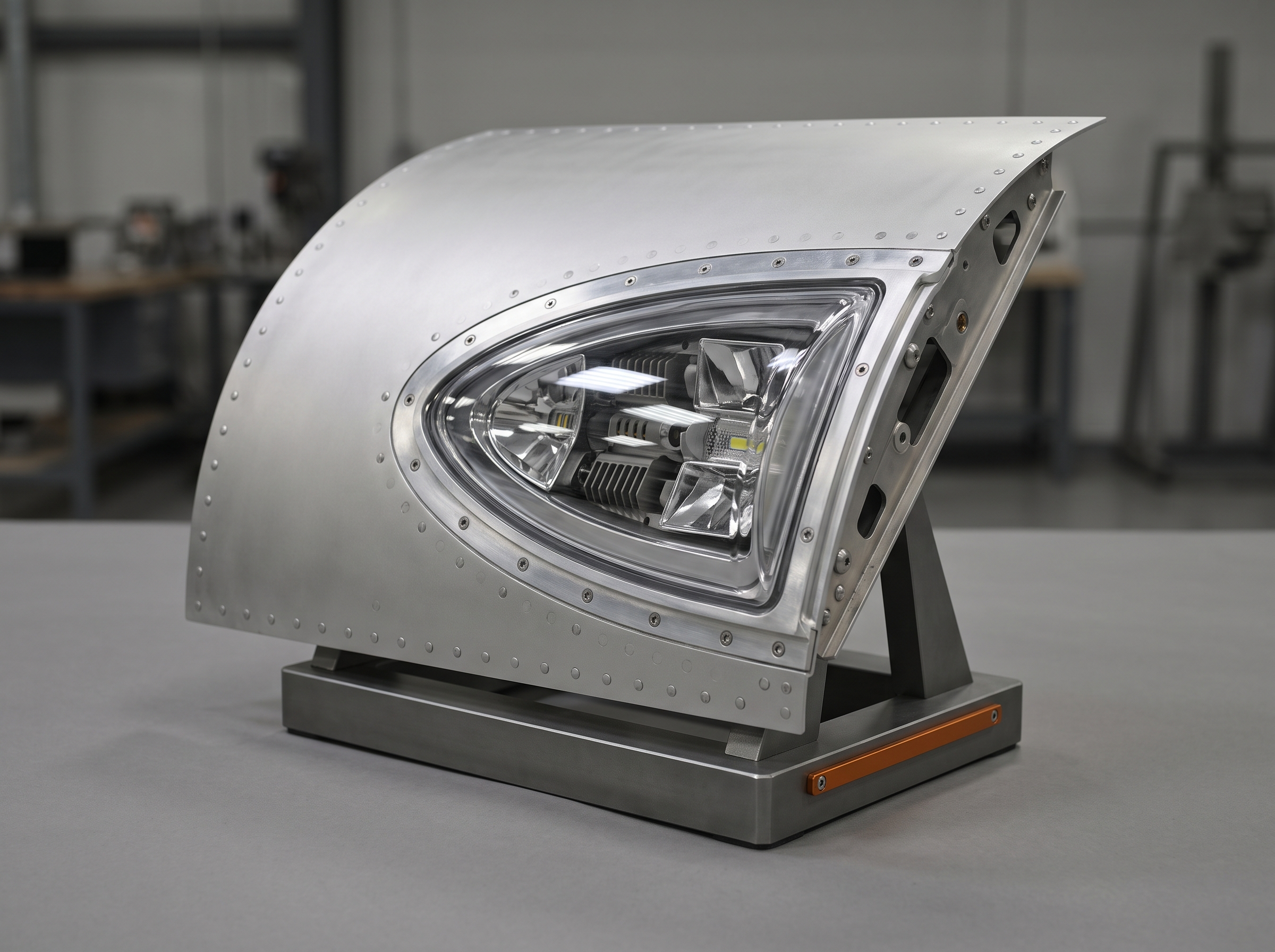
The selected TC-375 is a gyro-stabilised multispectral imaging system designed for surveillance and reconnaissance work in day and night conditions. GA-ATS says the sensor provides Full-HD imagery and supports real-time detection and identification across a range of operating environments.
Potential missions identified for the camera include military intelligence, surveillance, and reconnaissance alongside search and rescue, law enforcement, disaster response, and environmental monitoring. That range reflects the wider positioning of the Do228 NXT as a configurable special-mission aircraft rather than a platform built around a single military sensor suite.
The integration work is more important than simply making the camera available on an options list. Installing a stabilised electro-optical turret affects the aircraft mechanically, electrically, aerodynamically, and digitally. The sensor requires a position with an appropriate field of regard, a structural installation capable of handling its loads, power and data connections, operator interfaces, and integration with any mission computer, recording equipment, or wider surveillance system carried by the aircraft.
Vibration and line-of-sight stability are particularly relevant for long-range imaging. A camera may meet its laboratory performance specification while producing less useful imagery if installation vibration, airframe movement, or an obstructed viewing angle reduces its ability to maintain a stable track. Factory-supported integration gives the aircraft manufacturer and sensor supplier an opportunity to address those questions as part of one controlled configuration.
That can also simplify certification and support. A customer purchasing an already integrated mission option has a clearer baseline for installation, flight testing, maintenance, software configuration, and future upgrades than one commissioning a separate third party to modify delivered aircraft. The advantages become greater where several customers want broadly similar surveillance packages.
The Do228 NXT completed its first flight and official public premiere in June 2026. GA-ATS describes the aircraft as the next generation of the Dornier 228 family and is developing it for roles including maritime surveillance, patrol, intelligence work, search and rescue, cargo operations, and environmental monitoring.
Aircraft in this size class occupy a different part of the surveillance market from large maritime-patrol aircraft or business-jet-derived ISR platforms. They generally trade high transit speed and large mission-system capacity for lower operating costs, relatively compact infrastructure requirements, and the ability to perform persistent regional missions. That puts considerable importance on modular sensors because the same airframe may have to support several customers with different surveillance priorities.
Electro-optical equipment also rarely operates alone in more demanding ISR configurations. A multispectral camera can provide identification imagery or investigate contacts detected by another sensor, but its operational usefulness increases when tracks, position data, imagery, and operator annotations can move through the wider mission system without repeated manual handling.
The new partnership therefore creates the opportunity for deeper integration, although GA-ATS has not disclosed the complete mission-system architecture around the TC-375. There is no announced military customer for the configuration, and the companies have not published a delivery schedule or stated that a flight-tested TC-375 installation has already been completed.
That distinction keeps the development at the right scale. The 12 August announcement expands the supported sensor offering for the aircraft; it does not amount to a military procurement award or an operational ISR capability entering service.
The next useful milestone will be an installed and flight-tested system. That process can demonstrate field of regard, stabilisation, electrical integration, operator workflow, imagery handling, and the effect of the installation on the aircraft itself. A customer programme would then provide the stronger evidence that the configuration has moved from a manufacturer’s integration roadmap into a supported operational product.
For GA-ATS, expanding the mission-equipment catalogue is nevertheless necessary as the Do228 NXT moves beyond its first-flight phase. Special-mission aircraft are ultimately judged by what their sensors and operators can achieve rather than the airframe alone, making successful integration of products such as the TC-375 central to turning the revised Do228 into a broader surveillance platform.