IN Brief:
- EOS and VOP CZ signed a memorandum at Future Forces Forum in Prague on 21 October.
- The partnership will examine remote weapon systems for Czech wheeled armoured vehicle programmes and other European opportunities.
- No weapons system, vehicle integration contract, quantity or investment amount has been agreed publicly.
Electro Optic Systems (EOS) and Czech state-owned defence company VOP CZ have signed a memorandum of understanding to investigate the integration of remote weapon stations into wheeled armoured vehicles for the Czech Army. The agreement covers potential programmes in the Czech Republic and other European markets where VOP CZ is involved, but neither party has announced an equipment order, selected vehicle or production contract.
The memorandum was signed at Future Forces Forum in Prague on 21 October and disclosed on 22 October. EOS will contribute its existing expertise in remote weapon systems, while VOP CZ brings capabilities in military vehicle integration, manufacturing and sustainment. The partners will evaluate possible customer requirements and identify programmes where those capabilities could be combined.
The agreement is exploratory. It provides a basis for technical and commercial discussions, rather than committing the Czech Army to purchase a particular weapon station. The companies have not specified quantities, contract values, delivery milestones or the division of responsibilities under a future production agreement.
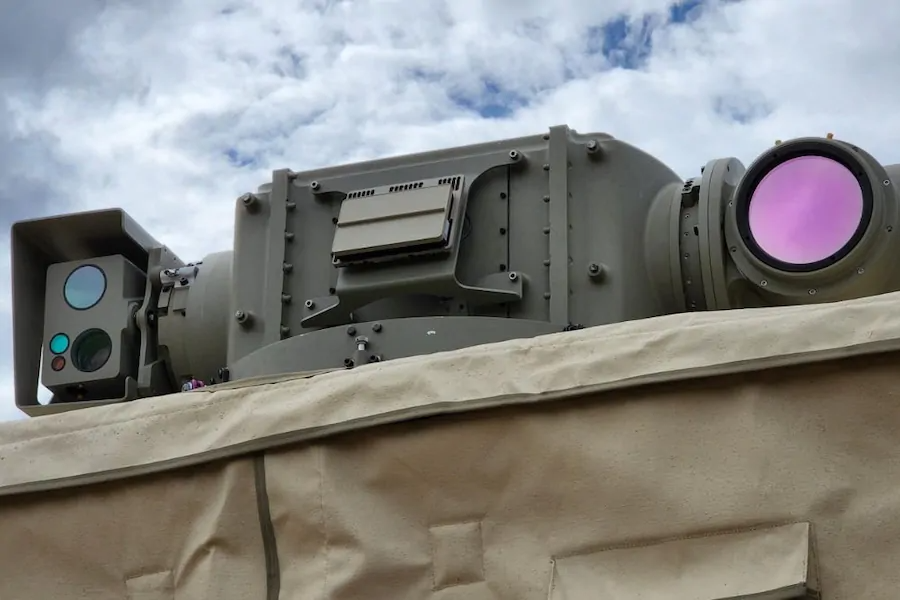
Remote weapon stations allow crews to observe and operate externally mounted weapons from protected positions inside vehicles. The equipment generally combines weapon mounting and movement mechanisms, optical sensors, control electronics and an operator interface. Product-specific capabilities depend on the weapon, sensors and stabilisation functions fitted to the selected system.
Integration begins with the vehicle’s structural and electrical interfaces. A weapon station adds weight and mechanical loads to its mounting position, while its drives, control equipment and sensors require a suitable power supply. Engineers must also account for the space needed by the installation, its movement envelope and any restrictions created by other equipment on the host vehicle.
The relationship between the weapon and sighting system can introduce further design requirements. Stabilisation is intended to maintain controlled aiming and observation as the vehicle moves, while the fire control equipment must receive the information needed to calculate and command the specified response. The accuracy and performance of the complete installation cannot be inferred solely from the supplier’s general product description.
EOS has supplied more than 2,500 remote weapon systems worldwide, according to the company’s October statement. Its portfolio includes stations for ground vehicles and counter-uncrewed aircraft applications, with products differing in armament and intended operational use. The Czech agreement does not identify the Slinger family or any other EOS station as a confirmed choice, and no new local production line has been announced.
VOP CZ’s established manufacturing base provides relevant experience with demanding vehicle integration work. At Šenov, the company began the domestic assembly phase of the CV90 infantry fighting vehicle programme in July 2026, following a transfer of production technology from BAE Systems Hägglunds. The first Swedish-built hulls reached the Czech site as that programme moved towards local assembly and testing.
VOP CZ has described the CV90 work as involving more than 200 vehicles, specialised assembly lines and arrangements for subsequent maintenance. These figures concern a separate existing programme: CV90 is a tracked infantry fighting vehicle, whereas the new EOS memorandum expressly refers to exploring cooperation on wheeled armoured vehicle programmes. There is no disclosed decision to fit EOS equipment to the CV90 fleet.
The Czech business also has a strategic agreement with Thales concerning potential European production of Bushmaster protected mobility vehicles. That arrangement illustrates its work on wheeled platforms, but the EOS memorandum does not state that a Bushmaster installation has been selected or that an earlier Thales agreement has been amended.
Local manufacture and integration can create opportunities for a supplier to take responsibility for vehicle assembly, installation of mission equipment and subsequent repair services. Such arrangements nevertheless require technical information, agreed quality procedures and contractual responsibilities. A partnership announcement alone does not establish that those conditions have been satisfied for a new system.
Maintenance is an additional consideration because remote stations combine moving parts, sensors, electronics and weapon interfaces. Through-life support may involve inspection, calibration, repair and replacement components, with the customer needing suitable documentation and trained personnel for the delivered configuration. EOS and VOP CZ have not defined a joint support contract under the memorandum.
Any future Czech procurement would also need to establish the intended vehicle role. A station fitted to a reconnaissance vehicle may face different space, visibility and electrical constraints from one installed on a protected mobility or combat support platform. The companies must therefore match equipment to the actual requirement rather than assume that one installation can be transferred unchanged between vehicles.
The proposed cooperation gives EOS another industrial contact in continental Europe and gives VOP CZ access to a broader range of possible weapon station solutions. Its next milestones will depend on identifying specific programmes, agreeing an integration approach and securing customer decisions. Until then, the confirmed development is the October memorandum and the decision to explore technical cooperation.