IN Brief:
- Estonia expects a fundamental decision on long-range air defence during September budget negotiations.
- Patriot, David's Sling, and SAMP/T remain among the systems under evaluation.
- Supplier estimates range from roughly two or three years to eight or nine years for delivery.
Estonia is preparing to choose the scale and preferred supplier for a new long-range air and ballistic missile defence capability during September budget negotiations, setting up detailed contract talks for what could become one of the country’s largest defence procurements. The Estonian Centre for Defence Investments has completed an extensive market study and is clarifying the remaining details of offers before the government makes its initial decision.
The new system would sit above Estonia’s recently delivered IRIS-T SLM medium-range air defence layer and is intended to protect strategic targets including airfields, ports, and defence command centres. Ballistic missile interception forms part of the requirement, giving the programme a different role from the shorter-range systems already entering Estonian service.
Patriot, Israel’s David’s Sling, and the Franco-Italian SAMP/T family remain among the publicly identified candidates, although Estonia has requested offers from four or five companies in total. Defence Minister Hanno Pevkur has said the proposals differ substantially in configuration and maturity, making a direct comparison difficult.
Cost remains unresolved. The programme could fall below or rise above €1 billion depending on the number of systems purchased, interceptor stocks, support arrangements, and configuration selected. Estonia is consequently comparing more than the acquisition price of launchers and radars; staffing, training, maintenance, ammunition, and other lifecycle costs will shape the eventual package.
Delivery time has become one of the sharper differences between suppliers. Pevkur said some companies have indicated that systems could be delivered within two or three years, while others require eight or nine. Several offers involve equipment already in production, while others concern products still approaching final development maturity.
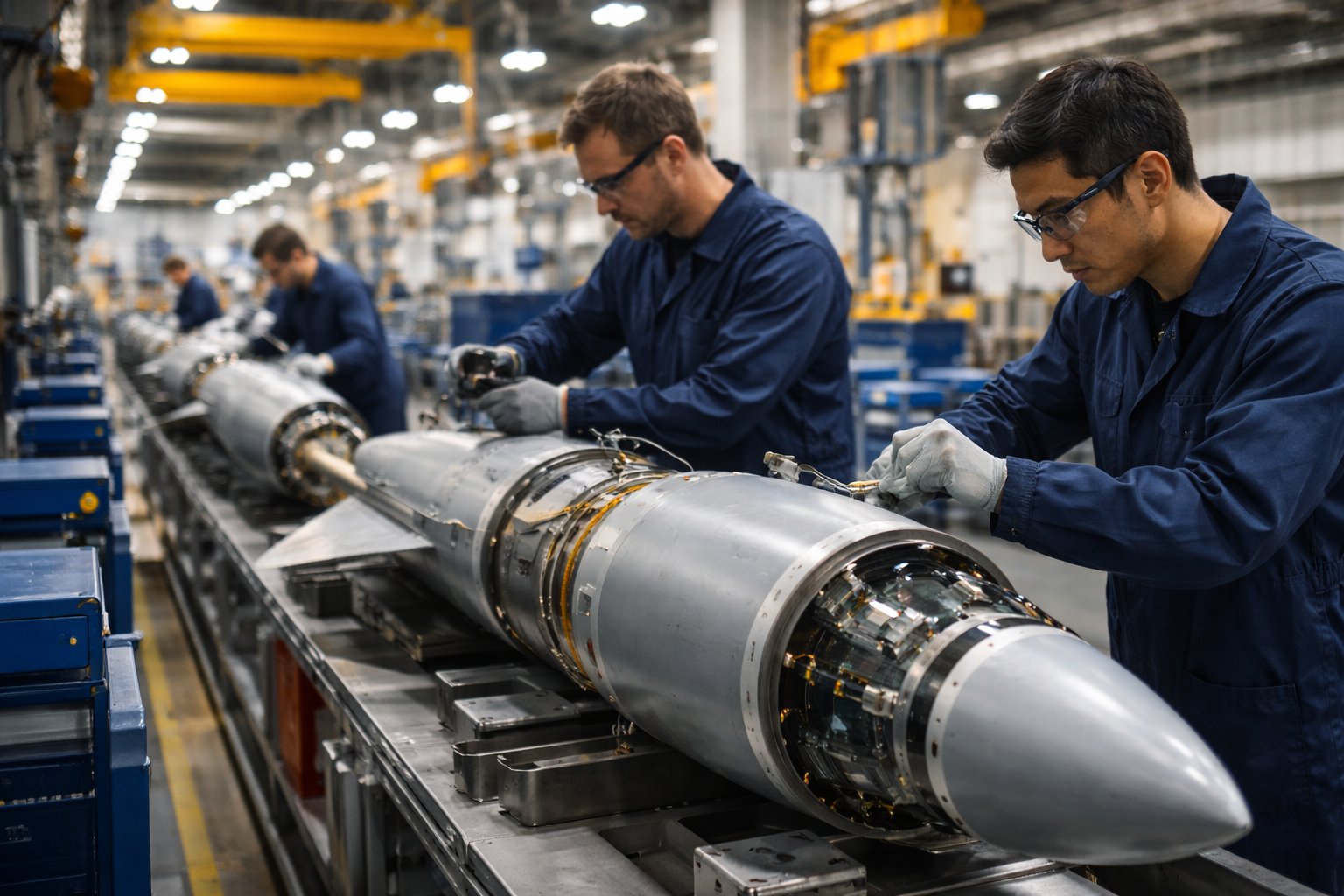
Those production schedules turn manufacturing capacity into a central part of the military requirement. A system with suitable technical performance is of limited immediate value if launchers, radar equipment, command systems, and interceptors cannot be delivered until well into the next decade. Existing users are also increasing their orders, placing additional pressure on production lines that were never designed around unlimited demand.
Interceptor availability is particularly difficult. Air defence batteries depend on a continuing stock of missiles rather than the one-time delivery of launchers, and manufacturers are balancing new customers against replenishment for established users. Pevkur has acknowledged that ammunition supply is among the hardest issues in the market assessment, especially for US equipment already required by several operators.
Estonia therefore has to assess how quickly an initial battery can be delivered and whether the supplier can sustain missile deliveries afterwards. A relatively fast hardware delivery followed by slow interceptor replenishment would leave a different operational capability from one supported by a predictable long-term ammunition pipeline.
The country’s existing IRIS-T SLM procurement illustrates the wider system requirements involved. Medium-range equipment delivered in June includes more than missiles and launchers; operators need training, lifecycle equipment, communications, command arrangements, and the infrastructure required to store and maintain the system. A long-range capability will add another layer of personnel and support demand to a relatively small defence organisation.
Integration with NATO’s air and missile defence network will carry similar weight. Long-range systems operate most effectively when they can receive and contribute tracks across several sensors and command nodes rather than relying solely on their organic radar. Communications security, identification, engagement authority, and coordination with medium- and short-range systems therefore become part of the acquisition even where they are not prominent in headline system comparisons.
The industrial choice also carries different supply-chain consequences. Patriot, SAMP/T, and David’s Sling rely on distinct multinational production arrangements, interceptor families, support networks, and upgrade paths. Estonia has not publicly identified a preferred option, and the current market study does not support treating any of the three named systems as the likely winner.
September’s government decision is expected to narrow those choices rather than complete the acquisition. Once the preferred scope and supplier are established, the Estonian Centre for Defence Investments can begin detailed negotiations covering price, configuration, delivery, ammunition, support, training, and contractual terms.
The contract that eventually emerges will expose how much weight Tallinn gives to capacity alongside performance. Long-range air defence has become a seller’s market in which delivery slots and interceptor output can be as decisive as range figures. Estonia may choose the system in September; securing enough hardware and ammunition on the timetable it wants will be the harder part.