IN Brief:
- Raytheon is studying European co-production expansion and supplier qualification for priority AMRAAM components.
- Lockheed Martin and NATO partners are exploring a dedicated PAC-3 missile maintenance facility in Europe.
- Air-defence readiness is moving deeper into components, repair turnaround, sustainment, and qualified technical labour.
Europe’s air-defence industrial base is moving deeper into the supply chain, with AMRAAM component qualification and PAC-3 missile sustainment both becoming targets for regional expansion.
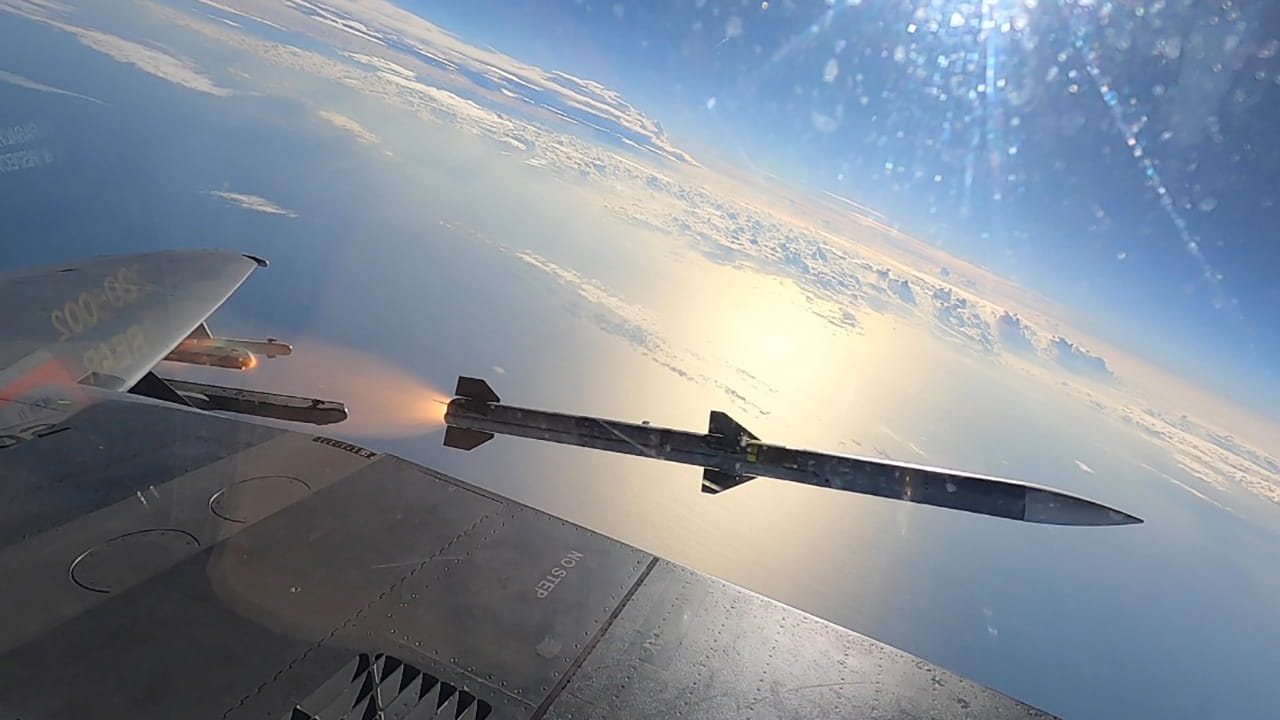
Raytheon is carrying out feasibility studies to qualify additional European suppliers for priority AMRAAM components. The work is intended to expand co-production, accelerate deliveries, and increase resilience across a missile family used by more than 40 countries. In parallel, Lockheed Martin and NATO partners are exploring a dedicated European PAC-3 missile maintenance facility covering PAC-3 MSE and PAC-3 CRI support.
Together, the moves show how allied air-defence planning has moved beyond launcher procurement. Readiness now depends on how fast missiles can be built, inspected, repaired, refurbished, upgraded, shipped, and returned to service. Components, test equipment, repair bays, technical data, export approvals, and skilled labour are becoming as important as the visible air-defence batteries.
AMRAAM’s broad user base creates both stability and stress. The missile is used in air-to-air roles and in ground-launched air-defence systems, which means demand comes from air forces, ground-based air-defence users, and allied stockpile planners at the same time. Expanding European supplier participation could reduce bottlenecks, but qualifying missile components is slow and exacting. Materials, electronics, structures, processes, and test data all need certification before they can enter a controlled production chain.
The PAC-3 sustainment proposal addresses a different problem. Interceptors are expensive, complex, and central to NATO missile-defence planning. If maintenance depends on distant facilities and long turnaround cycles, operational availability suffers. A European depot would shorten repair pathways for allied users and help keep high-value interceptors in service during periods of sustained demand.
Recent European missile activity points in the same direction. Britain’s move toward PrSM, Poland’s Barracuda production plans, and the UK’s shift from Meteor mid-life upgrade toward future air superiority effectors all show a market adjusting to longer-range fires, deeper magazines, and faster replenishment. L3Harris’ ramjet work also reflects the pressure to combine weapon performance with scalable production. The AMRAAM and PAC-3 work sits inside that wider move from boutique missile procurement to industrial resilience.
Supplier qualification will be the quieter but decisive part of the AMRAAM effort. Adding European suppliers only helps if the new sources address the true constraints: propulsion-related parts, electronics, assemblies, structures, materials, or specialist processes. Low-value workshare would add political comfort without increasing output. A useful expansion must relieve the parts of the chain that actually limit delivery speed.
PAC-3 maintenance will require equally disciplined execution. Missile depots need secure facilities, specialist tooling, approved handling procedures, test benches, safety systems, technical data access, and trained technicians. The work has to fit Lockheed Martin’s wider PAC-3 production ramp, because sustainment and new-build capacity draw from overlapping expertise.
For European governments, component production and depot repair provide a practical route into missile industrial capacity without full sovereign design. That can strengthen local skills, reduce turnaround times, and give allies more direct visibility over supply-chain health. It also creates a foundation for future missile work, especially around energetics, electronics, test, and integration.
The risk is political fragmentation. If too many countries seek isolated workshare, production can become slower and more complex. Missile output depends on standardised processes, certified components, and tight configuration control. Europeanisation must therefore be handled as a controlled industrial expansion, not a distribution exercise.
Stockpile planning is forcing the issue. Several European countries spent years buying missiles in peacetime quantities, with replenishment treated as a manageable future task. Current threat assumptions are less forgiving. Interceptors and air-to-air missiles may be used faster than production lines can replace them, turning industrial capacity into operational risk.
AMRAAM components and PAC-3 repairs may lack the drama of new weapon announcements, but they address the places where air-defence readiness often fails: qualified suppliers, maintenance capacity, technical data, and repair turnaround. NATO’s air-defence architecture will depend on those less visible factories and depots as much as on the launchers at the front.