IN Brief:
- F-35A aircraft JF-509 and JF-511 arrived at Rovaniemi on 23 October, bringing Finland’s in-country total to four.
- JF-511 completed the second ferry movement after remaining in the Azores following a minor avionics fault in September.
- Finland requires individual airworthiness certificates before domestic F-35 training, which is scheduled to begin in January 2027.
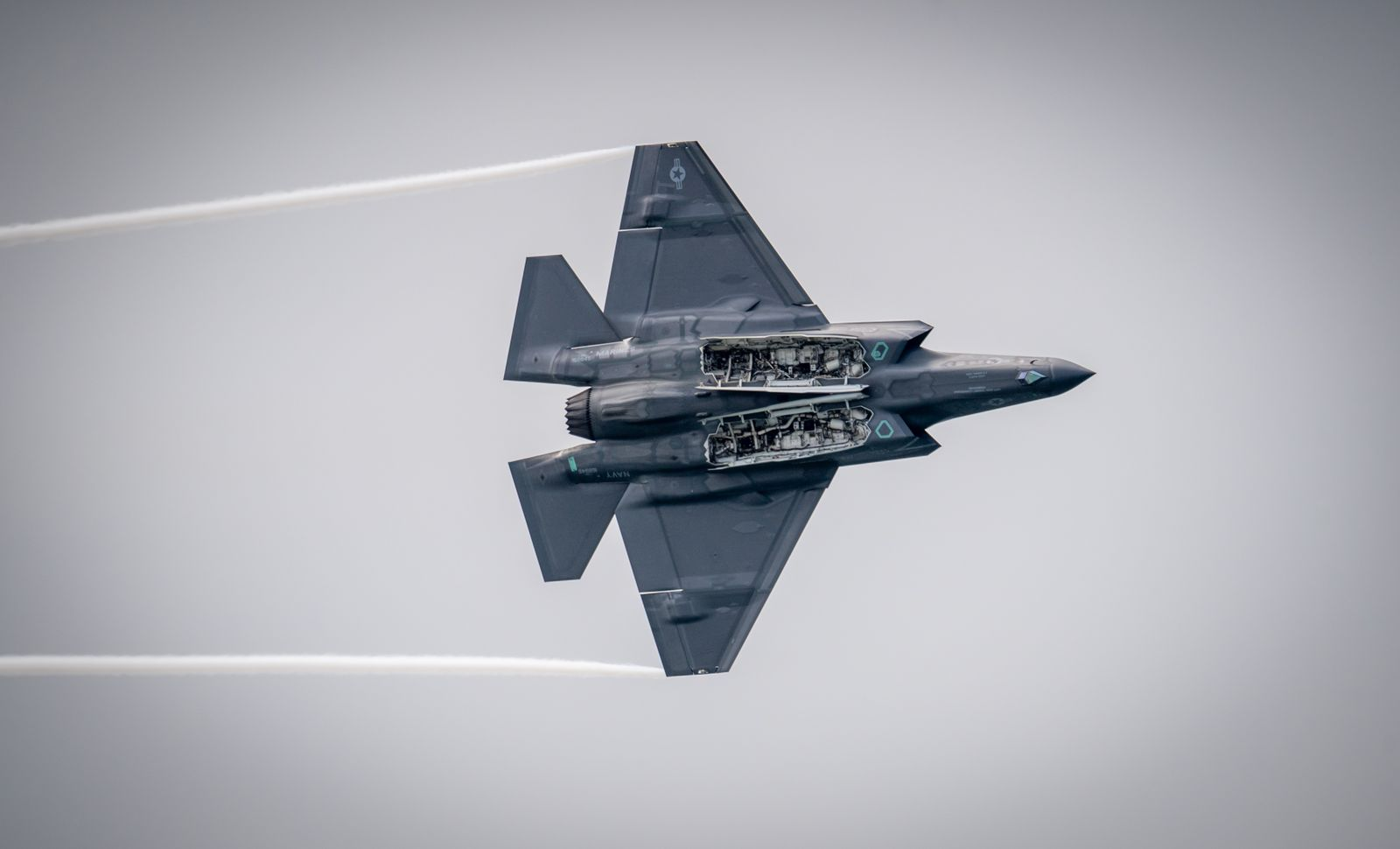
Two more Lockheed Martin F-35A Lightning II fighters have arrived at Lapland Air Wing in Rovaniemi, bringing the number of the type physically stationed in Finland to four. Aircraft JF-509 and JF-511 landed at 17:56 local time on 23 October, completing the second ferry delivery during Finland’s transition from the F/A-18 Hornet fleet.
The arrivals follow aircraft JF-510 and JF-512, which reached Rovaniemi on 18 September. Finland is procuring 64 F-35As under its HX fighter replacement programme, while Finnish personnel are also training on aircraft based in the United States. The four now in Finland represent its domestic arrivals rather than the total number of aircraft available across the wider training and delivery programme.
The two October aircraft had different routes into the delivery. JF-509 departed Lockheed Martin’s Fort Worth manufacturing site in Texas on 20 October and made an intermediate stop at Lajes Air Base in the Azores. JF-511 joined it there after remaining at the Portuguese base following an avionics fault encountered during the original September ferry movement. The publicly described fault was minor, but its exact component and corrective work have not been disclosed.
Finnish Air Force and Defence Forces Logistics Command personnel must now conduct national acceptance and airworthiness inspections on both fighters. Each aircraft needs an individual airworthiness certificate before entering the planned domestic training programme, which is scheduled to start in January 2027. Completion of a transatlantic ferry flight demonstrates that an aircraft was cleared for that journey, but does not substitute for the receiving country’s acceptance procedures.
National acceptance brings the aircraft under Finnish procedures for configuration, continuing maintenance and approved operation. Inspection teams must compare delivered equipment, technical records and aircraft condition with the configuration accepted by the receiving authority. They must also establish any outstanding maintenance requirements before permitting the aircraft to fly under the Finnish military airworthiness system.
Airworthiness inspections depend on traceable maintenance records and a verified hardware and software configuration. Aircraft systems are delivered in managed versions, with changes recorded so technicians and aircrew can establish what equipment is installed and which approved procedures apply. The Finnish Air Force has not identified a specific deficiency in the newly arrived aircraft, and routine acceptance inspection should not be interpreted as evidence of a defect.
JF-511 was unable to accompany the September delivery after a minor avionics fault at Lajes in the Azores. Avionics encompasses aircraft electronics, including mission and flight systems, but the Finnish Air Force did not identify the failed component or describe the repair. The aircraft’s arrival with JF-509 establishes that it subsequently completed the required ferry movement, without revealing the precise maintenance and verification work performed at the staging base.
The transition to a new fighter type extends well beyond incoming airframes. Support arrangements have to cover ground equipment, spare parts, technical documentation, software control, maintenance tooling and the training of both aircrew and engineers. Each element must be coordinated with local operating procedures before the aircraft can sustain repeated training sorties rather than occasional delivery or demonstration flights.
The F-35A is a conventional take-off and landing variant, unlike the short take-off and vertical landing F-35B or the carrier variant F-35C. Its mission systems integrate information from multiple onboard sensors for presentation to the pilot and for exchange with compatible forces. Maintaining that equipment requires specialist diagnostic and software support, in addition to the familiar mechanical, structural and propulsion checks found on other tactical aircraft.
Operating tactical aircraft from a northern air base imposes requirements for cold-weather ground support, aircraft sheltering, maintenance access and ramp preparation. Appropriate procedures are necessary for winter flying, but the arrival of four F-35As does not establish that every planned type-specific building, ground system or support installation at Rovaniemi is complete. Those facilities must be commissioned and supported alongside the growing fleet.
Finland is conducting the changeover while its existing Hornet force continues to provide national air defence. Introducing four aircraft domestically is an early stage in a much larger process of qualification, instruction and fleet build-up, rather than an indication that the new type has replaced the operational Hornet fleet. Training in Finland will add experience under local weather, airspace and maintenance conditions to the instruction already being conducted abroad.
The arrival also establishes a recurring logistics chain linking US manufacturing and specialist support to Finnish receiving facilities. Future deliveries will have to progress through the same broad sequence of production, verification, ferry movement and acceptance, although individual routes and timelines can vary. Published reports do not specify when the next pair will arrive or provide a revised delivery timetable for the full order.
The second ferry delivery places JF-509 and JF-511 at Lapland Air Wing for their individual acceptance checks, adding to the pair that arrived in September. Finland’s next stated milestone is the start of domestic F-35 training in January 2027, dependent on approved aircraft and the required local support arrangements. The existing Hornet force continues its role during the multi-year transition.