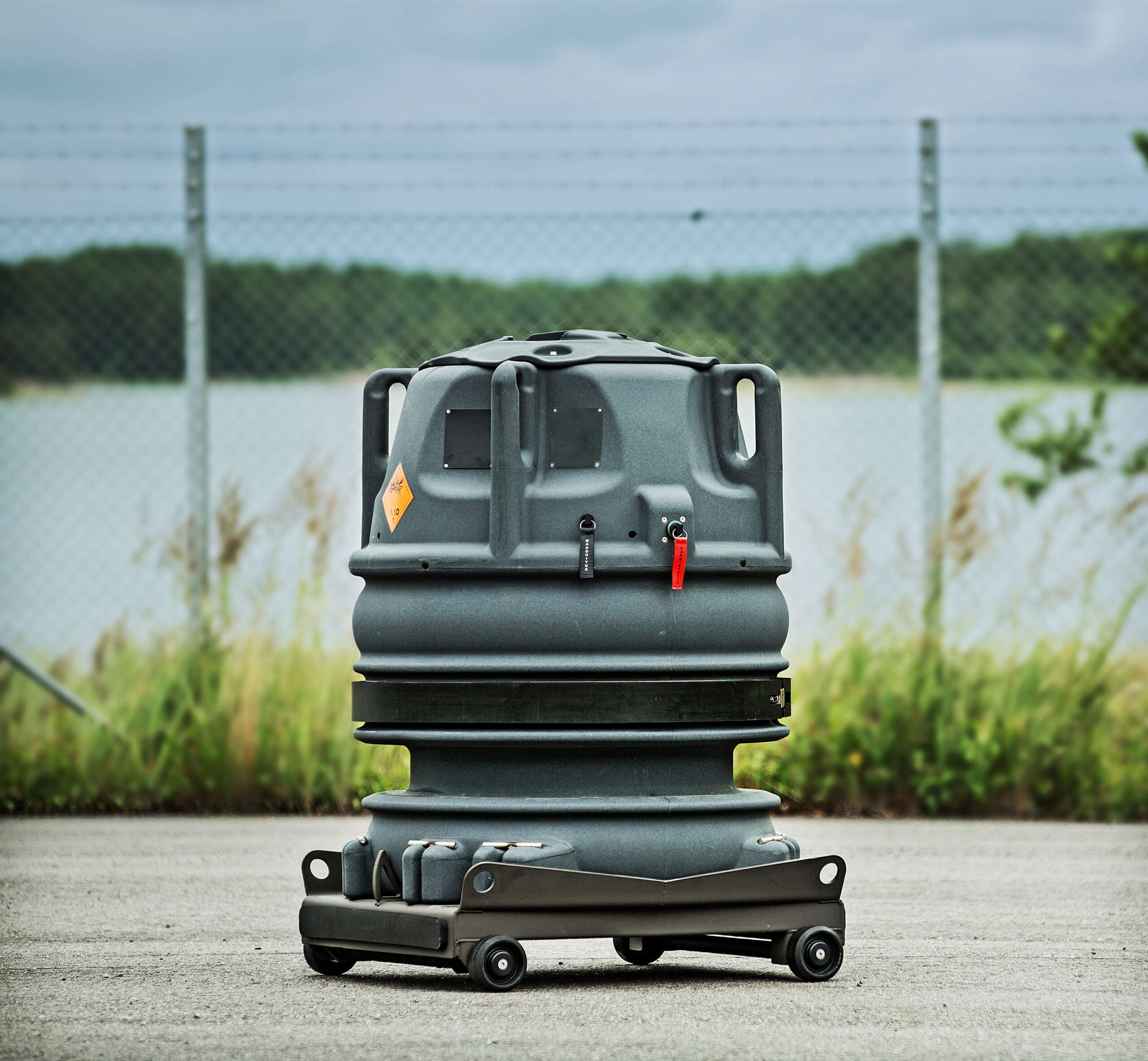
IN Brief:
- Finland, Germany, Denmark, Lithuania, and Norway are moving ahead with Forcit Blocker influence mines.
- The framework sits within a wider Naval Mines Cooperation project covering procurement, logistics, training, lifecycle support, and development.
- Production focus will sit around sensors, insensitive munitions, safety, storage, deployment, and sustainment.
Forcit’s Blocker framework agreement brings naval mines back into Europe’s defence manufacturing agenda, giving five NATO states a common route into modern seabed-denial capability.
Finland’s Defence Forces Logistics Command has signed an agreement with Forcit for the Blocker influence sea mine system, covering Finland, Germany, Denmark, Lithuania, and Norway in the initial phase. The agreement moves the Finnish-led Naval Mines Cooperation project into its main contract phase, after earlier multinational groundwork involving a wider group of European states.
Modern influence mines are a more sophisticated industrial category than their low-profile reputation suggests. Blocker combines sensor technology, insensitive munitions, seabed deployment, safe handling, storage, and lifecycle support. A mine that may sit in harsh maritime conditions must behave predictably, remain safe until armed, resist environmental degradation, and still provide a credible effect when required.
For the Baltic and northern European maritime environment, the attraction is direct. Narrow seas, chokepoints, ports, approaches to naval bases, undersea infrastructure, and short warning times all increase the value of controlled maritime denial. Mine warfare gives smaller navies and coastal states a way to impose cost and uncertainty without requiring large surface fleets in every location.
The production challenge lies in repeatability and safety. Influence mines need robust casings, sensor packages, power systems, arming logic, explosives, handling equipment, and documented maintenance procedures. Customers will need training mines, simulators, storage infrastructure, inspection processes, deployment planning, and disposal arrangements. The munition is only one part of the industrial package.
Forcit’s position shows how specialist suppliers can become strategically important in the current European rearmament cycle. Large primes dominate headlines around ships, submarines, missiles, and air defence, yet smaller companies producing specialised munitions, sensors, and support equipment often determine whether capability can be fielded in depth. Mine warfare sits firmly in that category.
Factories supporting naval mines also need a different rhythm from platform yards. Batch production, materials traceability, explosive safety, environmental sealing, acceptance testing, and secure storage have to be managed without the public visibility associated with shipbuilding. That quieter industrial base is exactly what gives mine warfare its operational credibility: weapons available in numbers, stored safely, inspected regularly, and ready for controlled deployment.
The multinational framework should provide demand stability, but it also creates workshare and standardisation challenges. Participating countries will have different operational requirements, safety authorities, storage rules, and deployment concepts. Forcit will need to maintain a common product base while supporting national users whose mine warfare doctrine may not be identical.
Naval mines also sit inside the wider undersea technology race. Thales’ move to strengthen its underwater robotics position through Exail and Lockheed Martin’s acquisition of Ultra Maritime’s ASW portfolio both point toward a defence market where seabed sensing, denial, counter-denial, and undersea autonomy are becoming more tightly connected. Mines, UUVs, sonar, mine countermeasures, and maritime C2 will increasingly be procured as parts of the same operational environment.
That overlap will shape future Blocker development. As uncrewed mine countermeasure systems improve, influence mines will need better discrimination, survivability, and operational flexibility. At the same time, navies acquiring mines will need the autonomous tools to exercise with them, clear them when required, and understand how adversaries might detect or neutralise them.
Magazine depth is another practical issue. Mine warfare deterrence relies on credible numbers, not token stocks. If mines are to shape access to maritime areas, customers need sufficient inventory, deployment plans, and replacement capacity. Production must therefore support both initial procurement and stockpile maintenance over long periods.
Insensitive munitions and safety certification will carry weight with European users. Mines are stored, transported, handled, and maintained across national infrastructure, often close to ports, depots, and training areas. A modern mine programme must meet safety standards without compromising operational performance. That creates demand for documentation, traceability, test evidence, and lifecycle management.
The Blocker framework gives Europe a practical, shared route into a capability that fits the region’s geography and current threat assumptions. Naval mines are returning as controlled, sensorised, safety-managed weapons within a broader seabed competition, and Forcit’s agreement gives that return a production base.