IN Brief:
- France is adding €36 billion over 2026-2030, including €8.5 billion more for munitions and €1.6 billion more for counter-drone and surface-air defence.
- The government says 10,000 FPV drones have been ordered for 2026, with 5,000 due this year.
- New strategic-stock and authorisation measures are intended to help industry assemble and manufacture faster.
France has placed munitions, drones, and counter-drone capability at the centre of its updated military programming law, adding fresh volume to the country’s rearmament push and giving the industrial base a clearer signal on where production is expected to harden. The government says the update adds €36 billion over 2026-2030, taking the 2026 defence budget to €57.1 billion and the 2030 level to €76.3 billion.
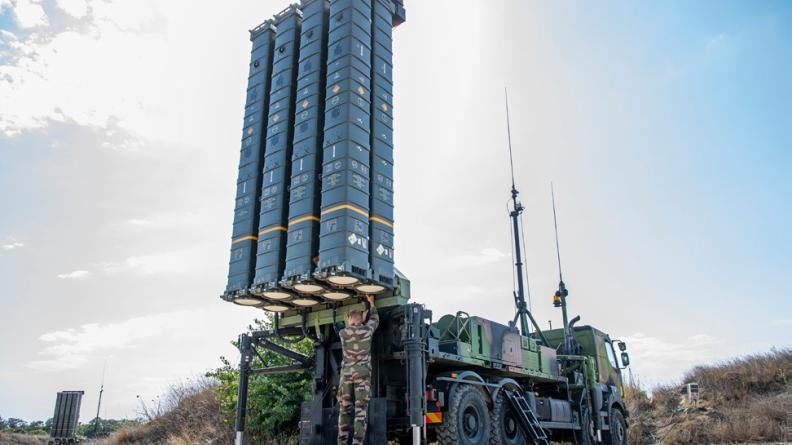
The most direct industrial message sits in the line-items. France says it is adding €8.5 billion for munitions, taking total period spending in that area to €26 billion, while a further €1.6 billion goes into the wider surface-air and counter-drone effort. Ministers have also pointed to expanded drone procurement, including 10,000 FPV drones ordered for 2026 and 5,000 due for delivery this year. The range is deliberately broad, running from basic battlefield drones to more complex systems and from artillery ammunition to higher-end missile lines including Aster and MICA.
That spread matters because France is not only buying more of one thing. It is trying to thicken multiple layers of conventional capability at once: stockpile depth, battlefield mass, localised air defence, anti-drone response, and longer-range effectors. For industry, that means the challenge is less about a single marquee programme than about sustaining throughput across many product families without allowing bottlenecks in components, energetics, electronics, or qualification capacity to move upstream into the wider system.
From missile lines to drone factories
Missiles and drones do not create the same industrial burden. Missile production leans heavily on specialist energetics, seekers, propulsion, warhead work, and a tightly controlled final-assembly environment. Drone output, especially at the smaller tactical end, is more exposed to motors, batteries, optics, navigation, data links, and a larger volume of iterative manufacturing. Building both at speed forces a defence base to hold two rhythms at once: tightly regulated missile production and faster-turn unmanned assembly lines with shorter refresh cycles.
Strategic stocks and production discipline
The government has also tied the spending rise to new rules on strategic stocks and faster authorisation pathways. That is a practical industrial step. Stock obligations create buffer where suppliers would otherwise remain thin, while simpler procedures help factories expand, modify sites, or add capacity with less drag. None of that removes the harder problem of cost control and supplier resilience, but it does show Paris is treating production as an organising issue rather than assuming budget alone will pull output higher.