IN Brief:
- Fujian appears to carry six-tube 324mm launchers associated with anti-torpedo torpedo defence.
- A hard-kill terminal layer would add direct underwater protection against incoming torpedoes.
- The installation signals China’s growing focus on carrier survivability, complex integration, and naval production maturity.
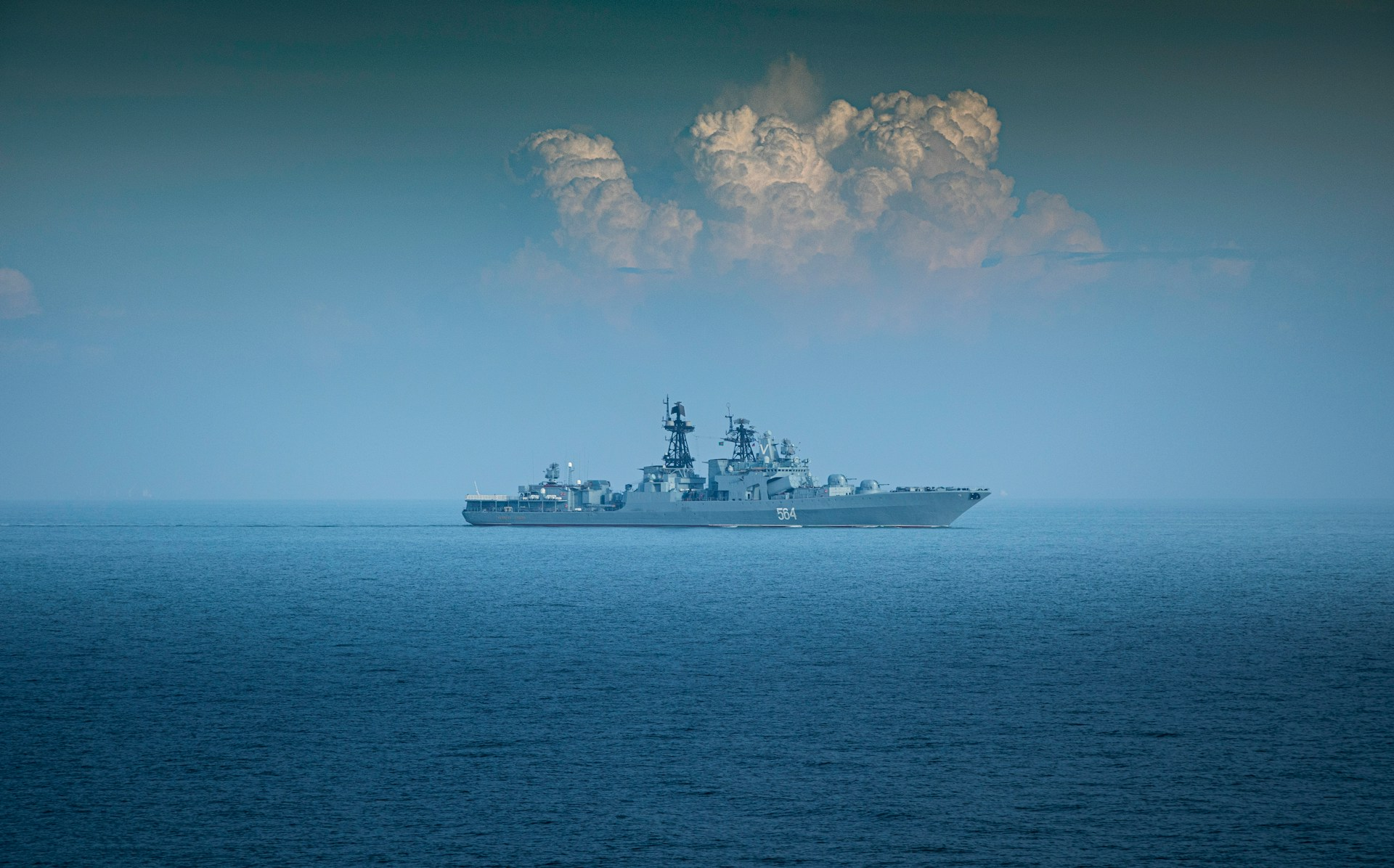
China’s Fujian aircraft carrier appears to have gained a hard-kill underwater defence layer, with visible six-tube 324mm launcher arrangements associated with anti-torpedo torpedo operations.
The reported installation would place terminal underwater protection inside the carrier’s own survivability architecture, rather than leaving torpedo defeat entirely to escorts, helicopters, decoys, and manoeuvre. Fujian already marks a significant step beyond China’s first two carriers through its catapult-assisted layout and electromagnetic launch system. A dedicated anti-torpedo fit would extend that shift into the less visible, but equally demanding, field of underwater self-defence.
Although carrier aviation attracts most attention, the ability to sustain flight operations in contested waters depends heavily on defensive integration. Anti-torpedo systems require launchers, compact interceptors, sensors, local control electronics, power, shock protection, corrosion management, software interfaces, and qualification against harsh maritime conditions. Fitting such a system into a carrier is a ship-integration task, not a deck-equipment addition.
A 324mm launcher arrangement places the system in the physical class of lightweight torpedo hardware, but the mission is more urgent and compressed. A terminal anti-torpedo interceptor has to react quickly, distinguish an incoming weapon from clutter, and defeat it before the carrier’s size becomes a liability. The carrier’s own acoustic signature, escort activity, propulsion noise, decoys, and sea conditions all complicate the engagement picture.
For Chinese shipbuilders, the installation reflects the increasing systems complexity of the country’s carrier production base. Fujian is not merely larger than Liaoning and Shandong. It is a major integration project involving launch systems, aviation support, weapons handling, command systems, power management, air defence, electronic warfare, and potentially a more active underwater protection layer. Every additional layer increases the load on design authorities, shipyards, systems suppliers, test teams, and naval acceptance bodies.
Similar pressures are visible across naval production globally. High-value surface combatants are becoming defensive systems-of-systems, with soft-kill countermeasures, electronic warfare, integrated air and missile defence, uncrewed offboard sensors, and layered underwater protection becoming part of the baseline expectation. Fujian’s apparent configuration suggests China is moving in the same direction, treating carrier survivability as a multi-domain engineering problem rather than a question of escort density alone.
The industrial demands are substantial. Hard-kill torpedo defence brings ready-round limits, launcher arcs, magazine safety, reload arrangements, explosive ordnance handling, and inspection cycles close to the hull of one of the navy’s most valuable assets. These issues sit deep in production and support planning, where materials, interfaces, safety certification, and shipboard maintainability determine whether the capability can be used with confidence.
The likely supply-chain beneficiaries are not always the most visible defence companies. Compact propulsion, underwater launch hardware, acoustic sensors, guidance electronics, sealed canisters, corrosion-resistant materials, and safety interlocks all become critical. If China standardises the approach across future carriers or large surface combatants, suppliers will need repeatable production quality rather than one-off prototype performance.
The Indo-Pacific carrier race is increasingly defined by survivability as much as sortie generation. Submarines, long-range missiles, autonomous underwater vehicles, seabed sensors, and persistent surveillance networks are all putting pressure on large naval platforms. Fujian’s reported underwater defensive layer shows how carriers are being redesigned around threat saturation from above, on, and below the surface.
As China prepares Fujian for operational service, the ship’s flight deck will remain the public face of its progress. The less photographed equipment below the waterline may prove just as revealing. A carrier able to launch advanced aircraft is a symbol of naval reach, but a carrier able to integrate layered defensive systems is a measure of industrial maturity.