IN Brief:
- GE Aerospace has qualified its HVPC and UDC systems for US military ground vehicles.
- The systems support a shift from 28V to 600V vehicle power architectures.
- Higher-voltage electronics will help future vehicles support EW, sensors, communications, and directed-energy payloads.
GE Aerospace has qualified two high-voltage power electronics systems for US military ground vehicles, marking a production-readiness step in the Army’s move toward higher-power vehicle architectures.
The company’s High-Voltage Power Controller and Unidirectional Converter have completed qualification for ground vehicle use. Low-rate initial production is expected in 2026, with deliveries to the US Army planned to begin in 2027. The systems were developed with the US Army Combat Capabilities Development Command Ground Vehicle Systems Center and support a transition from legacy 28V systems to a 600V architecture.
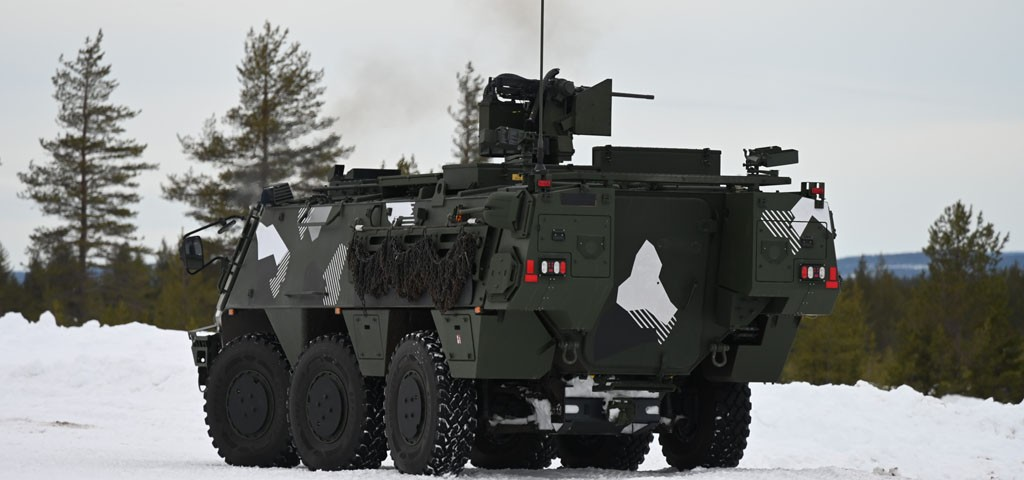
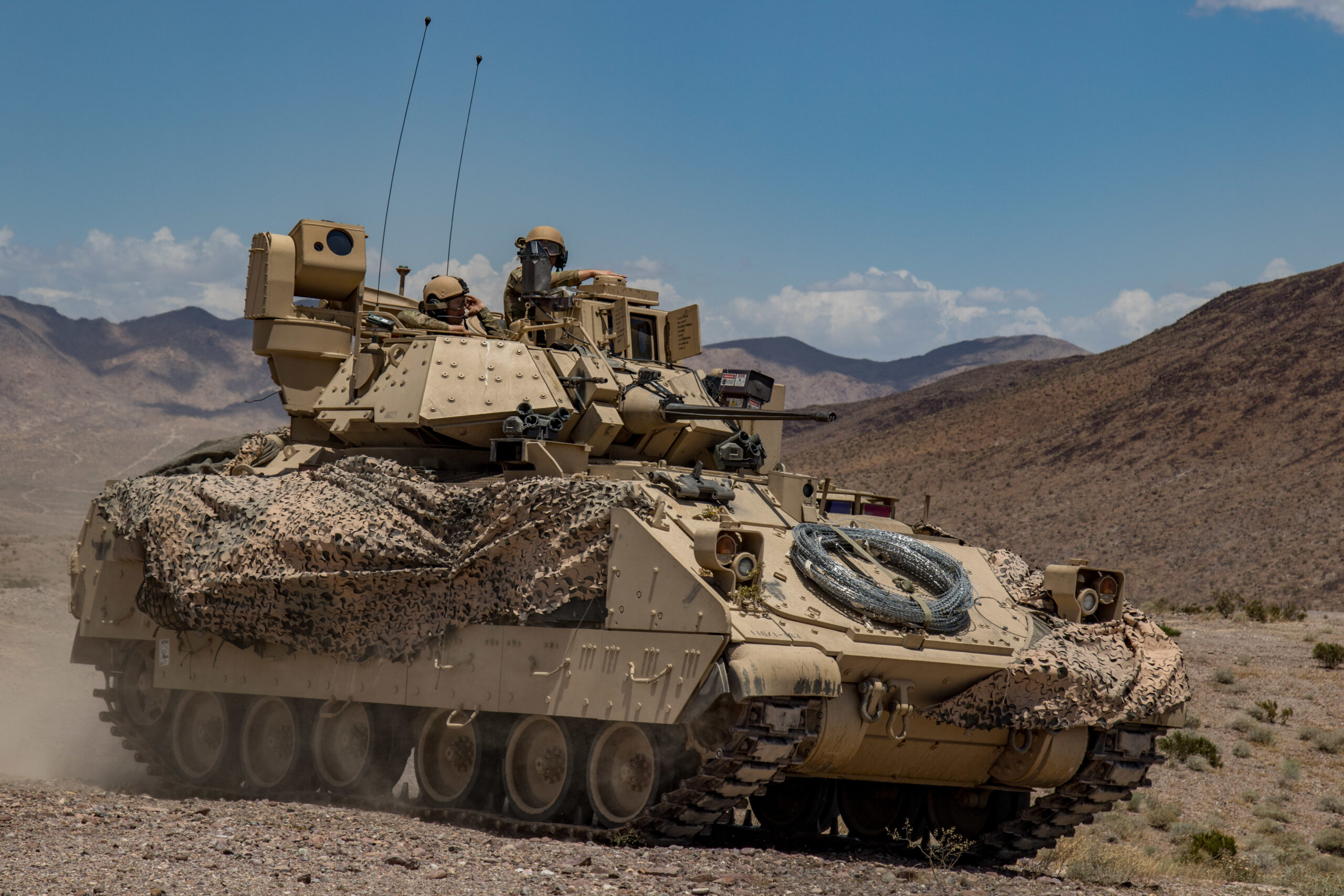
Higher-voltage vehicle power is more than an electrical upgrade. Modern combat vehicles are being asked to support larger sensor suites, electronic-warfare systems, advanced communications, active protection, onboard computing, and potentially directed-energy payloads. Legacy power architectures were not designed for that load. Higher-voltage systems can reduce losses, improve conversion efficiency, support battery charging, reduce weight, and free more engine power for mobility when required.
GE’s systems use silicon carbide semiconductor technology, which can handle higher voltages and temperatures more efficiently than conventional silicon. That allows more compact and lighter power electronics with improved thermal performance and energy management. On ground vehicles, size, weight, power, and cooling remain stubborn design constraints. Every extra box, cable, cooling loop, or generator competes with armour, payload, fuel, crew space, and maintainability.
Military vehicle electronics must be rugged, thermally stable, vibration-resistant, maintainable, and compatible with harsh electrical environments. Production readiness requires more than circuit performance. It requires packaging, connectors, cooling, qualification evidence, test procedures, supplier traceability, and integration guidance for vehicle manufacturers.
A move toward 600V architectures changes future vehicle design. Once higher electrical capacity is available, manufacturers can integrate more demanding systems without treating power as an afterthought. Electronic-warfare suites, high-bandwidth radios, distributed sensors, onboard computing, and active protection systems all require dependable power. Directed-energy systems, if deployed on tactical vehicles, will raise the requirement further.
European artillery programmes are moving in the same direction, with automated gun systems now tying mobility, digital fire control, navigation, and platform integration into the core of land-system capability.
Retrofitting higher-voltage systems into existing vehicles will not be straightforward. Platforms designed around lower electrical loads may need changes to space allocation, cooling, safety isolation, diagnostics, maintenance training, and integration procedures. Vehicle primes will need to assess how the HVPC and UDC fit within generators, batteries, distribution units, mission equipment, and safety systems.
New vehicles can be designed around a more flexible electrical baseline. A 600V architecture allows engineers to plan for future payloads rather than adding localised power fixes over the platform’s life. Managed properly, that can reduce complexity, simplify upgrades, and improve through-life performance. Managed poorly, the vehicle can accumulate incompatible subsystems and become harder to maintain.
The Army’s interest in high-voltage power does not necessarily signal a near-term move to fully battery-electric combat vehicles. Hybrid-electric drive, silent watch, exportable power, improved energy storage, and high-power mission systems are more immediate drivers. In each case, the vehicle becomes a more complex electrical platform, and power electronics become a critical production category.
GE Aerospace’s qualification reaches beyond two components. It shows the land systems market moving toward aircraft-style power-management discipline, where electrical architecture shapes capability. Future armoured vehicles will still be judged by protection, mobility, and firepower, but their ability to generate, convert, and manage power will increasingly determine which mission systems they can carry.