IN Brief:
- Germany will build a second Arrow-3 operational position in Bavaria, complementing its first battery near Berlin.
- The southern site will include radar in the Kaufbeuren area and launcher elements at nearby Lechfeld.
- The expansion reinforces production pressure across interceptors, launchers, sensors, and command-and-control systems.
Germany is expanding its Arrow-3 missile-defence architecture with a second operational position in Bavaria, extending the country’s emerging upper-tier shield beyond its initial site near Berlin.
The new southern position will be built in the greater Kaufbeuren area, with interceptor launcher elements planned for nearby Fliegerhorst Lechfeld. It will complement Germany’s inaugural Arrow-3 deployment at Holzdorf, where the system gives Berlin a national capability against long-range ballistic missile threats outside the atmosphere.
Arrow-3 is an exoatmospheric interceptor system developed by Israel Aerospace Industries with US Missile Defense Agency involvement. It is designed to engage ballistic missiles at very high altitude, adding a layer above shorter- and medium-range systems such as IRIS-T and Patriot. For Germany, the deployment forms part of a layered architecture shaped by the European Sky Shield Initiative and renewed concern over missile threats to European territory.
The Bavarian site is more than a basing decision. A national missile-defence architecture needs radar coverage, launchers, interceptors, command-and-control links, secure communications, civil infrastructure, training, maintenance, and continuing missile supply. Every additional site increases the burden on industrial teams responsible for producing, delivering, integrating, and sustaining the system.
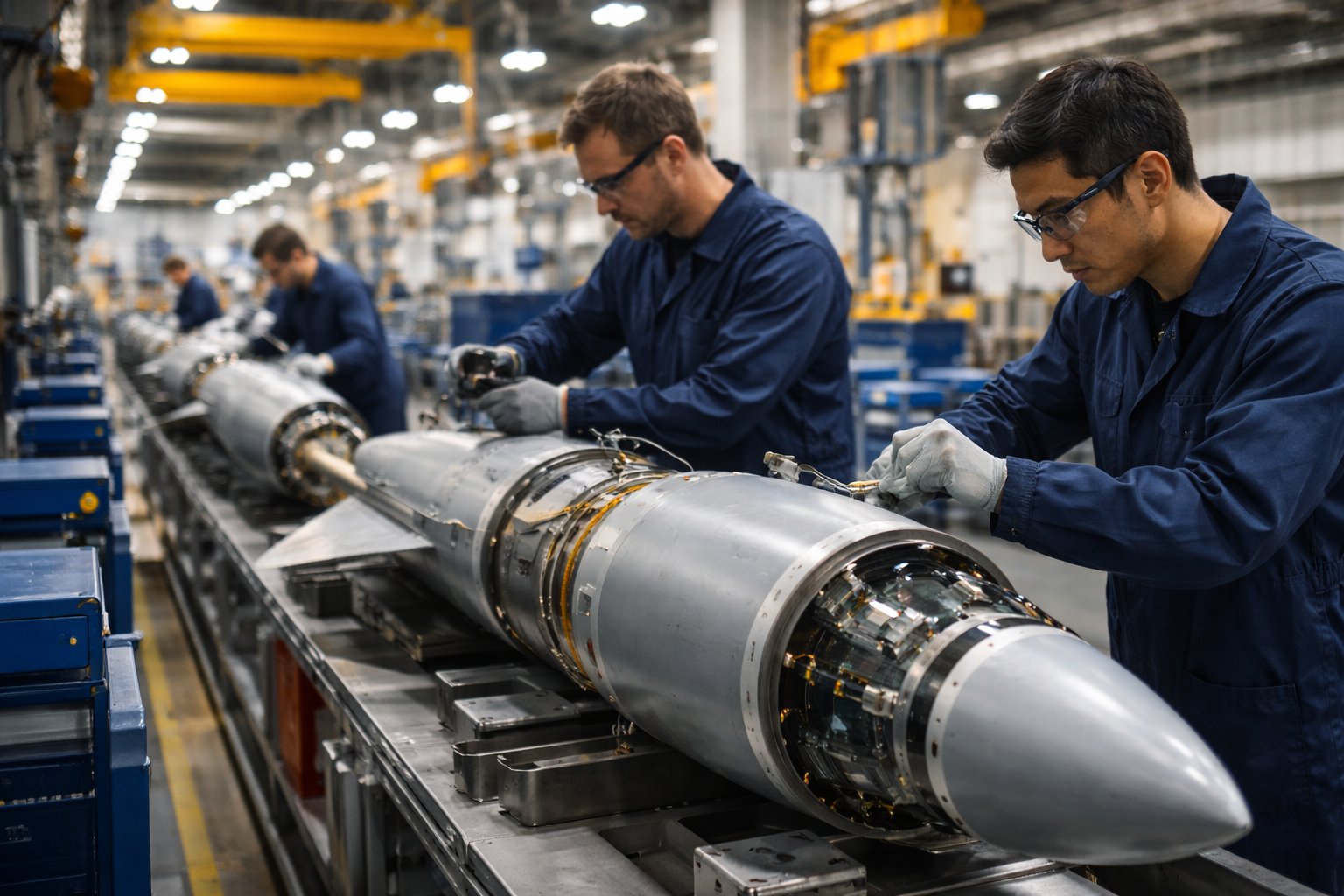
Germany’s Arrow-3 procurement has already expanded beyond its original scope, with further interceptor and launcher purchases lifting the programme value above $6.5bn. Production rate is therefore central. High-end missile-defence systems rely on specialist propulsion, seekers, kill vehicles, canisters, radar arrays, software, and quality assurance processes that cannot be scaled quickly once demand is already acute.
European air-defence manufacturing is being pulled in several directions at once. Lower-cost interceptors and directed-energy systems are being explored through efforts such as Britain’s Skyhammer and DragonFire work, while Germany’s Arrow-3 expansion addresses the opposite end of the spectrum. Strategic missile defence is expensive, technically demanding, and built around weapons whose production chains are narrow by design.
The industrial base behind Arrow-3 reaches beyond Germany. Israel Aerospace Industries leads the system, with US involvement and a wider supply chain connected to interceptors, launchers, radars, and command systems. Germany’s role as a major customer adds demand while creating a need for local infrastructure, trained personnel, support arrangements, and long-term sustainment planning.
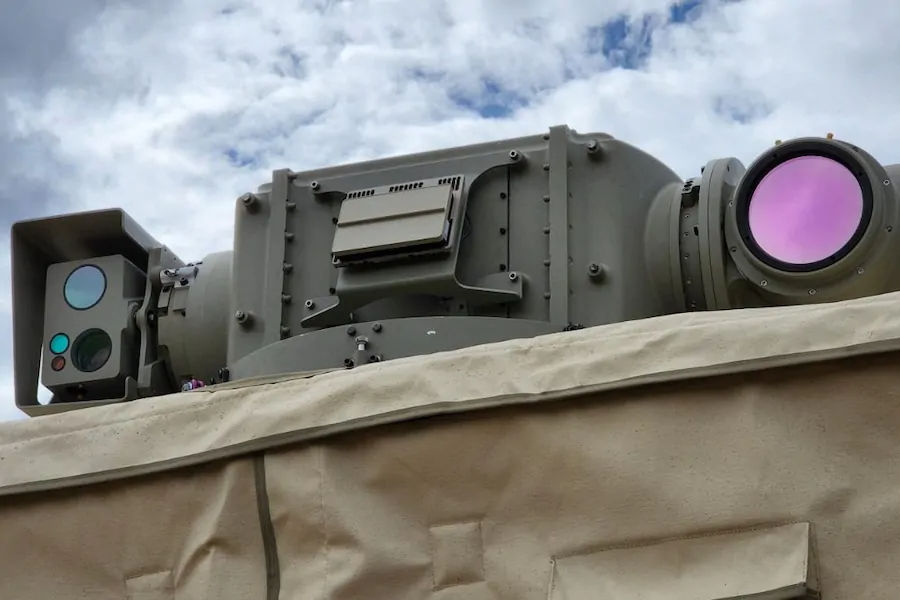
Site construction brings its own manufacturing and integration workload. Radar positions, launcher locations, command facilities, secure power, communications links, environmental controls, hardening, and physical security all have to be delivered as part of the operational system. Missile defence is often discussed through interceptors, but the deployed capability is also a civil engineering, electronics, cyber, and systems-integration project.
The geography of the second site expands coverage and resilience. A southern operational position reduces reliance on a single location and gives Germany a broader defensive architecture. It also means the system’s operational support network must grow, with maintenance, spares, training, and security provisions distributed across more than one site.
For European suppliers, the wider signal is unmistakable. Layered air and missile defence is becoming one of the continent’s dominant industrial programmes. At the lower end, companies are racing to counter drones and cruise missiles at affordable cost. At the upper end, systems such as Arrow-3 depend on deep-state procurement, controlled technology, and long production timelines.
Germany’s second Arrow-3 site converts strategic ambition into physical infrastructure. Once radar bases, launcher positions, and interceptor stocks are assigned to real locations, suppliers have to deliver qualified hardware, maintained readiness, and a production system capable of sustaining the shield for decades.