IN Brief:
- INKAS is adding three production facilities across Canada and the United States by 31 July 2026.
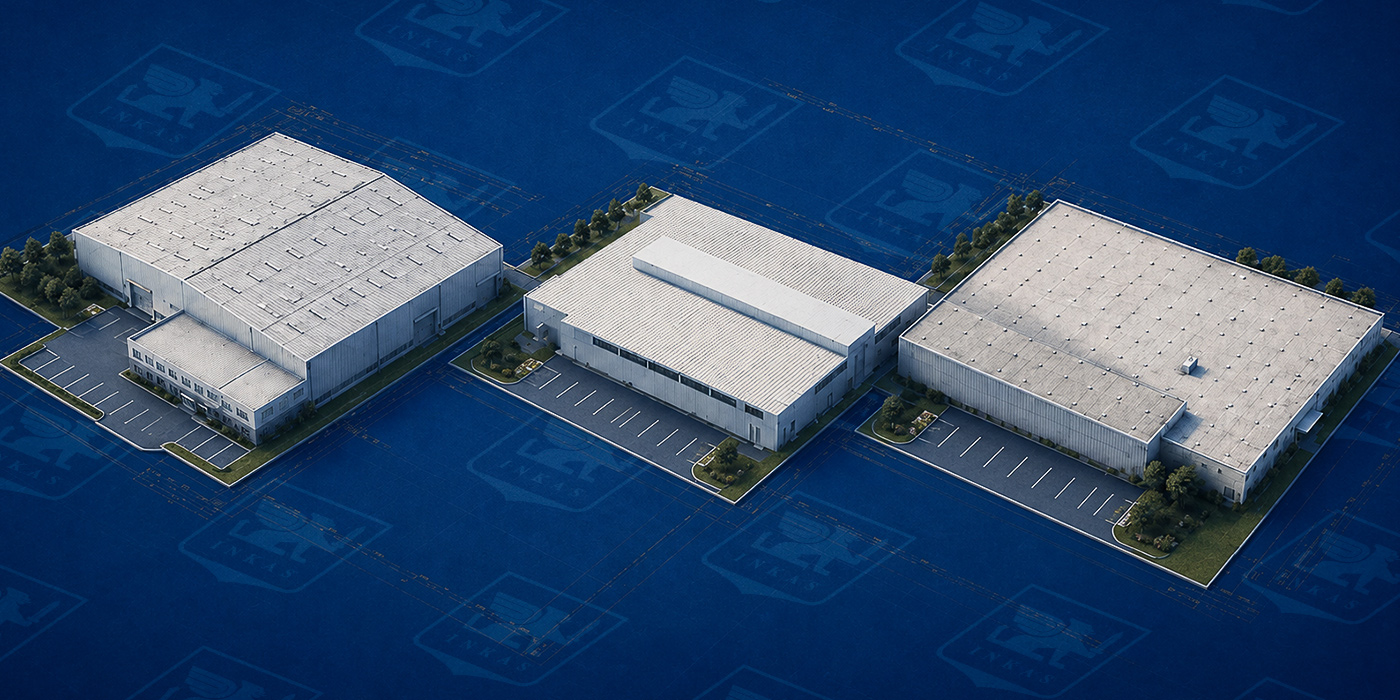
- The expansion includes 42,000 sq ft in Toronto, 200,000 sq ft in Charlotte, and 31,000 sq ft in Fort Pierce.
- The Charlotte site is equipped for armoured vehicle production and brings access to experienced manufacturing labour.
INKAS is expanding its North American manufacturing footprint with three additional facilities across Canada and the United States, more than doubling production space for armoured vehicles, defence systems, tactical platforms, UAVs, and special-purpose vehicles.
The newly leased sites include approximately 42,000 sq ft at an additional Toronto facility, 200,000 sq ft at an armoured vehicle production facility in Charlotte, North Carolina, and 31,000 sq ft at a first Florida facility in Fort Pierce. All three are expected to be in full operation by 31 July 2026.
The Charlotte facility is the industrial anchor of the expansion. It is already equipped for armoured vehicle production and gives INKAS access to a workforce with direct experience in that field, reducing the time normally required to develop manufacturing capability from the ground up. For a company working across protected mobility and specialist security platforms, that speed of scaling is likely to be valuable.
Protected mobility is a demanding manufacturing sector because every customer requirement changes the engineering balance. Armoured SUVs, sedans, tactical vehicles, personnel carriers, cash-in-transit vehicles, UAV support platforms, and custom security vehicles all require different combinations of ballistic protection, payload, mobility, weight, power, suspension, braking, visibility, communications, and survivability. Expanding production is therefore not only a question of more floor space; it is a question of process control across multiple variants.
A distributed North American footprint also gives INKAS greater resilience. Multiple sites can spread work, reduce dependence on a single facility, improve responsiveness, and separate product families where production processes differ. Customers in government, defence, law enforcement, commercial security, and specialist vehicle markets increasingly assess suppliers on delivery confidence as well as vehicle specification.
Demand for protected mobility is broadening. Defence and security customers want platforms configured for patrol, convoy protection, command, surveillance, special operations, counter-drone support, and urban security. Commercial and government buyers continue to require discreet armoured vehicles and cash-in-transit platforms. The manufacturing challenge is to support both standardised output and bespoke integration without slowing delivery.
INKAS’ portfolio also includes drones and UAV-related systems, which could make the expanded footprint useful as vehicle and uncrewed-system integration converges. Armoured vehicle manufacturers are increasingly being asked to provide power, communications, launch, recovery, charging, or transport capacity for unmanned systems. That pulls traditional vehicle production toward electronics, autonomy support, and mission payload integration.
Land-systems manufacturing has already been under pressure across heavier vehicle programmes, including CV90 MkIV production work linked to Allison transmissions. INKAS operates in a different segment, but the production lesson is similar. Protected mobility depends on specialist suppliers, controlled integration, mobility components, and workforce depth rather than final assembly alone.
Workforce availability will shape how quickly the new sites reach useful capacity. Armoured vehicle production requires fabrication, welding, ballistic material handling, glass and transparent armour installation, electrical integration, interior fitting, quality inspection, and vehicle testing. Skilled technicians and engineers are difficult to create quickly. A Charlotte site with existing armoured vehicle expertise gives INKAS a faster route to volume.
The company will also have to manage supply-chain pressure across ballistic steel, composites, armoured glass, run-flat systems, suspension upgrades, specialist tyres, cameras, communications equipment, electronic countermeasure provisions, and customer-specific interior systems. As volumes rise, purchasing discipline and supplier qualification become as important as vehicle design.
The expansion gives INKAS more industrial room to pursue current and future programmes. Production across Toronto, Charlotte, and Fort Pierce should allow the company to separate workflows, reduce bottlenecks, and support more complex platform demand across North America and export markets.
Protected mobility is moving toward a more scalable manufacturing model. Customers still need specialised vehicles, but they increasingly expect faster execution, stronger resilience, and better integration with unmanned and digital systems. INKAS’ expansion shows how suppliers are adding distributed capacity before demand becomes impossible to service from smaller bespoke workshops.