IN Brief:
- Sweden has signed a 4bn krona framework agreement for the SKORPION2 vehicle-mounted mine-laying system.
- An initial 900m krona order covers systems, ammunition, training, and demonstration material.
- The modular system can be fitted to wheeled, tracked, unmanned, or trailer-mounted platforms.
Sweden has signed a 4bn krona framework agreement with Dynamit Nobel Defence for SKORPION2 vehicle-mounted mine-laying systems, placing remote obstacle creation back into the Nordic land-defence production agenda.
The agreement runs to 2033, with an initial order of around 900m krona covering systems, live and training ammunition, and training and demonstration material. Sweden becomes the third EU and NATO country to procure SKORPION2 after Latvia and Denmark, creating a common regional base for anti-tank mine-laying capability.
SKORPION2 is a modular remote mine-laying system that can be mounted on wheeled, tracked, unmanned, or trailer platforms. It is designed to deploy anti-tank mine barriers quickly and at selected density, allowing forces to delay, channel, and disrupt mechanised formations. The system uses disposable magazines and Next Generation AT2+ mines, linking vehicle-mounted dispensers to a wider ammunition production and sustainment chain.
Mine warfare has returned in a more industrially sophisticated form. The task is not merely to produce mines; it is to manufacture controlled deployment systems that can be integrated onto different vehicles, supported with training rounds, transported safely, programmed reliably, and used within modern doctrine and legal requirements.
Vehicle integration is one of the harder parts of the order. A remote mine-laying system has to sit on a host platform without compromising mobility, stability, crew safety, maintainability, or battlefield signature. If future customers fit SKORPION2 to unmanned vehicles, the problem becomes more complex, involving remote control, route planning, safety logic, and operator interfaces around live munitions.
Ammunition supply will carry equal weight. Obstacle systems can consume stock rapidly in training and conflict, and specialised anti-tank mines require precision manufacturing, safe storage, reliable fuzing, and disposal planning. Training ammunition must also be available at scale, allowing units to practise deployment without exhausting live stocks or creating avoidable safety and environmental burdens.
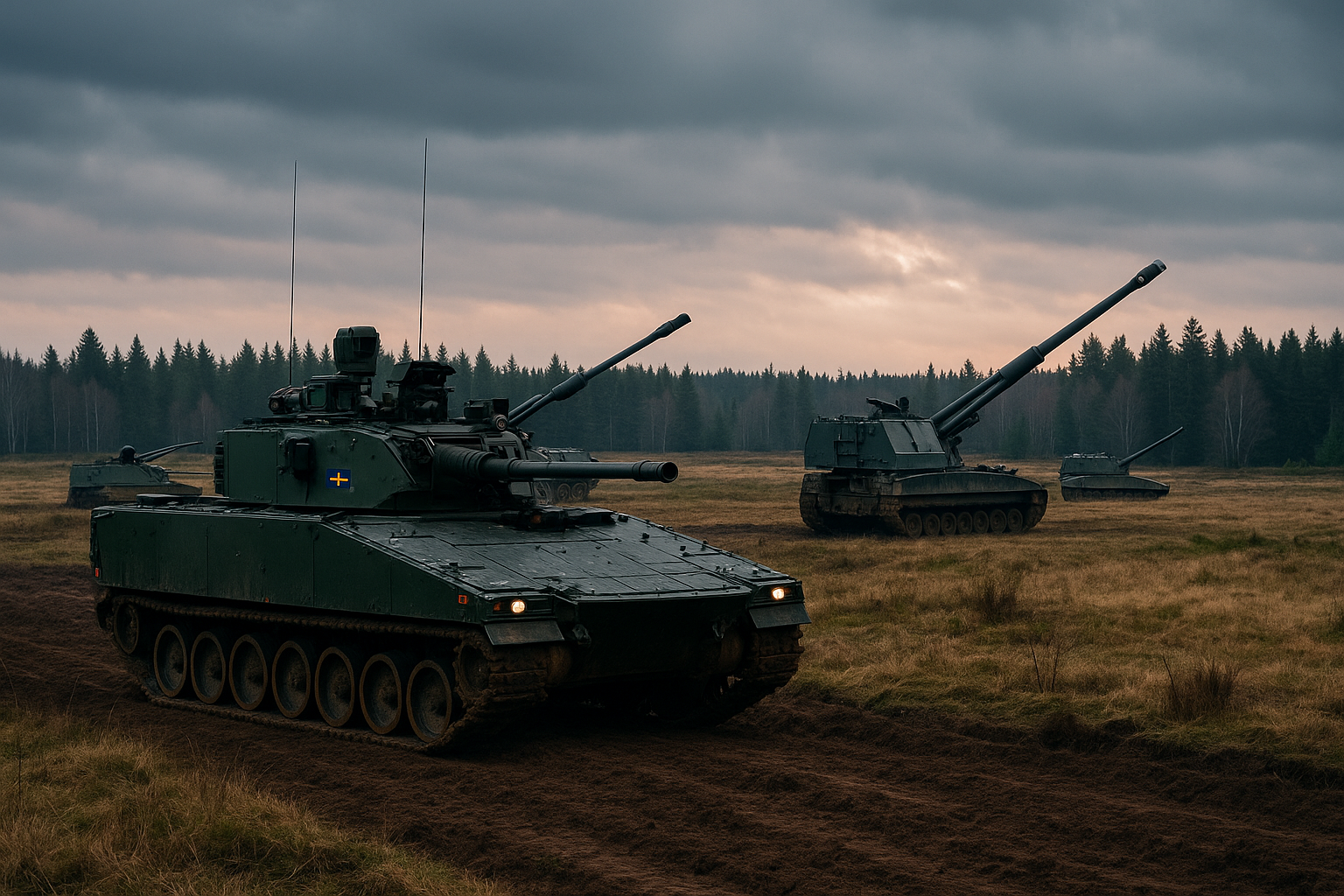
Sweden’s land-systems modernisation has already moved across firepower and sustainment, including Leopard upgrade work that strengthened heavy armour capability. SKORPION2 adds another layer to that posture. Rather than focusing only on vehicles and direct fire, Sweden is strengthening the systems that shape terrain, movement, and the tempo of mechanised operations.
The NATO dimension is practical. Sweden, Denmark, and Latvia operating a common minelaying system gives the region a stronger basis for aligned training, shared spares, ammunition planning, and doctrine development. Around the Baltic, where terrain, reinforcement routes, and mobility corridors are central to deterrence, common obstacle systems can simplify cooperation under pressure.
The order also reflects a wider return to mass and depth in European land warfare. After years of expeditionary force design, armies are again investing in artillery, mines, fortifications, drone defence, ammunition stockpiles, heavy armour, and repair capacity. SKORPION2 belongs to that more attritional understanding of land defence, where movement denial and rapid barrier creation can shape battlefield outcomes before direct engagement begins.
Modern mine systems will remain scrutinised. Procurement must address legal compliance, mapping, self-neutralisation or controlled effects, recovery, training, and post-conflict risk. Those requirements turn digital controls, documentation, and operator discipline into part of the product, not an administrative addition.
For Dynamit Nobel Defence, Sweden’s order strengthens a growing NATO customer base. For Sweden, it adds a production-backed tool for rapid anti-tank obstacle creation. For the wider land-systems sector, it confirms that mobility denial has returned to serious procurement, bringing ammunition manufacturing, vehicle integration, training infrastructure, and alliance interoperability with it.