IN Brief:
- Sweden has received the first of 110 upgraded Strv 123A main battle tanks from KNDS.
- The REMO programme adds a new L55A1 120mm gun, protection improvements, digital workstations, connectivity, and logistics support.
- The upgrade reflects Europe’s shift from isolated armoured purchases toward fleet modernisation, interoperability, and industrial readiness.
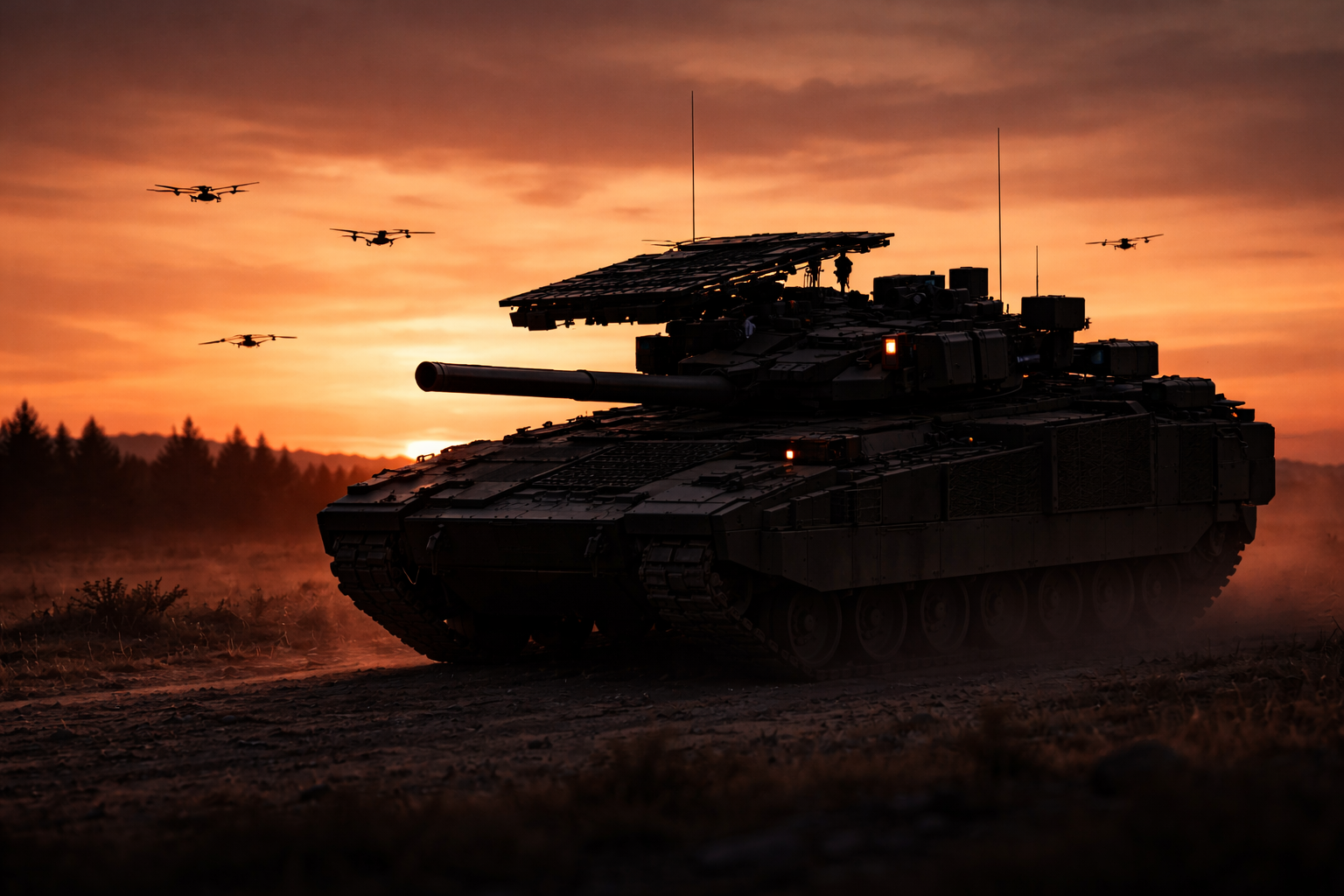
Sweden has received the first of 110 upgraded Strv 123A main battle tanks from KNDS, opening the delivery phase of a major Leopard 2 modernisation programme.
The Strv 123A, also known as Leopard 2 SWE, is being delivered under Sweden’s REMO renovation and modernisation programme for the Strv 122 fleet. KNDS handed over the first system to the Swedish Defence Materiel Administration in Munich, with the full programme scheduled to run to 2030. The upgrade covers firepower, protection, digitalisation, connectivity, and logistics support.
The new L55A1 120mm gun is the most visible change. A longer and more capable gun increases range and firepower, while supporting modern ammunition types and future growth. The weapon change is not a standalone improvement, however. Recoil management, ammunition compatibility, stabilisation, sighting, ballistic computation, fire-control software, and crew interfaces all need to work together if the new gun is to deliver its full value.
Digital workstations and connectivity upgrades are just as important. Armoured vehicles now operate inside networked formations where target data, friendly-force information, sensor feeds, and command instructions move rapidly. Replacing ageing electronics reduces obsolescence, improves maintainability, and creates a better foundation for future software and sensor upgrades. A tank with an old digital backbone becomes harder to sustain even when the hull and gun remain useful.
Modernisation lines are industrially different from new-build programmes. Existing vehicles must be inspected, stripped, repaired, modified, rewired, refitted, tested, and returned to service. After decades of use, each hull may carry its own maintenance history, repairs, and national modifications. The production line has to manage variation while delivering a consistent final configuration, which places heavy demands on documentation, technicians, spare parts, test equipment, and configuration control.
Sweden’s NATO membership adds another layer to the upgrade. Interoperability is not an abstract standard; it affects radios, ammunition, diagnostics, data links, training, repair procedures, and logistics. A tank that performs well in national service can still create friction if its support chain, communications, or software architecture does not align with allied operations. The Strv 123A programme reduces that friction while preserving Sweden’s investment in its existing fleet.
The logistics package is an essential part of the capability. Armoured readiness is often constrained less by headline vehicle numbers than by spares, depot capacity, trained maintainers, recovery equipment, test sets, and repair pipelines. A modernised tank without the parts and technicians to keep it running becomes a static asset. Including logistics inside the programme treats the Strv 123A as a fleet capability rather than a vehicle display.
Across Europe, land-systems readiness is being rebuilt through workshops and depots as much as new procurement. Germany’s armoured readiness work and Finland’s role in HIMARS and M270 fire-control sustainment show the same pattern: vehicles, launchers, and fire-control systems need industrial depth behind them. Sweden’s Leopard upgrade belongs to that wider return of sustainment as a front-line issue.
The war in Ukraine has also changed how tank survivability is understood. Main battle tanks remain valuable, but they now operate under persistent threat from drones, artillery, mines, loitering munitions, top-attack weapons, and electronic warfare. Protection upgrades cannot be confined to armour alone. Sensors, situational awareness, communications, mobility, repairability, and integration with air defence and electronic warfare all contribute to the vehicle’s ability to survive and remain useful.
KNDS gains industrial continuity from the programme. European tank demand is rising, but new production capacity cannot be created instantly. Modernisation work keeps skilled labour, tooling, engineering teams, and suppliers active while new Leopard 2A8 orders and future European land-system concepts mature. Upgrade programmes also feed practical lessons into new-build designs because they expose which legacy components fail, which interfaces are fragile, and which systems are most valuable to users.
The programme also shows the limits of national customisation. Sweden’s Strv 122 included features tailored to national requirements, some of which now have to be removed or adapted for better interoperability. Many European fleets face the same issue. National modifications can be valuable at the time of acquisition, but they can complicate future upgrades, spares, training, and allied support.
Sweden’s first Strv 123A delivery is therefore a workshop milestone as much as an armoured one. The programme turns existing Leopard 2 hulls into more connected, better armed, and more supportable systems while preserving the production knowledge needed to keep heavy armour credible. Europe’s next armoured decade will not be defined only by new tanks. It will be defined by the fleets that can be modernised, repaired, supplied, and returned to service at pace.