IN Brief:
- Leonardo is being integrated into Lockheed Martin’s regional C-130 support network.
- Lockheed Martin plans to provide technical assistance, equipment, and training.
- Regional MRO capacity relies on engineering data, approved repairs, spares, skilled labour, and predictable aircraft throughput.
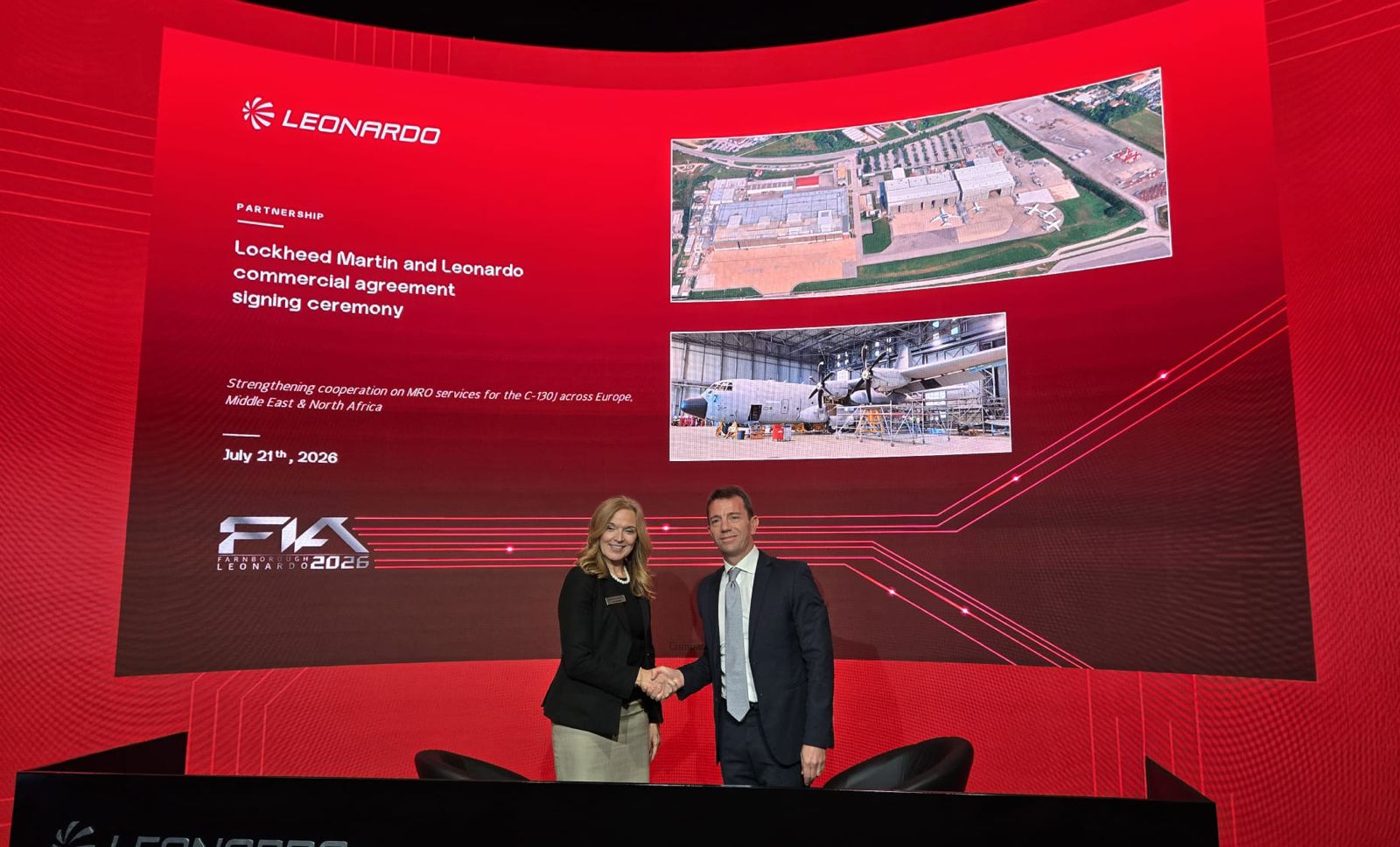
Leonardo and Lockheed Martin are developing Italy as a regional maintenance, repair, and overhaul centre for C-130J operators across Europe, the Middle East, and North Africa.
The arrangement will combine Leonardo’s aircraft-support infrastructure with technical assistance, equipment, and training from Lockheed Martin. Both companies already support the Italian Air Force’s C-130J fleet, providing an established technical base for a broader regional service.
More than 570 C-130Js have been delivered to 27 countries, including 16 potential users within the intended region. Such an installed fleet creates continuing demand for scheduled maintenance, structural inspections, component repair, modifications, and unscheduled recovery work.
Military-aircraft MRO depends on a controlled industrial system rather than hangar capacity alone. Aircraft must arrive with agreed workscopes, complete engineering records, available tooling, approved repair data, and a supply chain able to support defects discovered after disassembly.
Once panels, floors, engines, and equipment are removed, corrosion, fatigue, wiring damage, seal deterioration, and component wear frequently expand the planned workload. An aircraft can occupy a valuable maintenance position for weeks while awaiting one engineering disposition or replacement part.
C-130J fleets also contain substantial national variation. Communications, defensive aids, mission equipment, software, and structural modifications differ between operators, requiring the centre to maintain common aircraft expertise without assuming that every arrival shares the same configuration.
Leonardo brings experience from C-27J support and other military-aircraft programmes, while Lockheed Martin controls the technical data and original-equipment knowledge needed to expand approved C-130J work. Their existing cooperation with the Italian fleet reduces the amount of capability that has to be created from the beginning.
Readiness becomes regional industrial work
Locating support closer to operators reduces ferry distance and can simplify the movement of people, components, and technical representatives. It also distributes maintenance capacity across the fleet when established depots face competing demand.
Military airlifters are carrying a growing range of equipment and undertaking missions beyond conventional cargo transport. Australia’s Aladdin air-launched logistics work illustrates how C-130-class aircraft are being used to deploy new autonomous and expendable systems from existing fleets.
New mission kits affect maintenance through added weight, electrical demand, structural loads, cooling requirements, and wiring changes. Frequent operation from austere runways increases exposure to dust, debris, landing-gear loads, and surface damage, while tactical low-level flight can accelerate fatigue consumption.
An MRO visit creates a practical point for incorporating defensive-aids updates, communications, navigation equipment, cockpit systems, mission consoles, and structural modifications. Combining upgrades with scheduled maintenance can reduce the number of separate periods during which an aircraft is unavailable.
The provider must nevertheless manage uncertain induction schedules. Operational commitments can cause customers to move maintenance dates, creating empty docks followed by several aircraft arriving together. Labour, tooling, and component capacity then become difficult to balance.
Spare parts remain a potential constraint even within a mature aircraft programme. Engines, propellers, avionics, actuators, landing gear, and specialist components may be supported by suppliers with their own repair queues and material shortages.
Workforce development will determine how quickly the Italian capability can expand. Structural technicians, avionics engineers, licensed maintainers, non-destructive-test specialists, planners, quality staff, and supply-chain personnel require type-specific knowledge and experience with military documentation.
Commercial aviation can provide recruits, although military configuration control, security, defensive systems, and airworthiness processes introduce different demands. Training courses establish competence, but efficient fault diagnosis develops through repeated work on the aircraft.
Customers will judge the centre through turnaround performance, technical depth, parts access, and engineering response rather than labour rate alone. A low quoted price provides little benefit if an aircraft remains unavailable while unexpected defects move through a slow approval chain.
Leonardo will need a sufficiently predictable flow of aircraft to retain skills and justify tooling, yet the regional market offers several possible sources of work. Scheduled inspections, modifications, component repair, and engineering support can be combined across fleets with different operating cycles.
The agreement gives Lockheed Martin another route to distribute support capacity, while Leonardo gains access to sustainment work that can continue independently of new aircraft production. Its industrial value will accumulate through recurring maintenance visits rather than one large manufacturing batch.
A regional hub becomes strategically useful only when it returns aircraft to service predictably. Italy’s opportunity will be measured through available spares, approved repairs, skilled labour, and the ability to absorb additional findings without allowing each maintenance visit to drift beyond its planned completion date.