IN Brief:
- Italian Eurofighters have completed two consecutive NATO Baltic Air Policing rotations from Ämari Air Base in Estonia.
- The detachment logged more than 1,300 flying hours before handing responsibility to the Portuguese Air Force.
- For industry, sustained air-policing demand reinforces the need for MRO capacity and for Italy’s replacement order of new Typhoons to feed back into fleet resilience.
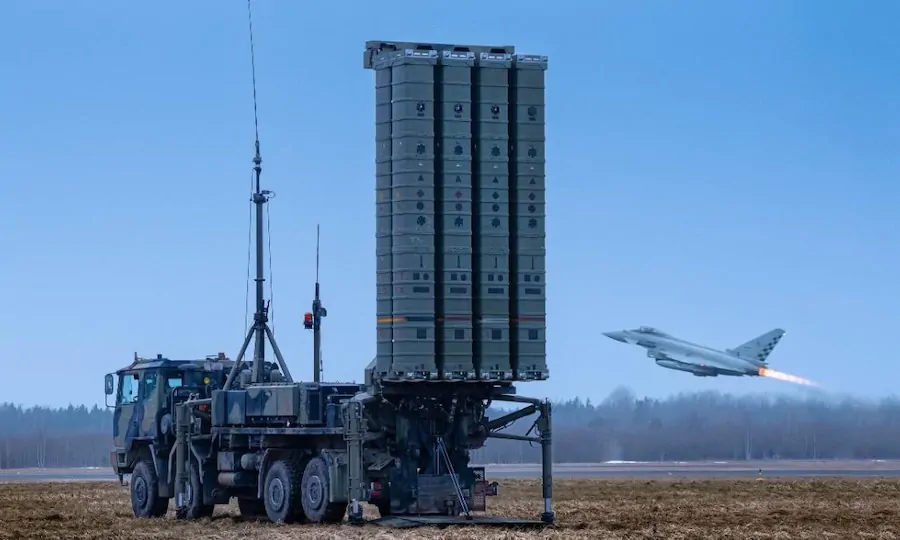
Italy has concluded its latest NATO air-policing deployment in Estonia after two consecutive Eurofighter Typhoon rotations from Ämari Air Base. The mission handed over to the Portuguese Air Force after the Italian detachment logged more than 1,300 flying hours, underlining once again how air-policing tasks on NATO’s eastern flank have become a sustained demand signal rather than an occasional reassurance measure.
Operationally, the mission is familiar territory: quick-reaction alert coverage, persistent surveillance, and intercept readiness against aircraft approaching or probing allied airspace. But for aerospace and defence manufacturing readers, the larger point is what such rotations ask of a mature combat-aircraft fleet. Air-policing may look lighter than full combat operations, yet it is maintenance-intensive, personnel-intensive, and unforgiving of supply-chain gaps.
Every additional rotation pushes requirements into engines, mission systems, consumables, software support, and flight-line maintenance. It also keeps the discussion alive around how quickly operator nations can sustain sortie generation while preparing for the next decade of upgrades and fleet renewal.
Sustainment load behind the sortie count
That matters for Italy because the country has already committed to up to 24 additional Eurofighter Typhoons to replace older Tranche 1 aircraft. The connection between the Estonia mission and the replacement order is not rhetorical. High-readiness NATO tasks depend on fleets that are modern enough to remain available, supportable, and economically sensible to maintain.
A long-running air-policing posture rewards aircraft that can be turned around quickly and supported through a predictable industrial base. It also exposes the cost of keeping older airframes in service when obsolescence, component lead times, and software divergence begin to bite.
European production relevance
The Typhoon remains one of the central industrial programmes in European combat aviation, and rotational deployments help explain why. A platform that is regularly available for NATO tasks keeps demand alive not only for new aircraft, but for repair capacity, upgrades, radar work, avionics support, and the broader supplier network that underpins a multinational fleet.
In that sense, the end of Italy’s latest Estonia deployment is not simply the close of a mission cycle. It is another reminder that readiness on the ramp depends on a manufacturing and sustainment base that remains active between headlines.