IN Brief:
- Northrop Grumman says IVEWS has exceeded 500 flight hours and 300 sorties during F-16 development and operational testing.
- The AN/ALQ-257 suite is digitally interoperable with the F-16's AN/APG-83 SABR AESA radar.
- Air Force planning covers 206 operational aircraft through FY2031, with $438 million requested for 48 installations in FY2027.
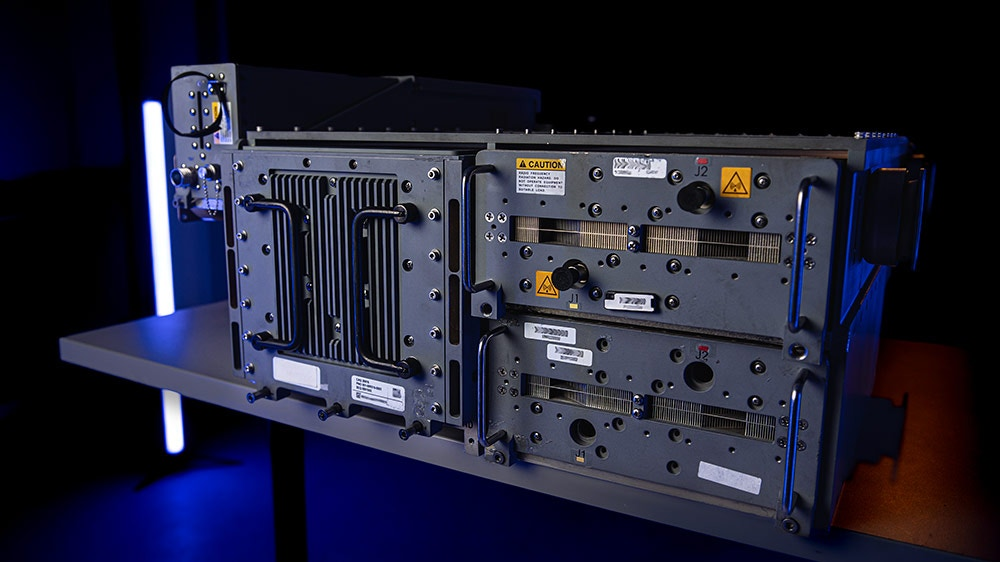
Northrop Grumman says its AN/ALQ-257 Integrated Viper Electronic Warfare Suite has exceeded 500 flight hours and 300 sorties during F-16 testing, adding another maturity milestone as the US Air Force prepares to move the system into wider procurement. IVEWS is now the service’s programme of record for F-16 electronic warfare and is being produced in functional configurations ahead of planned fleet installations.
The flight campaign has exposed IVEWS to radio-frequency threats from airborne, land, and maritime sources, including scenarios involving several emitters at once. The suite is designed to detect, identify, locate, and counter radio-frequency threats while remaining internal to the aircraft, preserving external stations for fuel, sensors, or weapons.
More than 500 accumulated flight hours is useful evidence of maturity, but the figure should not be confused with fleet-wide qualification or completion of the procurement programme. The system has progressed through developmental testing and operational assessment, while additional software releases and production work remain part of the Air Force’s planned programme through the end of the decade.
A central engineering requirement is compatibility with the F-16’s AN/APG-83 Scalable Agile Beam Radar. Northrop Grumman says IVEWS and SABR are digitally interoperable on a pulse-to-pulse basis, allowing the electronic-warfare suite and AESA radar to operate simultaneously rather than requiring one to remain inactive to prevent interference with the other.
That problem is particularly important on an aircraft being modernised decades after its original design. The F-16 has finite electrical power, cooling, physical volume, antenna locations, and computing capacity, leaving an internal electronic-warfare system to fit within constraints that would be easier to manage on a clean-sheet aircraft. Installation also has to avoid creating conflicts with the radar, communications equipment, weapons, and other mission systems already occupying the airframe.
IVEWS uses a digital architecture built around wideband radio-frequency reception, processing, and high-power transmission. The system is designed to provide radar warning and active countermeasures across a broad frequency range, with software and threat data capable of being updated as emitters and tactics change. Electronic-warfare capability therefore depends on continuing software and mission-data support after the hardware has entered service.
The Air Force’s FY2027 procurement plan makes the industrial scale clearer. Budget material calls for $438 million to acquire equipment for 48 F-16 aircraft, with the wider programme covering 206 operational F-16C aircraft through FY2031 in addition to engineering and manufacturing development installations. Earlier funding provided for the first six low-rate initial production assets, spares, software work, and preparation for depot support.
Those numbers describe a planned procurement path rather than 206 systems already under contract. Funding is spread across future fiscal years, and installation will depend on subsequent appropriations, production output, aircraft availability, software qualification, and modification capacity. The distinction is important because moving from test articles to several dozen aircraft per year creates a very different workload from development testing.
Production has to combine specialised radio-frequency components, processors, antennas, high-power electronics, mechanical installation hardware, cabling, software, and test equipment while preserving configuration control between lots. Any shortfall in a qualified electronic component can constrain completed-system deliveries even if final assembly has sufficient labour and floor space.
The aircraft modification process creates another bottleneck. Operational F-16s have to be taken out of normal service, prepared for installation, modified, tested, and returned to their units. Depot capacity therefore becomes part of the production rate, particularly once several modification programmes compete for access to the same aircraft and maintenance infrastructure.
Software will continue changing during that process. Air Force planning includes further development releases, while the architecture is intended to accommodate future processing and countermeasure functions. That means early production aircraft cannot simply be frozen indefinitely at the configuration used during initial flight testing; updates will have to move through qualification and fleet release without fragmenting the installed base into incompatible versions.
International demand may add another production stream. Northrop Grumman says more than 2,500 F-16s remain in service in more than 20 countries and is marketing IVEWS to partner operators as well as the US Air Force. Export configurations can differ in radar fit, software, mission data, communications, and national security requirements, so additional customers can increase volume while making configuration management more complicated.
The latest flight milestone shows that IVEWS has accumulated substantial airborne test experience and is moving into a phase where procurement and installation rates become more important than another isolated sortie. The Air Force’s 206-aircraft plan now puts the pressure on production, depot throughput, software qualification, and supply continuity. Passing 500 flight hours demonstrates maturity; converting that maturity into more than 200 operational modifications is the larger industrial test.