IN Brief:
- The US Army has placed a $63 million FWS-I production order under Leonardo DRS's existing indefinite-delivery/indefinite-quantity contract.
- The uncooled thermal sight connects wirelessly to compatible ENVG-B and IVAS soldier-worn vision systems.
- Its clip-on design allows thermal imaging equipment to be fitted to existing weapon platforms, with imagery viewed through a helmet-mounted display.
Leonardo DRS has received a $63 million US Army production order for its Family of Weapon Sights – Individual (FWS-I) thermal imaging system, extending an established programme to equip soldiers with weapon-mounted sensors that communicate wirelessly with helmet displays. The order was placed under the Army’s existing indefinite-delivery/indefinite-quantity contract and continues manufacturing of equipment designed to support observation and target acquisition in darkness and reduced visibility.
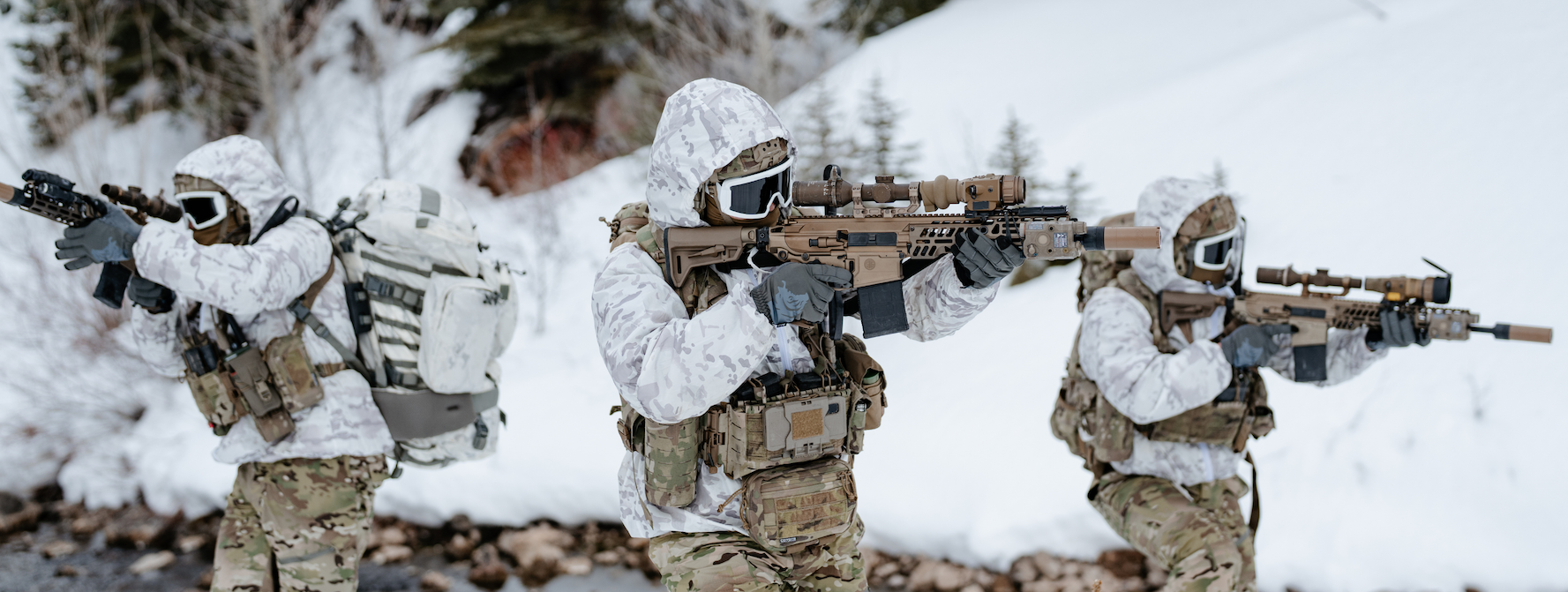
FWS-I combines a lightweight, uncooled infrared sensor with a clip-on weapon sight and a wireless connection to compatible soldier-worn vision equipment. Its supported displays include the Enhanced Night Vision Goggle – Binocular (ENVG-B) and Integrated Visual Augmentation System (IVAS). The arrangement allows imagery collected by the weapon sight to be viewed through a helmet-mounted display, reducing the need for the operator to bring their eye directly into alignment with the weapon. Leonardo DRS has not disclosed the number of sights covered by the latest order or its delivery schedule.
The award continues a production programme established under a five-year, $579 million contract announced in October 2022. Leonardo DRS subsequently reported a production order exceeding $134 million in November 2023 and another worth $117 million in August 2024. The new $63 million commitment is an additional order under the existing arrangement, rather than a replacement contract or a separately announced programme to develop a different weapon sight. The company has not provided an updated cumulative quantity of systems ordered or delivered.
Thermal imaging works by detecting infrared radiation emitted by objects and converting differences in the received energy into an image. The resulting information can reveal temperature contrasts that are difficult to observe using visible light, particularly at night or when conventional illumination is limited. Thermal sensors can also assist observation through some forms of smoke or visual obscuration, although performance depends on the material obstructing the view, atmospheric conditions and the contrast between an object and its surroundings. Infrared imaging cannot be assumed to provide clear visibility through every barrier or weather condition.
FWS-I uses an uncooled detector architecture, avoiding the cryogenic cooling equipment required by some other infrared systems. The absence of a mechanical cooling assembly can reduce the size, complexity and power demands of a sensor intended for dismounted personnel. Image quality nevertheless depends on the detector, optics, electronic processing and operating temperature. The equipment must also remain within its specified environmental and electrical limits when mounted on a weapon that is carried, handled and exposed to repeated movement.
The clip-on configuration enables FWS-I to operate alongside an existing weapon sight rather than requiring the principal optical equipment to be replaced. Its mechanical mounting must keep the thermal unit properly positioned, while the relationship between its image and the weapon’s existing sighting arrangement must remain consistent. Movement, vibration and repeated handling can affect mounted equipment, making mechanical integrity and verification important during manufacture and service. Leonardo DRS has not announced a change to the clip-on interface as part of the October order.
Connecting the weapon sight to a soldier-worn display introduces additional electronic and software requirements. The infrared imagery must be processed, transmitted and presented in a form compatible with the receiving equipment, with sufficient consistency for the intended operational use. Wireless integration also allows the sight and display to occupy different positions, although the practical performance of the connection depends on the supported interfaces and operating conditions. The company has not published new measurements of wireless range, transmission delay or display performance for the latest production batch.
Compatibility with ENVG-B and IVAS forms part of Leonardo DRS’s wider approach to connected soldier equipment. These systems have different architectures and development histories, making configuration control important when components are supplied or updated independently. A change to a communication interface, software version or display function may require additional integration checks before it is introduced. The manufacturer’s stated compatibility should therefore be understood in relation to supported system configurations rather than as an assurance that every existing or future variant will operate interchangeably.
Manufacturing such equipment involves the integration of infrared sensors, optical assemblies, processing electronics and wireless components into a mechanically robust package. Consistency across production batches depends on controlled assembly, calibration and testing, particularly where thermal measurements must be converted into repeatable imagery. Equipment also needs to be inspected against the requirements of the contracted configuration before acceptance. Leonardo DRS has established infrared sensor production and laboratory capabilities within its US operations, although it has not attributed a specific factory expansion or additional manufacturing investment to the new order.
John Baylouny, president and chief executive of Leonardo DRS, described the Army’s continued procurement as part of its investment in connected sensing equipment for dismounted soldiers. Jerry Hathaway, senior vice-president and general manager of the company’s Electro-Optical Infrared Systems business, also identified the combination of uncooled thermal imaging and soldier-worn displays as a central feature of FWS-I. Their comments accompany an additional production commitment, without identifying a new technical configuration or a change in the Army’s procurement requirements.
The $63 million order secures further work for Leonardo DRS’s established thermal weapon sight programme while the Army continues equipping personnel with connected observation systems. The quantities involved, timing of deliveries and precise configuration of the new production batch remain undisclosed. Those details will determine the immediate manufacturing and delivery commitments associated with the award.