IN Brief:
- The US Army's Threat Systems Management Office has selected VIAVI's T/Rx transceiver for electromagnetic testing at military ranges.
- The Test Range Private Industry Initiative aims to give commercial developers access to five Army facilities, including companies without existing government contracts.
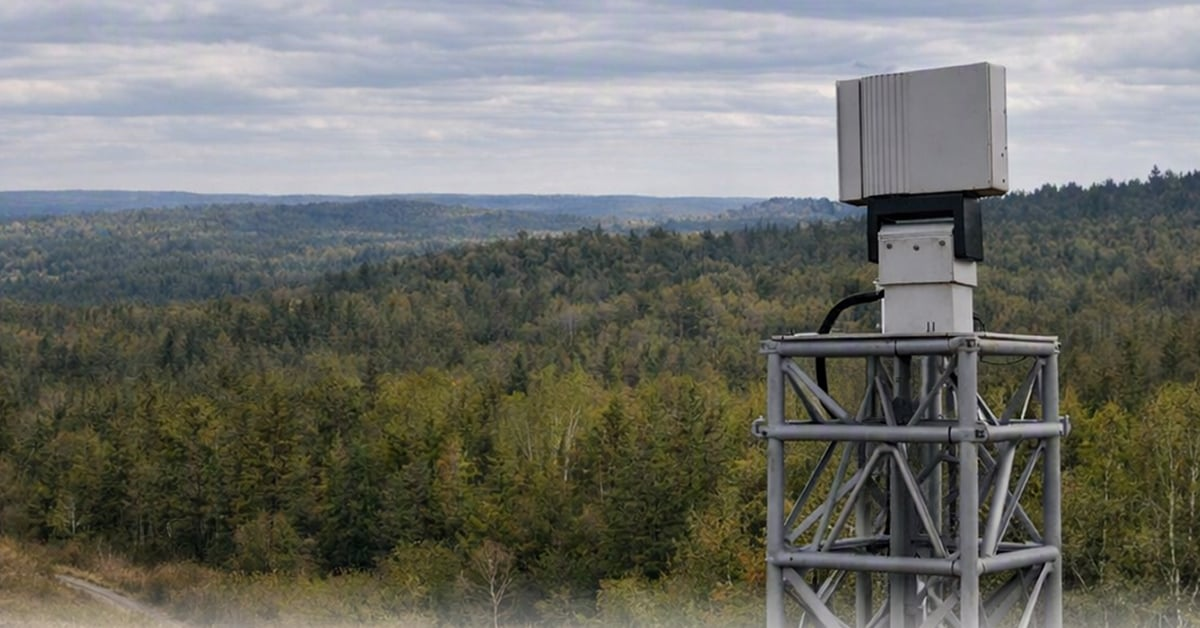
- T/Rx equipment was used at Camp Grayling in September 2026 to generate challenging electromagnetic conditions for testing.
VIAVI Solutions has been selected by the US Army’s Threat Systems Management Office (TSMO) to provide equipment for generating and analysing electromagnetic environments at military test ranges. Its T/Rx software-defined transceiver will support an initiative opening specialist Army facilities to commercial developers of drones, counter-drone technology and interceptors, allowing equipment to be evaluated under more representative radio-frequency conditions.
The selection forms part of the Army’s Test Range Private Industry Initiative, which is intended to provide commercial organisations with access to five existing test facilities. Companies developing uncrewed aircraft, counter-uncrewed aircraft systems, long-range fires equipment and lower-cost interceptors are among those eligible to benefit, including businesses that do not already hold government contracts. TSMO, operating under the Army’s Portfolio Acquisition Executive C2/CC2 organisation, will use VIAVI technology to provide a substantial part of the electromagnetic testing capability. The announcement does not disclose an award value, equipment quantity or installation timetable for each range.
Electronic systems used in military equipment operate within an electromagnetic environment containing signals from communications equipment, navigation services, radar and other transmitters. Their performance can change when interfering signals are present or when equipment encounters deliberate electronic disruption. A drone may experience degraded navigation or command communications, while radar and other sensing equipment can be affected differently depending on its operating frequency and design. Testing individual systems against controlled electromagnetic conditions allows engineers to examine their responses before relying on them in demanding environments.
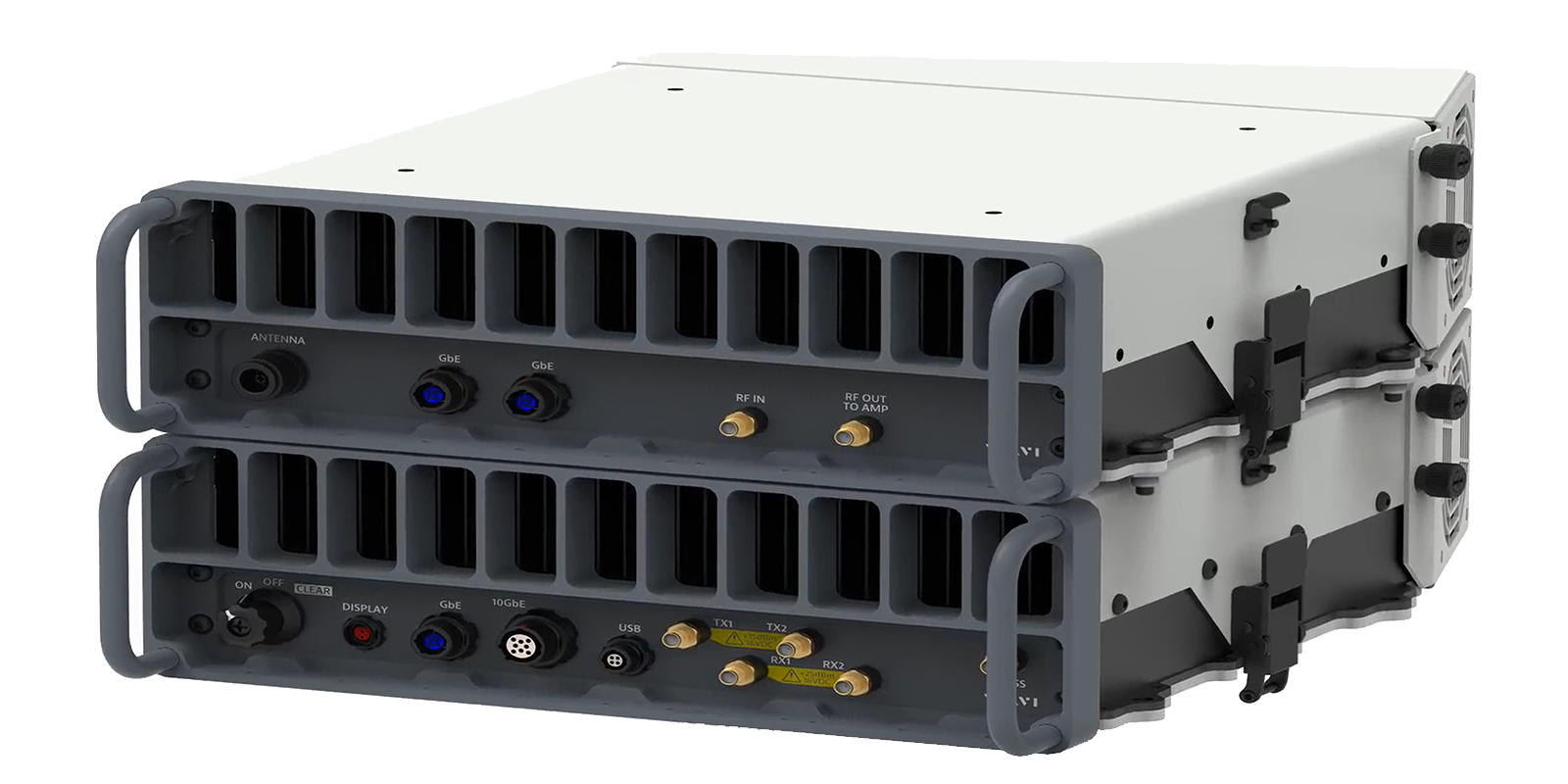
T/Rx combines radio-frequency signal generation and reception within a rugged, field-deployable instrument. Unlike equipment designed to produce one fixed signal, a software-defined transceiver can be configured to transmit different waveforms and monitor the resulting spectrum activity. Its receivers can collect information about existing signals, while its transmitters generate defined test scenarios. This allows range personnel to introduce changes in the electromagnetic environment and examine how the equipment under evaluation responds as those conditions develop.
VIAVI specifies two independent receivers and two transmitters within each T/Rx unit, with transmit and receive capability from 1MHz to 18GHz and up to 400MHz of instantaneous bandwidth per channel. The receivers and transmitters can be configured independently within their supported limits, allowing several signal conditions to be represented during a test. The published bandwidth describes the frequency span handled by an individual channel at a given time rather than an ability to reproduce every signal across the full operating range simultaneously.
The equipment also supports waveform recording and playback. Capturing a signal environment allows engineers to analyse its characteristics or reproduce selected conditions during a subsequent evaluation, helping them compare equipment behaviour before and after modifications. VIAVI offers supporting software for building test scenarios and controlling sequences of electromagnetic activity. The accuracy of a reproduced environment still depends on the selected recordings, signal generation settings, antennas and other equipment used at the range. It cannot be assumed that a laboratory-generated scenario reproduces every characteristic of an operational electronic warfare environment.
Camp Grayling in Michigan has already hosted testing involving T/Rx under the Army’s initiative. During a September 2026 event, the system generated changing electromagnetic conditions intended to reproduce aspects of the interference experienced by uncrewed aircraft and counter-drone equipment in contested operating environments. VIAVI describes the activity as an opportunity for developers to investigate system resilience and improve their equipment. The company has not published a complete test report, individual participant results or evidence that a particular drone or interceptor met its operational requirements as a result.
Reproducing interference presents several practical challenges. Radio-frequency signals can vary in frequency, power, duration and modulation, while their effect on a device depends on how the receiver and its associated software respond. An engineering test must therefore define the signals introduced and record the behaviour observed, rather than treating the presence of interference as a complete assessment of resilience. Repeated trials can help identify whether changes to hardware or software improve performance under the selected conditions, provided the test arrangement is sufficiently consistent to support comparison.
Integrated defence systems may require further work because several components can depend on different parts of the spectrum. A counter-drone installation may combine radar detection with communications links and connected command equipment, each having distinct susceptibility to interference. A test focused on one component may fail to reveal problems arising when the complete configuration operates together. Range personnel can use programmable signal generation to examine selected combinations of conditions, although the performance of a complete system must still be established through an appropriate test programme.
Opening Army facilities to private industry introduces additional requirements for test management and technical support. Different developers will bring equipment with varying interfaces, power arrangements and safety constraints, requiring range operators to establish suitable test configurations and coordinate access. The electromagnetic environment also needs to be monitored so that transmissions used during testing remain within the approved operating arrangements. VIAVI’s equipment provides one part of that infrastructure, rather than the complete range management or safety system.
Doug Russell, VIAVI’s senior vice-president and general manager for aerospace and defence, said the selection would help provide the programmable spectrum environments needed for testing emerging military technology. The company previously demonstrated its electromagnetic simulation capabilities through a US government electronic warfare realism challenge, providing a background to its selection for the Army’s current range work. Neither the earlier demonstration nor the September Camp Grayling event establishes that all five facilities have received their final T/Rx installations.
The Army’s decision gives VIAVI a role in expanding access to electromagnetic testing as private developers seek to qualify new equipment. Subsequent milestones will establish how the technology is distributed between the five ranges, the configurations installed and the extent to which commercial users can conduct repeatable tests against defined spectrum conditions. Those details remain open following the October selection.