IN Brief:
- HII has secured an option-year production contract for the US Navy’s Lionfish small UUV.
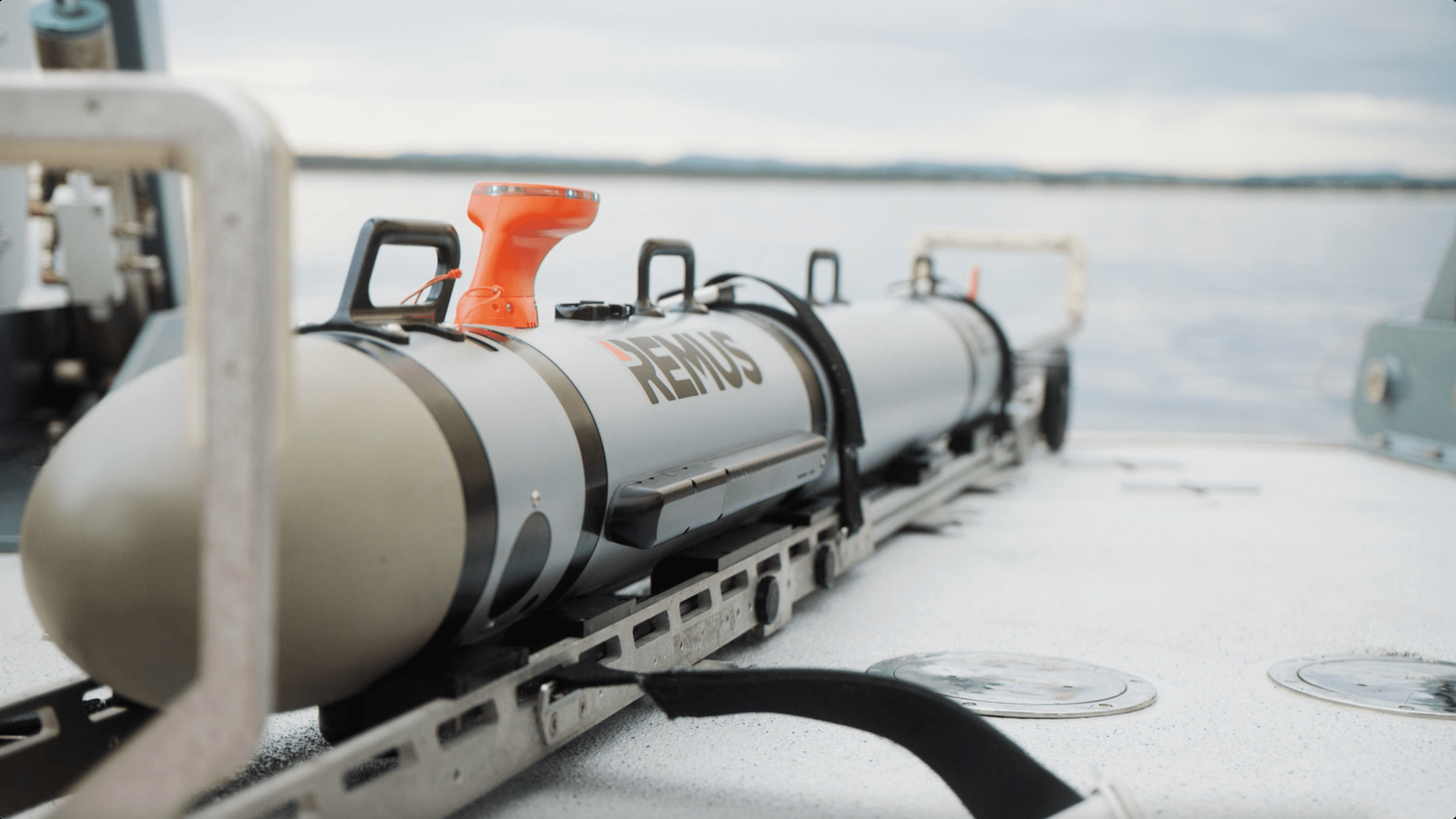
- Lionfish is based on the REMUS 300 and supports mine countermeasures, ISR, ASW, electronic warfare, and other missions.
- The programme could scale to 200 vehicles, making production discipline, cyber compliance, payload integration, and sustainment central.
HII’s latest Lionfish contract option gives the US Navy’s small uncrewed underwater vehicle programme a clearer production-rate signal, moving undersea autonomy further into fleet inventory planning.
Lionfish is based on HII’s commercial REMUS 300 platform and supports missions including mine countermeasures, intelligence, surveillance, reconnaissance, anti-submarine warfare, electronic warfare, and other payload-driven tasks. HII has completed the 42nd Lionfish vehicle at its Pocasset facility, and the five-year programme could scale to as many as 200 vehicles with a total value above $347m.
That potential scale changes the way the system should be viewed. Small UUVs have often lived in the space between experimentation and operational adoption, with demonstrations, pilots, and limited buys proving useful without reshaping fleet planning. Lionfish gives the Navy a route toward a repeatable inventory, where manufacturing rate, quality assurance, payload interfaces, cyber compliance, and operator support carry the programme.
The REMUS family gives HII an established foundation. Hundreds of REMUS vehicles have been delivered to users around the world, creating a production and support base that many emerging UUV developers lack. For the Navy, that reduces some adoption risk, because Lionfish builds from a commercial and military lineage rather than a clean-sheet prototype.
Small UUV manufacturing has its own pressures. Pressure housings, batteries, propulsion, navigation systems, communications, autonomy software, payload bays, and recovery equipment must operate reliably in salt water, pressure cycles, and contested environments. A small defect rate can quickly become a fleet problem when vehicles are deployed in numbers across mine-hunting, survey, or intelligence missions.
Cyber compliance is now inseparable from undersea autonomy. UUVs gather sensitive mission data, operate through software-defined behaviours, and connect into naval networks for planning, updates, and exploitation. A compromised vehicle could expose technical signatures, mission data, or operational patterns. HII’s emphasis on cyber-compliant production reflects that undersea drones are becoming connected military systems, not isolated robotics devices.
Open architecture will shape the programme’s future. The Navy wants vehicles that can accept changing payloads, which creates opportunities for sensor suppliers, electronic warfare companies, mine countermeasure specialists, autonomy developers, and data-processing firms. Modularity only works at fleet scale if interfaces remain disciplined. Otherwise, useful upgrades can leave the inventory fragmented into incompatible variants.
The wider undersea market is moving in the same direction. Thales’ move to strengthen its underwater robotics position through Exail and Lockheed Martin’s acquisition of Ultra Maritime’s ASW portfolio show how much value defence companies now attach to undersea sensing, autonomy, and anti-submarine capability. Lionfish occupies the smaller-vehicle end of that ecosystem, where numbers, portability, and mission flexibility may matter more than exquisite individual performance.
Mine countermeasures remain the most practical near-term use case. Sending small UUVs into suspected mine areas reduces risk to crewed vessels and gives commanders more options for survey and classification. ISR and ASW roles are more complex, but distributed sensing can still help populate the undersea picture when combined with aircraft, surface ships, fixed sensors, larger UUVs, and shore-based analysis.
Production consistency will decide trust. Fleet commanders need vehicles that work repeatedly, not simply systems that succeed in controlled tests. Battery reliability, sealing, navigation accuracy, acoustic performance, mission endurance, recovery rates, and software stability will determine whether Lionfish becomes a routine operational tool.
Sustainment will require equal attention. A 200-vehicle pathway means spares, training, depot procedures, battery replacement, software updates, payload support, operator manuals, and logistics systems. The Navy cannot treat small UUVs as disposable unless the economics and mission assumptions are explicitly built that way. Reusable vehicles require a support model that tracks configuration, usage, faults, and upgrades over time.
Procurement cadence will also shape the supplier base. A five-year production path gives component makers, battery suppliers, autonomy developers, and payload specialists a clearer demand signal than sporadic trials. That can support investment in tooling, test capacity, and workforce development, but only if the Navy keeps requirements stable enough for suppliers to plan around.
Lionfish shows the US Navy moving small undersea drones toward inventory scale. The system’s value will depend on whether HII and its suppliers can build, maintain, secure, and upgrade UUVs with the same discipline expected of larger naval systems.