IN Brief:
- Lockheed Martin’s MTC membership links a major prime more closely to the UK’s applied manufacturing ecosystem.
- Early focus areas include additive manufacturing, automation, augmentation, digital integration, AI, autonomy, cyber, advanced materials, and space manufacturing.
- The programme is aimed at moving more UK-developed capability from concept into deployable, supportable production.
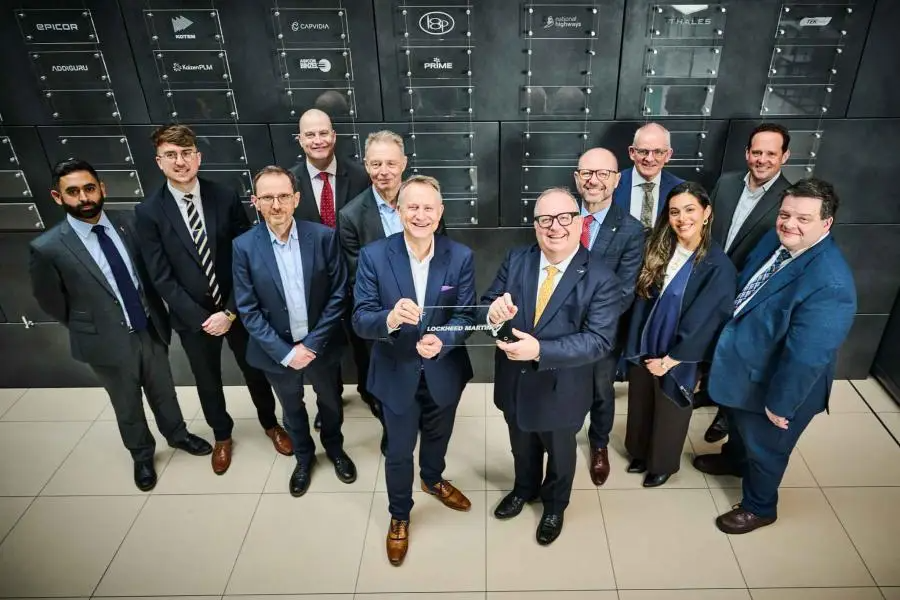
Lockheed Martin has expanded its UK industrial footprint by joining the Manufacturing Technology Centre as a Tier 1 member, adding a more formal production and technology-transfer layer to its British defence activity. Alongside the membership, the company has set out a UK technology roadmap initiative led by Skunk Works, intended to connect advanced development work more directly with sovereign industrial delivery.
The immediate emphasis is less about a single platform than about the mechanics of getting technology into service faster. That includes closer work on supply-chain constraints, production methods, and the transition from early-stage engineering into repeatable manufacture. For UK defence, that is increasingly where competitive advantage sits: not only in generating new ideas, but in qualifying them, scaling them, and integrating them on programmes that can actually absorb them.
There is also a strong SME angle. Lockheed Martin’s existing UK supplier engagement has already pulled in a large number of smaller businesses, and the MTC link gives that network a more structured route into prototyping, manufacturing readiness, and industrial collaboration. In practice, that should favour companies that can offer specialist software, autonomous subsystems, advanced materials, machining, or digital engineering capability, but need a clearer path into defence-grade production.
Industrial production implications
The MTC partnership points to a tighter coupling between product development and factory-floor delivery. Additive manufacturing, automation, and digital integration are not decorative extras in this context; they are the tools that reduce lead times, compress rework cycles, and allow lower-volume defence manufacture to run with more predictable cost and schedule performance.
That matters for UK programmes where the production base is often distributed across large primes, specialist mid-tier suppliers, and small advanced-technology companies. A shared manufacturing environment makes it easier to de-risk novel parts, prove process stability, and raise technology readiness without waiting for a full programme launch to expose bottlenecks.
Qualification and delivery pressures
The harder part comes after the demonstration phase. Defence customers still need export-control discipline, secure data handling, traceable materials, certifiable processes, and a supplier base that can support parts over long service lives. Any roadmap that pulls innovation forward also has to pull industrial assurance forward with it.
For British suppliers, the opportunity is obvious, but so is the burden. Faster insertion of AI, autonomy, cyber tools, or advanced materials only works if qualification, software assurance, production engineering, and sustainment planning move at the same pace.