IN Brief:
- MBDA’s CROSSBOW has completed firing trials following a rapid design-to-demonstration cycle.
- The ground-launched weapon is designed for long-range strike, with a payload up to 300kg and range beyond 800km.
- The programme reflects Europe’s need for deep-fires capacity that can be produced beyond boutique quantities.
MBDA’s CROSSBOW weapon has completed firing trials, giving Europe’s deep-fires market a more concrete industrial reference point as governments seek long-range strike systems that can be produced quickly and in meaningful numbers.
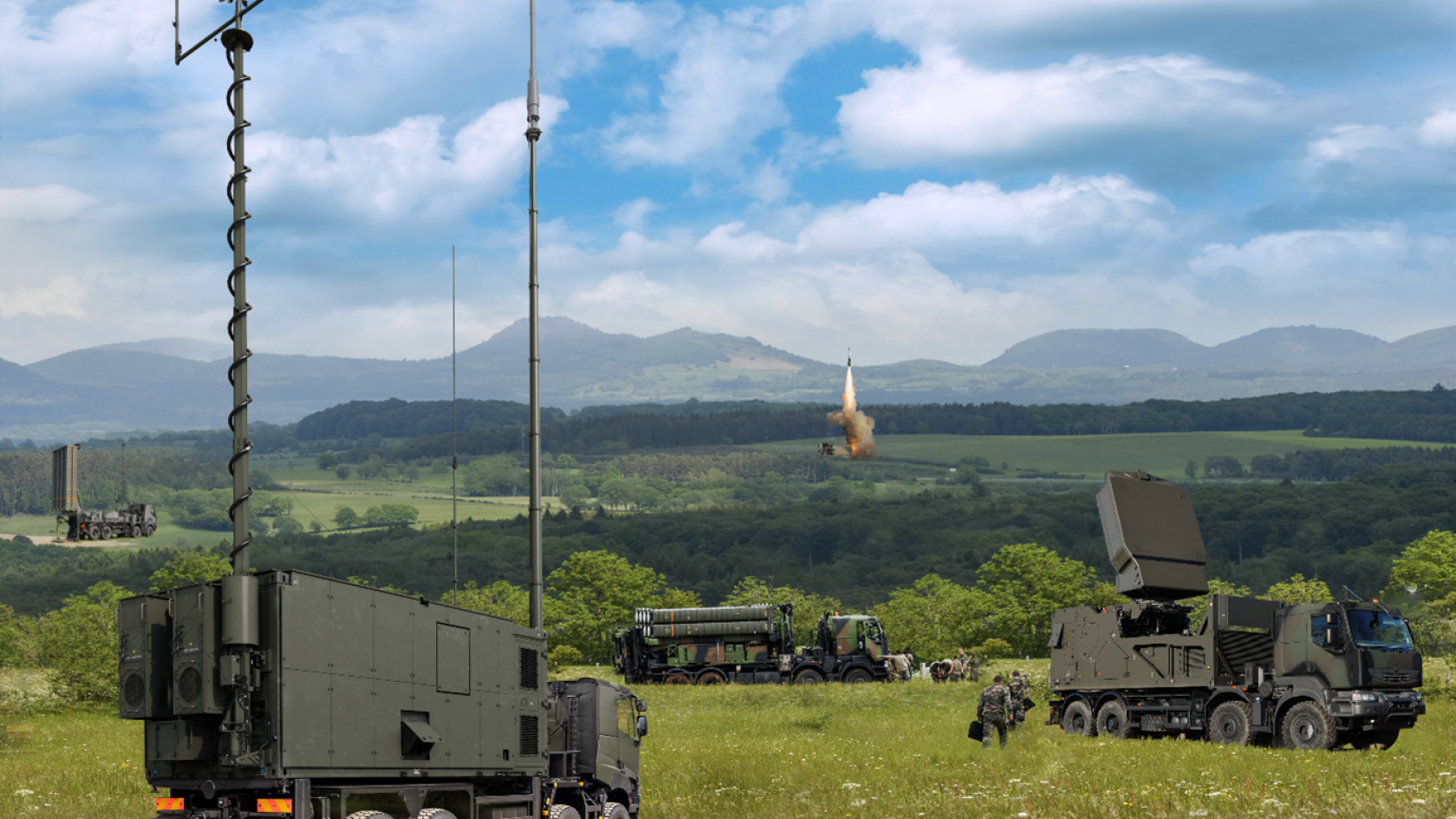
CROSSBOW is being developed as a ground-launched weapon with a range beyond 800km and a payload of up to 300kg. The system has moved from design to demonstration in nine months, with MBDA using a modular design approach, military and commercial off-the-shelf subsystems, and a supply chain spanning SMEs and prime contractors across the UK and Europe.
The production model is central to the programme. Europe’s deep-fires shortfall has become one of the defining industrial problems of the Ukraine war era. Long-range strike systems are expensive, slow to produce, dependent on specialist propulsion and guidance suppliers, and often held in small stockpiles. Yet modern operations have shown that range only has value when weapons can be bought, stored, replenished, and fired in sufficient numbers.
CROSSBOW appears to be designed around that problem. By balancing capability, complexity, cost, and speed, MBDA is trying to create a system that can sit between high-end cruise missiles and shorter-range rocket artillery. That middle ground is becoming increasingly important as European forces look to hold logistics hubs, command nodes, air-defence assets, and staging areas at risk without consuming the most expensive weapons for every target.
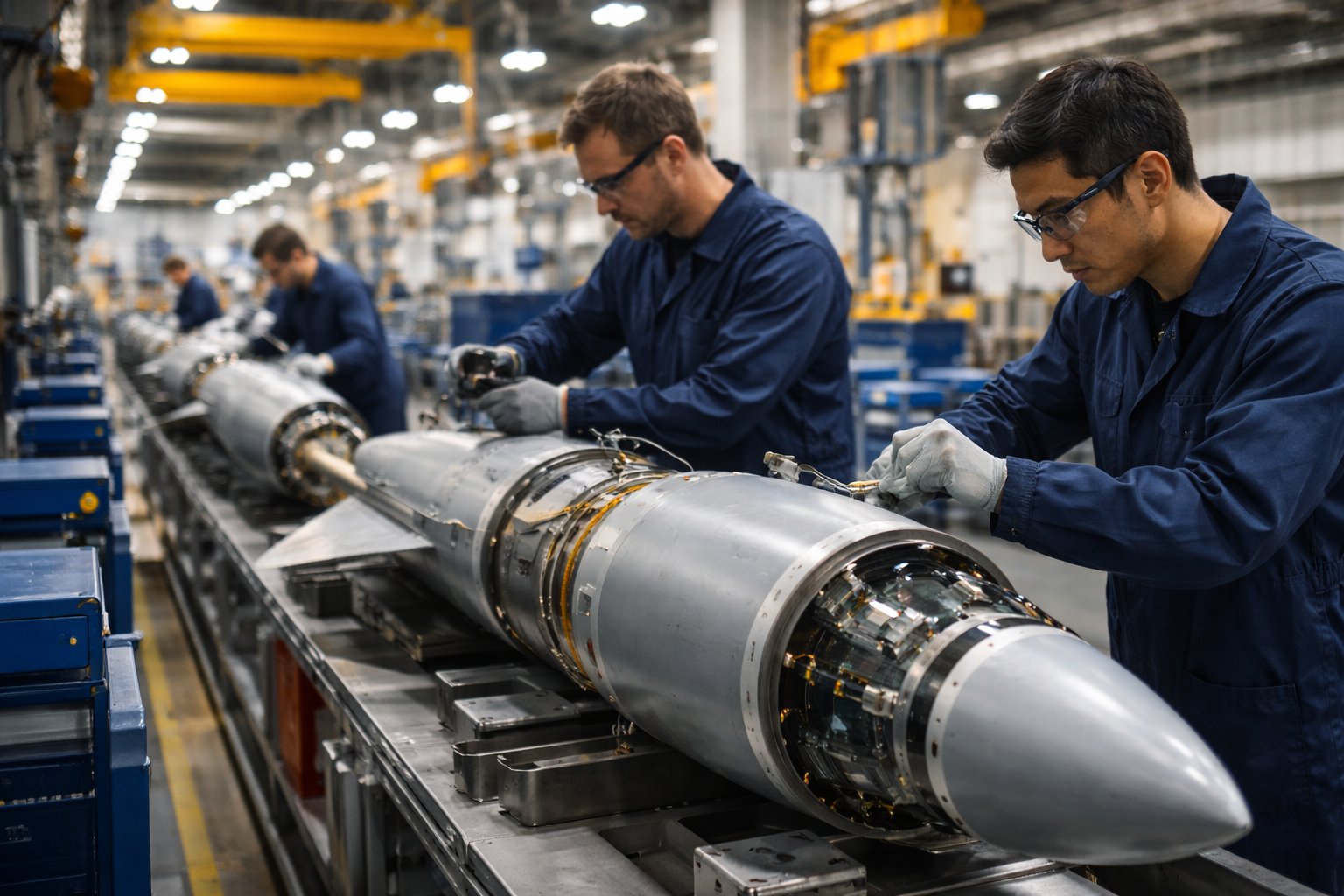
The manufacturing burden is substantial. A long-range ground-launched weapon draws together airframe production, propulsion, guidance, payload integration, mission planning, launch equipment, containerisation, and software assurance. If it is to be produced at pace, each element has to be engineered for repeatability and supplier resilience. Modular subsystems can reduce development time, but they increase the importance of interface control, configuration management, and disciplined testing.
The UK’s own long-range strike work under Project Brakestop sits in the same procurement environment. Governments are looking beyond single exquisite weapons and asking how domestic and allied industry can generate larger inventories of affordable long-range effects. CROSSBOW is a European expression of the same pressure, with the added challenge of scaling a multinational supply chain.
The weapon’s payload figure gives the programme additional industrial weight. A 300kg-class payload pushes CROSSBOW into a category where structural design, centre-of-gravity management, launch loads, and mission flexibility become major engineering constraints. A heavier payload expands target options, especially against hardened or high-value assets, while increasing the demands on propulsion, range, airframe strength, storage, and transport.
MBDA’s reference to production at scale aligns with wider expansion activity across European missile manufacturing. Any new deep-fires system will compete for scarce engineering capacity, energetic materials, actuators, electronics, test facilities, and final assembly space. The core question for CROSSBOW is whether its modular design can avoid the bottlenecks that have slowed other guided munition programmes.
Ground launch also changes the industrial and tactical equation. A dispersed land-based system can be concealed, moved, and operated without relying on aircraft availability. It can be folded into existing command-and-control structures and used to complicate adversary planning across depth. That advantage depends on more than range, however. Reload speed, storage life, launcher mobility, targeting networks, and affordability will decide whether the system becomes a scalable force element or another limited stockpile asset.
CROSSBOW’s progress shows where Europe’s deep-fires market is heading. Performance remains essential, but the next competition will be won by systems that combine range with manufacturing credibility. In a defence environment defined by stockpile pressure, the assembly line is now part of the deterrent.