IN Brief:
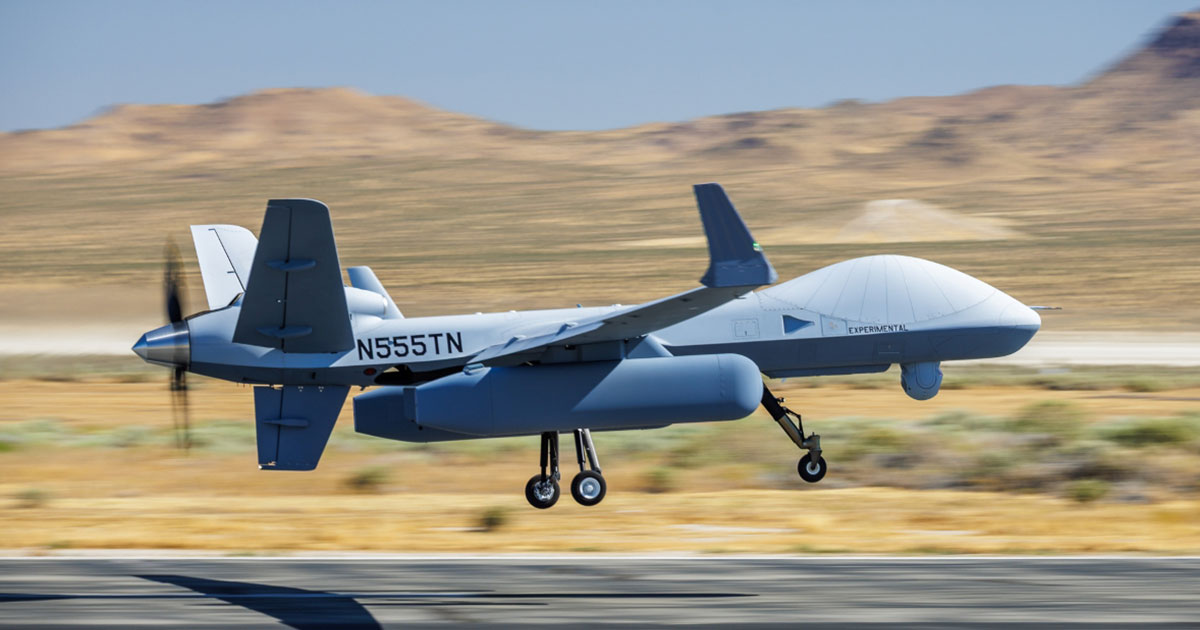
- GA-ASI has flown an MQ-9B remotely piloted aircraft with airborne early warning pods for the first time.
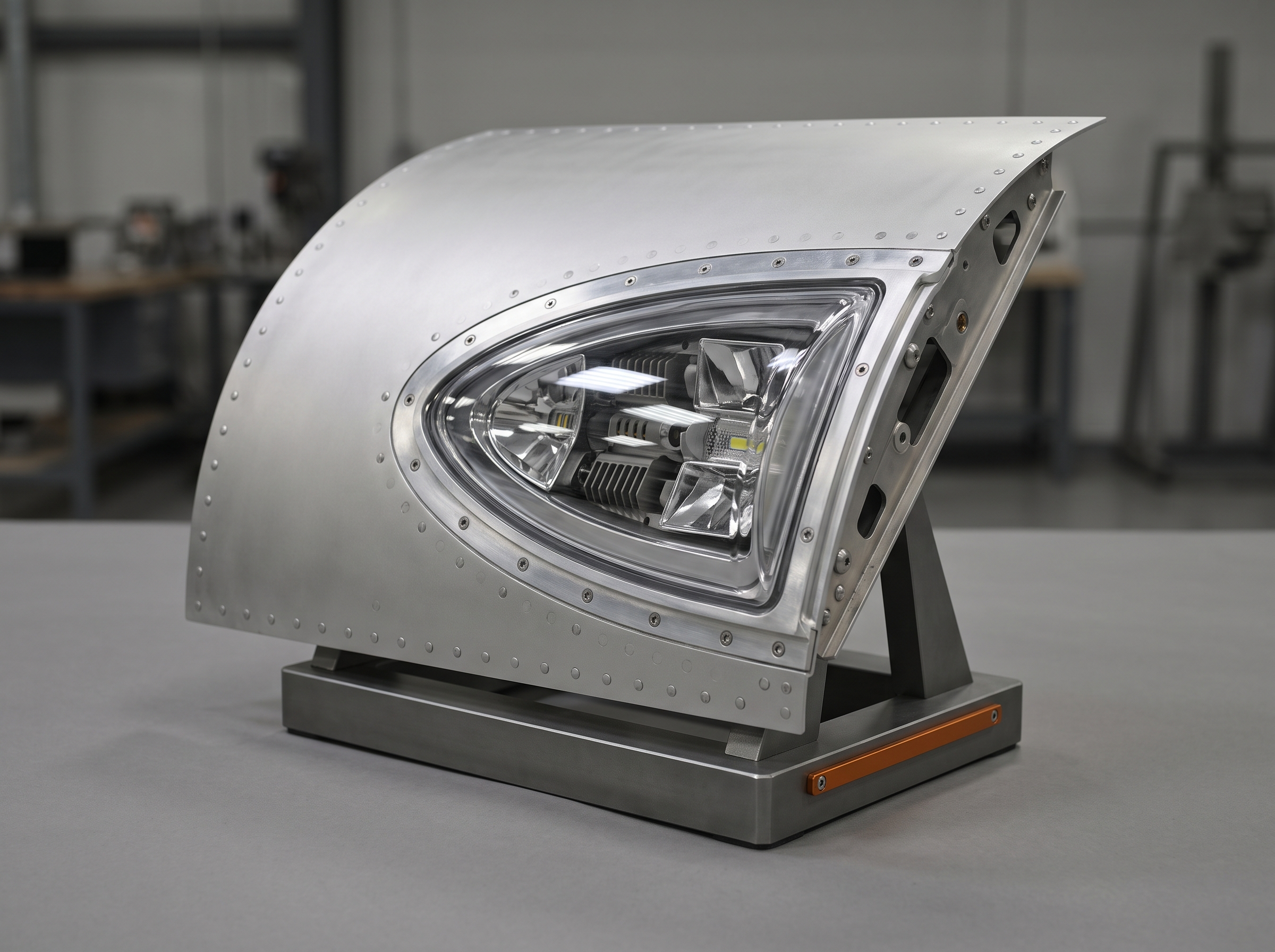
- The AEW capability is being developed with Saab and uses the LoyalEye sensor concept.
- The production challenge now sits in payload integration, power, cooling, software, data links, and repeatable certification for MQ-9B operators.
General Atomics Aeronautical Systems and Saab have completed the first flight of an MQ-9B remotely piloted aircraft fitted with airborne early warning pods, marking a development step for persistent unmanned surveillance.
The validation flight took place on 19 May from GA-ASI’s Desert Horizon flight operations facility in Southern California using a company-owned MQ-9B. The AEW capability is being developed through a partnership with Saab, with the radar sensor named LoyalEye. Development work will continue over several months, with a full-capability demonstration planned later this year.
Airborne early warning remains one of the most demanding missions in modern air operations. Crewed AEW&C aircraft provide wide-area surveillance, track management, threat warning, and battle-management support, but they are expensive, scarce, and heavily tasked. An MQ-9B-based AEW option would not replace the largest crewed platforms, but it could add persistence and availability in regions where airborne surveillance coverage is thin.
MQ-9B is a logical carrier for this development because it already offers long endurance, satellite communications, and a growing customer base. The family includes SkyGuardian, SeaGuardian, the UK’s Protector variant, and the STOL configuration being developed for naval applications. Adding AEW pods moves the platform beyond traditional ISR and maritime surveillance into a mission set normally associated with high-value crewed aircraft.
The integration problem is substantial. AEW radar payloads require power, cooling, structural support, electromagnetic compatibility, software integration, mission planning, datalink capacity, and operator interfaces. The aircraft must carry the pods without compromising safety, endurance, or flight performance beyond acceptable limits. The radar must also produce useful tracks while operating from an unmanned airframe with its own vibration, power, and data constraints.
A mature system would give GA-ASI and Saab a modular AEW product line for MQ-9B customers, with common payload hardware, installation kits, ground-station interfaces, training packages, and sustainment support. A one-off demonstrator has limited industrial value. A qualified kit that can be produced, installed, and supported across multiple operators creates a more durable market.
For Saab, LoyalEye extends airborne surveillance expertise into the unmanned systems space. For GA-ASI, it broadens the MQ-9B mission portfolio at a point when medium-altitude long-endurance aircraft are being pushed to justify their role in more contested environments. Traditional MALE UAV missions have been challenged by modern air defences, but persistent sensing remains valuable when aircraft operate at suitable stand-off distances, under allied protection, or in less heavily contested regions.
The capability also fits the move toward distributed sensing. Air forces increasingly want sensor networks that mix satellites, crewed aircraft, uncrewed aircraft, ground radars, naval sensors, and passive systems. A lower-cost unmanned AEW node could add coverage without committing a crewed aircraft to every orbit. It could also support maritime surveillance, missile warning, drone detection, airspace monitoring, and coalition operations where persistent presence carries more value than speed.
The UK has a natural interest in that architecture. Protector gives the RAF an MQ-9B operator base, while E-7 Wedgetail will rebuild the country’s crewed airborne early warning capacity. An unmanned AEW layer would not remove the need for Wedgetail, but it could change how routine coverage, maritime surveillance, and expeditionary sensing are distributed across the fleet.
The wider combat-air ecosystem is already moving toward networked and distributed capability. As GCAP’s early international engineering work moves forward through the package covered in GCAP contract moves Edgewing into first international work package, near-term systems such as MQ-9B AEW show how existing airframes can be adapted more quickly with new sensors and communications packages.
Certification and exportability will shape the next phase. An AEW-equipped MQ-9B must satisfy airworthiness, sensor performance, spectrum, cybersecurity, and operational safety requirements. Customers will also want evidence that the system can be maintained without excessive specialist support, especially if it is to operate from dispersed locations or with smaller air forces.
Operators will judge the system on availability, mission endurance, data quality, integration with command networks, training burden, and the cost of adding the capability to existing or planned MQ-9B fleets. The strongest production case would be a repeatable package that delivers persistent AEW coverage without requiring a bespoke aircraft programme.
The first flight proves the AEW payload can be carried and flown on MQ-9B. The next stage is the harder one: moving from flight validation to a product that customers can procure, integrate, certify, and sustain at scale.