IN Brief:
- Navantia and the Spanish Navy are defining an F110 IAMD variant under the navy's Armada 2050 requirements.
- The proposal includes greater vertical missile-launch capacity and an evolved SCOMBA New Generation combat management system.
- Five standard F110 frigates are already under construction; the IAMD design has not yet received a confirmed procurement order.
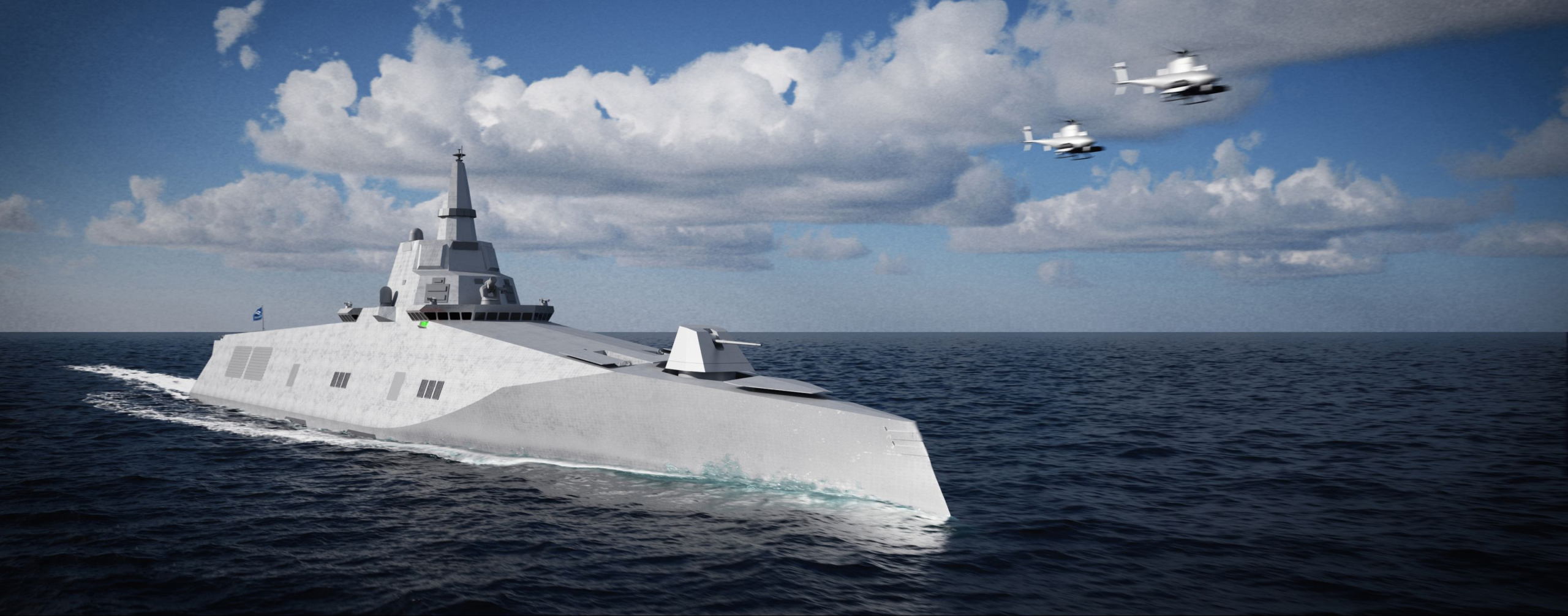
Navantia and the Spanish Navy have begun defining an expanded F110 frigate configuration with stronger integrated air and missile defence capabilities. Designated F110 IAMD, the proposed vessel would evolve the Bonifaz class to provide wider protection against aircraft, cruise missiles and ballistic missile threats while retaining the original design’s anti-submarine and surface warfare roles.
The work, confirmed on 23 October, follows the navy’s Armada 2050 requirements for future capability. Spain is already building five F110 frigates, while the proposed IAMD design is being defined as a possible extension of that class. Its final configuration remains subject to work between the navy, the Ministry of Defence and Navantia under the relevant procurement process.
The F110 IAMD concept extends the mission from local ship defence towards protection of a wider naval force. That requires sensors and combat systems to maintain tracks on several potential threats, pass information between ships and support engagements against different target types within the same period. Navantia specifically identifies aircraft, cruise missiles and ballistic missiles, alongside the need to escort high-value vessels and coordinate area air defence.
Navantia says the new design would strengthen detection, classification, tracking and simultaneous engagement at longer ranges. The company has also identified expanded vertical launch capacity as a design objective, allowing a future ship to carry a different mix of missiles according to the mission. Neither an exact cell count nor a final missile selection has been specified, and any comparison with the weapons fit of the existing class remains provisional.
Additional vertical launch capacity would affect the design well beyond the weapons fit. Launch equipment needs structural support, electrical and combat system interfaces, maintenance access and arrangements that accommodate the associated weight. Those integration demands have to be reconciled with the hull, machinery and other mission spaces as the configuration develops. Navantia has announced increased capacity as an objective but has not confirmed an approved missile loadout or installation design.
Navantia also proposes an evolved SCOMBA New Generation combat management system to connect sensors, weapons, shipboard equipment, data links and autonomous platforms. The company describes a cloud-hosted architecture supporting a shared tactical picture and coordination of a task group’s air defence. Development will have to define how information is distributed and how the combat system preserves reliable command functions when communications between ships are constrained.
Describing this architecture as a naval combat cloud refers to connected military systems sharing and processing operational information. It should not be read as confirmation that the ship would depend on an unrestricted public internet connection. Availability, cyber protection and resilience when external links are degraded will have to be addressed in the detailed design, with final technical arrangements still subject to development.
That command architecture is also intended to support operations within NATO and European Union naval formations, in which different ships can contribute sensors and weapons. Exchanging tracks across compatible data links helps participating platforms build a common operational picture; the handling of targeting decisions and engagement authority remains governed by the force’s command arrangements. Navantia identifies interoperability as a design requirement rather than a completed qualification result.
Despite the stronger air defence emphasis, the IAMD proposal would preserve the broader mission range of the existing F110. Navantia identifies anti-submarine warfare, anti-surface warfare, electronic warfare and responses to asymmetric threats among the intended capabilities. It also envisages a multi-mission area able to support additional equipment, a second helicopter and uncrewed vehicles, although the size and detailed arrangement of those facilities have not yet been finalised.
The Spanish shipbuilder has additionally identified greater speed and endurance as design ambitions. Meeting those aims alongside extra combat equipment would require the ship’s propulsion, fuel provision and hull arrangement to be assessed together. No revised displacement, propulsion specification or endurance figure has been disclosed, so the eventual performance improvement cannot yet be quantified.
Navantia intends to carry forward the digital engineering approach established for the present class. Its proposals include digital twins, condition-based maintenance and an integrated platform management system to support maintenance planning and crew training. The usefulness of those systems will depend on sensor data, equipment models and the ability to keep the representation of each ship aligned with changes made during construction and service.
Ferrol’s existing F110 construction programme supplies engineering experience and a production base for any future development. Five Bonifaz-class frigates are already under construction, while Navantia reports an industrial network of more than 500 companies across Spain, supported by technology and academic partners. Work on the IAMD configuration could extend demand for design, systems integration and through-life support expertise, although the Spanish authorities have not placed a follow-on shipbuilding order.
The next decision lies with the navy, the Ministry of Defence and Navantia as they reconcile operational requirements with the final design and procurement process. The number of additional ships, their weapons fit, contract value and delivery dates remain unannounced. The 23 October development establishes active joint design work, while construction of the five existing frigates continues under the original programme.