
News
-

The Indian Navy is defining long-range maritime loitering munition requirements. Its RFI calls for more than 1,000km range, nine hours of endurance, ship and shore launch options, resilient navigation, and networked control.
-

India has approved another major package of domestic defence acquisitions. The ₹1.10 lakh crore package spans land, naval, aerospace, electronic warfare, and support capabilities, with about 98% intended for Indian industry.
-

Dynetics will build fourteen production-representative air-defence radar systems for Marines. The $40.8 million modification also covers software, logistics, manuals, engineering changes, and retrofit work on earlier MRADR and MELPS prototypes.
-
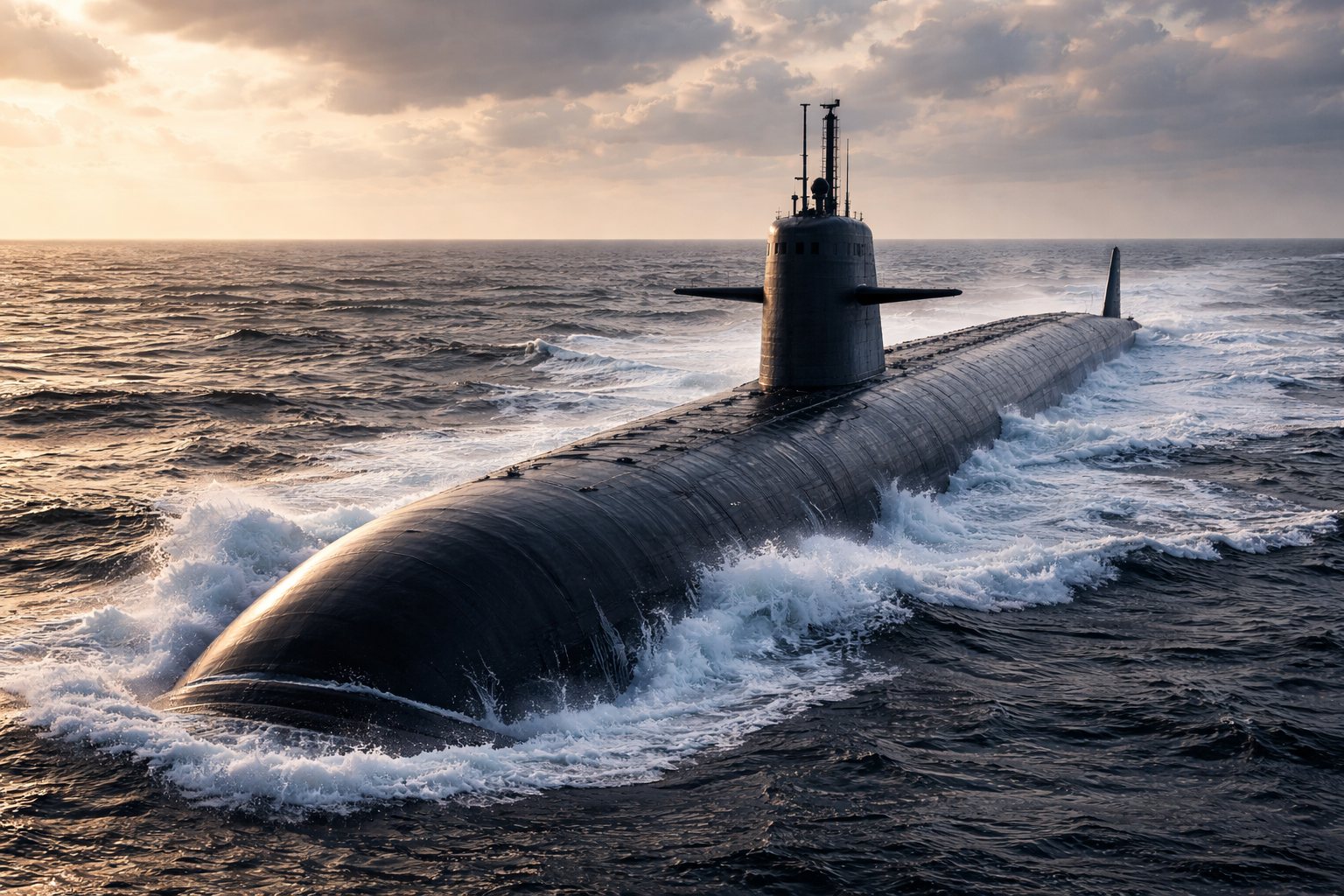
Lockheed Martin will advance Trident II D5LE2 development through 2030. The $90.2 million Navy modification funds additional advanced design and development work within the wider strategic missile life-extension programme.
-

General Dynamics will upgrade MUOS ground infrastructure for two satellites. The $99.3 million task order covers design, integration, deployment, and changes needed to incorporate two service-life-extension spacecraft through 2028.
-
L3Harris will produce low-profile photonics masts for US Navy submarines. The $139 million modification covers new-build and in-service boats, spares, and engineering support at Northampton through September 2030.
-
NASSCO will modernise USS Pinckney during its 2026 depot availability. The $149.6 million programme covers maintenance, repair, testing, production, and equipment modernisation at the company’s San Diego shipyard through September 2028.
-

Boeing will repair nine F/A-18 flight-control surface configurations through 2032. The $241.3 million Navy order covers Super Hornet and Growler components and extends a long-duration sustainment route for critical aircraft structures.
-
General Dynamics will support fire-control engineering for nuclear-armed SLCM-N programme. The $194.1 million modification funds technical development at Pittsfield and Manassas through September 2028 as the Navy develops the missile’s supporting weapon-system architecture.
-
HII will procure long-lead materials for future carrier CVN 82. The $336.1 million award starts advance purchasing for USS William J. Clinton at Newport News Shipbuilding, with contracted work extending to 2039.