IN Brief:
- Northrop Grumman has received a $215.9 million DARC Site 2 contract modification.
- The work covers antenna manufacturing, hardware, long-lead equipment, and pre-construction activity.
- Cawdor Barracks in Pembrokeshire remains the proposed UK location for the three-nation radar network.
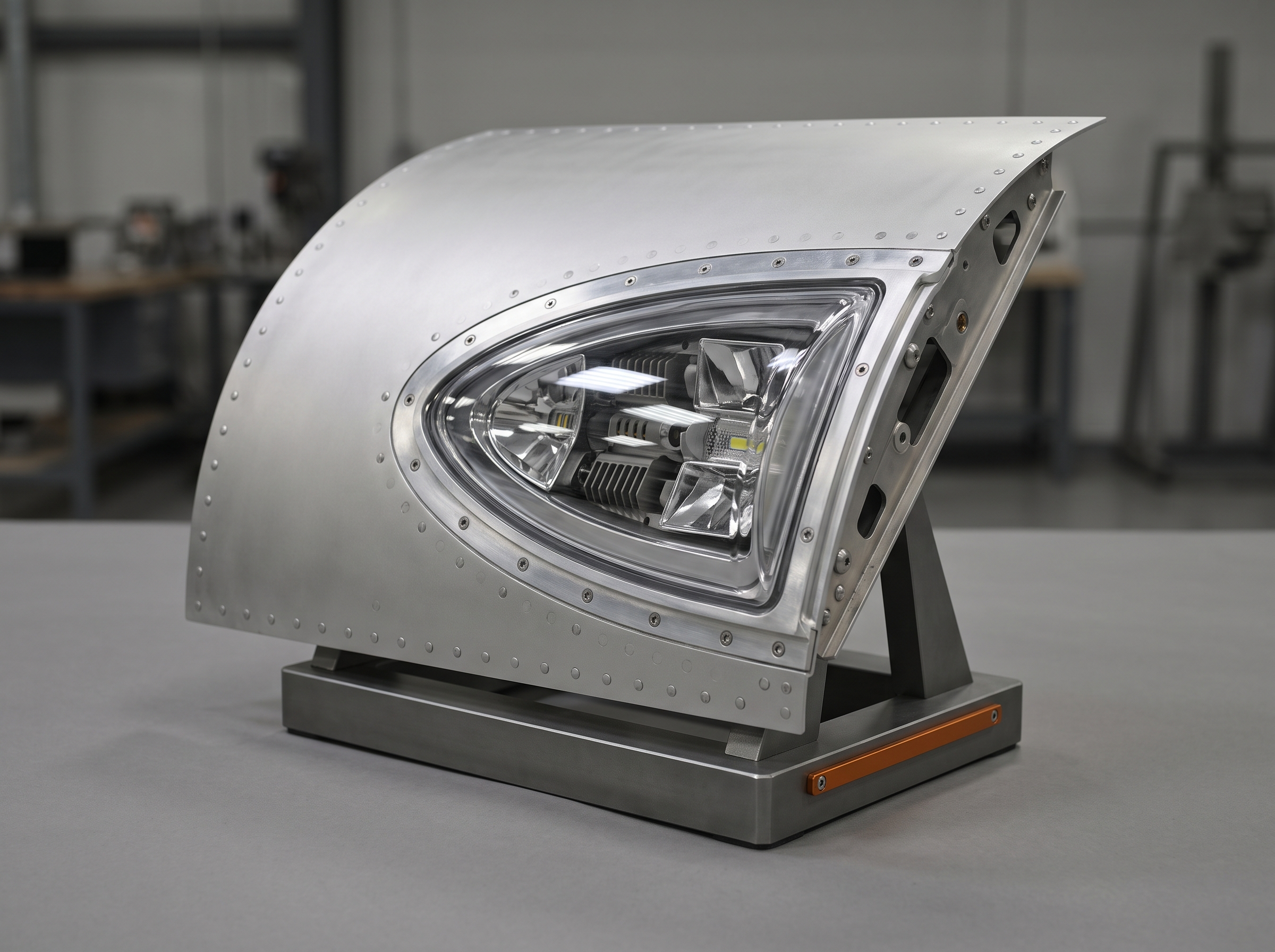
Northrop Grumman has received a $215.9 million contract modification for the second Deep Space Advanced Radar Capability site, adding antenna manufacturing, long-lead hardware, and pre-construction activity to the proposed UK element of the trilateral space-surveillance network.
The modification increases the cumulative value of the Site 2 contract from $279.4 million to $495.4 million. The US Department of War said $51.4 million of fiscal 2025 research, development, test, and evaluation funding is being obligated with the award, while work in Colorado Springs, Colorado, is expected to continue until March 2030.
The latest action covers pre-construction long-lead items, antenna hardware, antenna manufacturing, and related preparatory work. It was awarded on 24 August and disclosed in the US government’s 25 August contract notice, moving another part of the programme from design and preparation towards physical hardware production.
DARC is a joint United States, United Kingdom, and Australia programme intended to detect, identify, and track objects in Earth orbit. Three geographically separated ground radar sites are planned so the combined network can provide persistent coverage across the sky in different weather conditions and at all times of day.
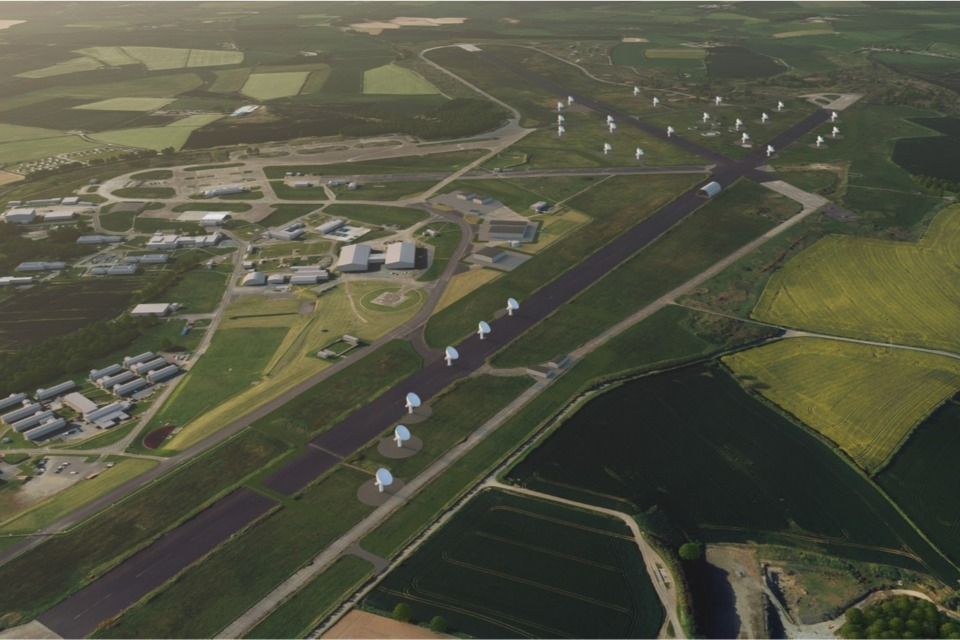
The Ministry of Defence proposes to host the UK site at the former Cawdor Barracks airfield in Pembrokeshire. The project remains subject to the UK planning process, and MOD completed a statutory pre-application consultation earlier in 2026 before progressing towards a formal application. The US manufacturing award therefore does not amount to construction consent for the Welsh site.
That distinction illustrates one of the practical difficulties in delivering a large radar programme. Specialised antennas, transmit-and-receive hardware, processing equipment, and other long-lead systems can require years of engineering and manufacture. Waiting until every civil planning stage is complete before ordering critical hardware can introduce further delay, while beginning production early carries its own programme risk if site requirements change.
DARC is intended for a markedly different operating environment from conventional air-surveillance radar. The UK government says the network will detect, track, and characterise satellites, debris, and other objects in orbit, with earlier programme material describing surveillance out to around 36,000 kilometres from Earth.
That range demands high sensitivity, accurate timing, substantial processing capacity, and tightly controlled antenna performance. Radio-frequency energy transmitted towards space has to be received and processed after reflection from distant objects, with the system separating useful returns from noise and maintaining accurate tracks over time.
The three-site architecture is intended to overcome the geographic limitations of an individual ground radar. Sites in Australia, the UK, and the United States can observe different parts of the sky and combine their output into a wider space-domain picture, reducing periods when an object falls outside useful coverage.
The Australian installation at Exmouth has already progressed through construction and system-integration activity, making the UK site the next major part of the network to move deeper into delivery. Site 2 now carries nearly half a billion dollars in cumulative contract value before construction of the proposed UK facility is complete.
Antenna manufacture is one of the programme’s defining industrial workstreams. The radar architecture depends on consistent production of antenna elements and associated electronics, supported by structures, power distribution, cooling, networking, control systems, and computing infrastructure. Those elements eventually have to perform as one sensor rather than as individually compliant pieces of hardware.
Installation will bring another set of engineering requirements. Antenna hardware manufactured in the United States has to be transported, assembled, connected, calibrated, and accepted at the final operating location. Site conditions, power quality, environmental exposure, communications links, electromagnetic compatibility, and maintenance access all become part of achieving the specified radar performance.
The proposed Cawdor Barracks redevelopment extends beyond the antenna field. MOD planning material includes radar operations and spares buildings, support facilities, access work, receiving and transmitting antenna areas, and associated infrastructure. The department has also identified future requirements around high-performance computing, information technology, logistics, operations, and facilities management.
Space-domain awareness has become a larger defence-industrial requirement as military activity depends increasingly on satellites for communications, navigation, intelligence, surveillance, weather data, and command functions. Tracking objects in orbit supports routine space safety as well as the identification of manoeuvres or behaviour that may affect national-security spacecraft.
The programme therefore combines specialised radar manufacturing with a substantial fixed-infrastructure project. Northrop Grumman and its suppliers have to progress long-lead hardware while British planning and site-development work proceeds on a separate track, leaving programme managers to keep the two schedules aligned.
The latest award does not mean Cawdor Barracks is ready for radar installation, nor does it settle the remaining UK planning process. It does show that Site 2 is moving further into hardware production, with antenna manufacturing now specifically funded and the cumulative US contract value approaching $500 million.
The next significant milestones will be planning approval, visible site construction, production of the antenna hardware, and its eventual installation and calibration in Pembrokeshire. Those steps will determine whether the industrial activity now under contract can meet DARC’s planned deployment schedule and turn a three-nation radar architecture into an operational global surveillance network.