IN Brief:
- Patria is preparing a technology-transfer model for Lithuania’s potential CAVS participation.
- The programme would support local industrial capability around the Patria 6×6 armoured vehicle.
- The move reflects growing European demand for standardised, locally supportable land systems.
Patria is preparing to support Lithuania’s potential participation in the Common Armoured Vehicle System programme, with technology transfer and local industrial capability placed at the centre of the proposal.
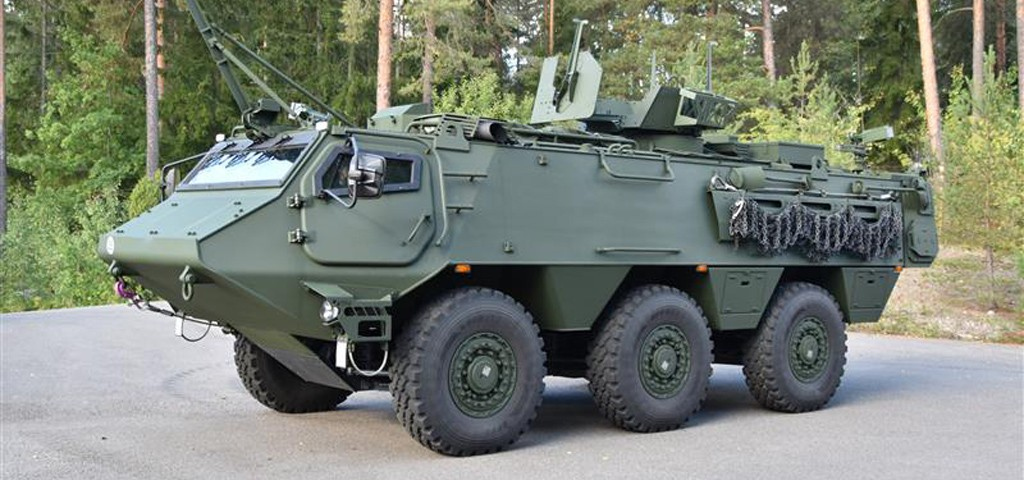
The CAVS programme is built around the Patria 6×6 armoured vehicle and already includes Finland, Latvia, Sweden, Denmark, Norway, Germany, and the UK. Vehicles have been delivered to several participant nations, and the platform has also been used operationally in Ukraine. Lithuanian involvement would extend one of Europe’s most visible multinational land-systems frameworks into another NATO eastern-flank market.
Patria’s model for Lithuania would transfer armoured vehicle manufacturing expertise to local partners while supporting maintenance capability and security of supply. The company has been working with Lithuanian industry for more than a year to assess how domestic capability could support vehicle production, sustainment, and lifecycle work.
Armoured vehicle procurement across Europe is being reshaped by the requirement for capacity as much as capability. The war in Ukraine has placed renewed focus on repair pipelines, spares availability, battle-damage recovery, and rapid upgrade routes. Vehicles need to be delivered quickly, maintained close to the operating area, and modified as threat conditions change.
The Patria 6×6 has gained momentum partly because it offers a relatively standardised platform that can be adapted across user nations. The CAVS structure gives participants a shared baseline, coordinated development routes, and potential procurement commonality. It also allows national industries to take defined workshare, linking vehicle acquisition to longer-term industrial development.
Lithuania could use such a model to build capability around welding, assembly, automotive integration, electronic systems installation, training, maintenance, and spare-parts support. Those areas determine whether a vehicle fleet remains available under pressure. Final delivery numbers are only part of the equation; operational usefulness depends on the ability to keep platforms running, repair them quickly, and integrate incremental upgrades.
The proposal also fits a wider European land-systems pattern. Rising order books and capacity pressures, visible in the broader European land-systems ramp-up, are pushing governments to reconsider fragmented national procurement. Shared programmes can reduce duplication, but only if countries preserve enough commonality to support efficient production and maintenance.
CAVS is one route through that problem. A common 6×6 platform can support troop transport, command, ambulance, logistics, and specialist variants, provided national changes are controlled. Excessive customisation would weaken the benefits of common spares, training, and production planning. The balance between local workshare and platform standardisation will therefore shape the programme’s long-term value.
Technology transfer brings its own production demands. Transferring vehicle capability does not simply mean handing over drawings or assembly instructions. It requires qualified suppliers, controlled welding processes, inspection standards, environmental testing, configuration management, workforce training, and acceptance procedures. Armoured vehicle manufacturing relies heavily on repeatability, particularly where ballistic protection, mobility, and mission systems must perform together.
Lithuania’s geography gives the proposal added relevance. As a NATO member on the alliance’s eastern flank, the country has a direct requirement for protected mobility and local support depth. A domestic support base for 6×6 vehicles would reduce dependence on distant maintenance facilities and improve resilience during periods of heightened tension.
For Patria, Lithuanian participation would strengthen CAVS as a European reference programme. The company has positioned the 6×6 as a modular, supportable platform rather than a bespoke national system. That approach aligns with current demand for equipment that can be manufactured in meaningful numbers and sustained across multinational fleets.
The model will still need careful execution. Local production can add resilience, but it can also introduce complexity if supply chains, quality systems, and technical authority are not tightly managed. Shared programmes work best when industrial participation supports common output rather than fragmenting the platform into separate national variants.
Europe’s land-systems base faces a capacity test that will not be solved by isolated procurement decisions. Artillery, armour, ammunition, mobility, and protected logistics all require stronger production networks. Lithuania’s potential CAVS participation would be a relatively focused vehicle decision, but it points to a larger shift towards distributed manufacturing and regional sustainment.
If the proposal advances, the measure of success will be the practical depth of Lithuanian industrial participation. Assembly alone would offer limited resilience. A broader model, covering production skills, maintenance authority, spares, upgrades, and training, would give the programme more durable value.